Devices in a modern wireless environment
Slides - part twenty three
Reduction & Recovery
Lowering exposure is foundational — but it is not the whole strategy. When stressors accumulate, they often converge on shared biological pathways such as oxidative load, nervous system dysregulation, and circadian disruption.

Regulatory frameworks focus narrowly on acute heating thresholds. Biology operates through cumulative signalling, redox balance, mineral status, light timing, and environmental input density.

This set explores what recovery actually requires — without pretending that supporting physiology replaces the need to reduce avoidable stressors at source.
Some people get sick in modern wireless environments. And no one knows how to talk about it properly.
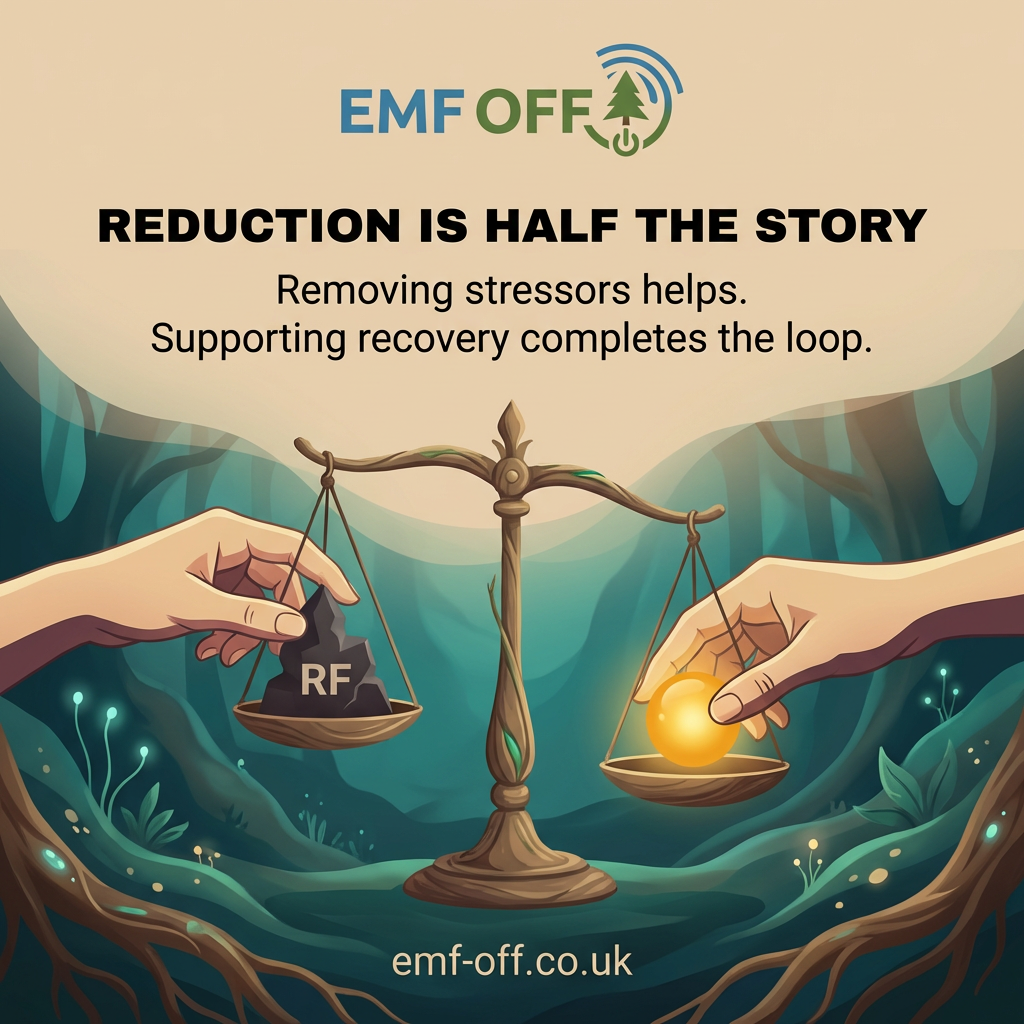
Removing Load Is Only Step One Lowering RF exposure reduces one input into the stress equation.

But biological systems recover through active repair processes, not passive absence alone.

When regulatory models ignore non-thermal pathways, responsibility shifts to individuals to buffer the consequences.

Reduction protects. Recovery rebuilds.
Some people get sick in modern wireless environments. And no one knows how to talk about it properly.
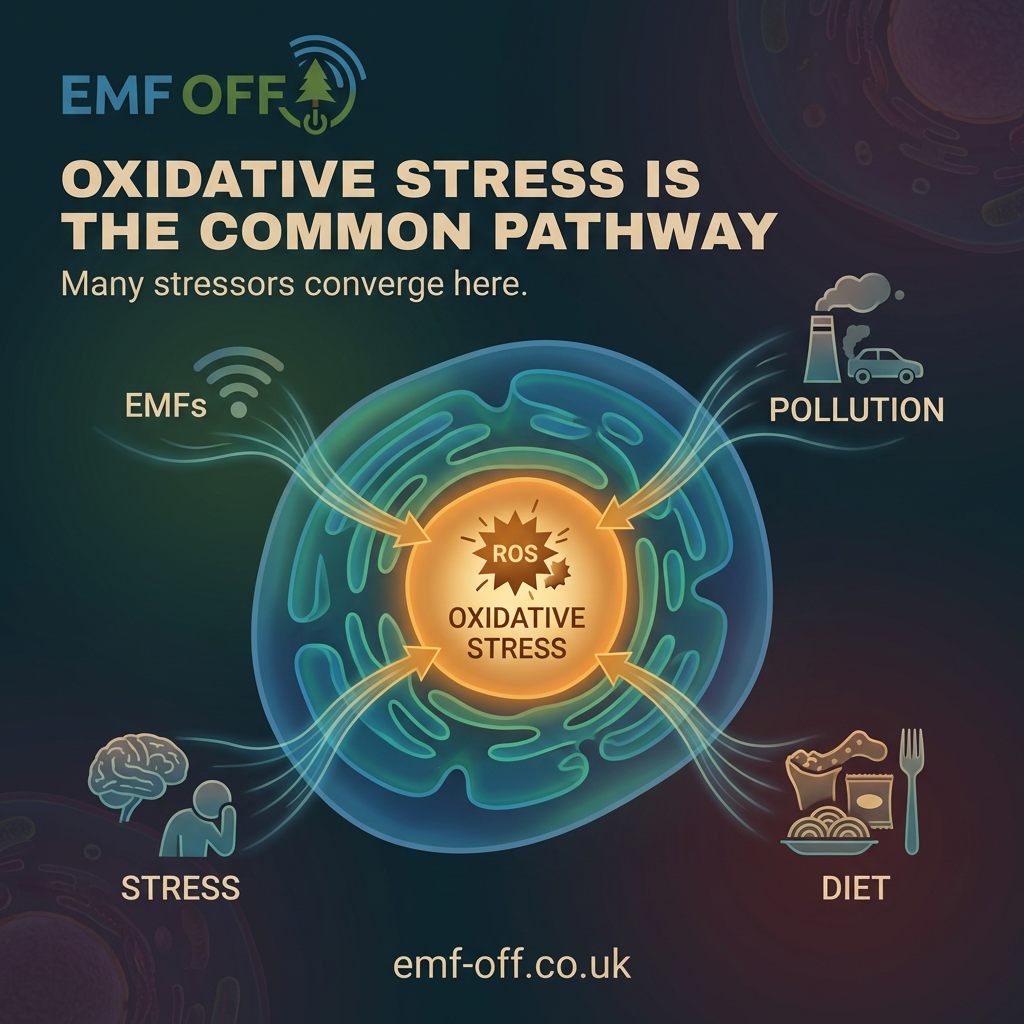
Shared Stress Pathways Matter Oxidative stress is a convergence point for multiple modern inputs: chemical pollution, chronic psychological stress, poor diet, and persistent RF signalling.

When exposure standards define harm purely as tissue heating, oxidative mechanisms fall outside enforceable concern.

This does not make them speculative — it makes them inconvenient.

Different stressors can amplify the same biological bottleneck.
Some people get sick in modern wireless environments. And no one knows how to talk about it properly.
Molecular Hydrogen as Redox Support Selective antioxidants target specific reactive species rather than indiscriminately suppressing signalling molecules needed for normal function.

Support strategies like this are adjunctive — not substitutes for exposure reduction.

They become relevant precisely because regulatory definitions stop at thermal limits.

Support is necessary when systemic inputs are left unaddressed.
Some people get sick in modern wireless environments. And no one knows how to talk about it properly.
Mineral Status Shapes Electrical Stability The nervous system operates through ion gradients and membrane potentials.

Magnesium and related minerals influence excitability thresholds, calcium channel behaviour, and stress responsiveness.

When signalling density increases, nutrient resilience becomes more consequential.

Electrophysiology depends on adequate mineral buffering.
Some people get sick in modern wireless environments. And no one knows how to talk about it properly.
Food Can Buffer or Compound Stress Load Whole foods rich in phytonutrients and antioxidants contribute to redox stability and mitochondrial efficiency.

Ultra-processed inputs often increase inflammatory signalling and oxidative burden.

In an already signal-dense environment, dietary load matters more, not less.

Resilience is cumulative — so is stress.
Some people get sick in modern wireless environments. And no one knows how to talk about it properly.
Low-Stimulation Environments Restore Baseline Natural settings reduce artificial light exposure, signalling density, and sensory fragmentation.

Many people report improved sleep depth and nervous system calm when removed from constant urban transmission fields.

Such observations are often dismissed because they are experiential rather than regulatory endpoints.

Environmental quiet reveals how much load was normalized.
Some people get sick in modern wireless environments. And no one knows how to talk about it properly.
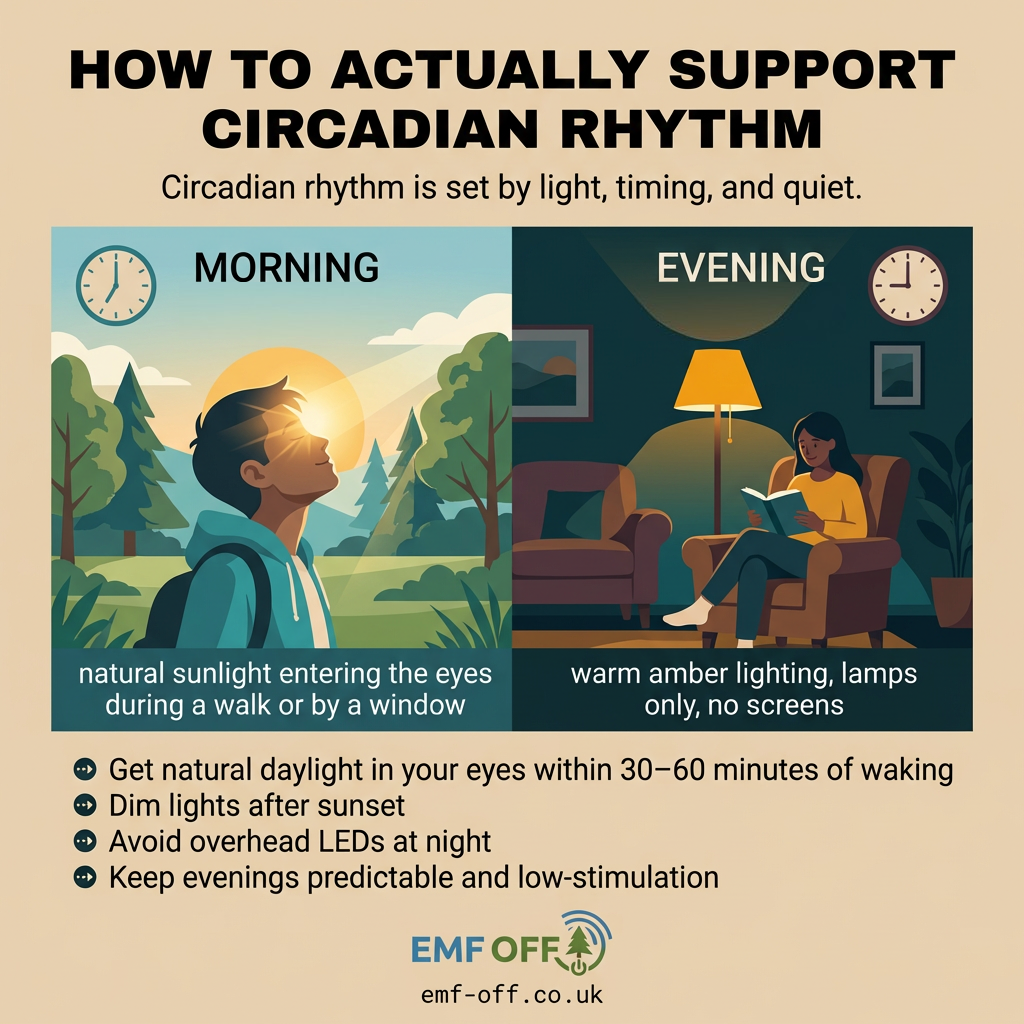
Circadian Timing Is a Regulatory System Light exposure, especially in the morning, anchors hormonal cycles and metabolic rhythms.

Late artificial light and evening stimulation delay melatonin signalling and compress repair windows.

Standards governing RF exposure do not account for chronobiological disruption.

Timing is a biological input, not a lifestyle preference.
Some people get sick in modern wireless environments. And no one knows how to talk about it properly.
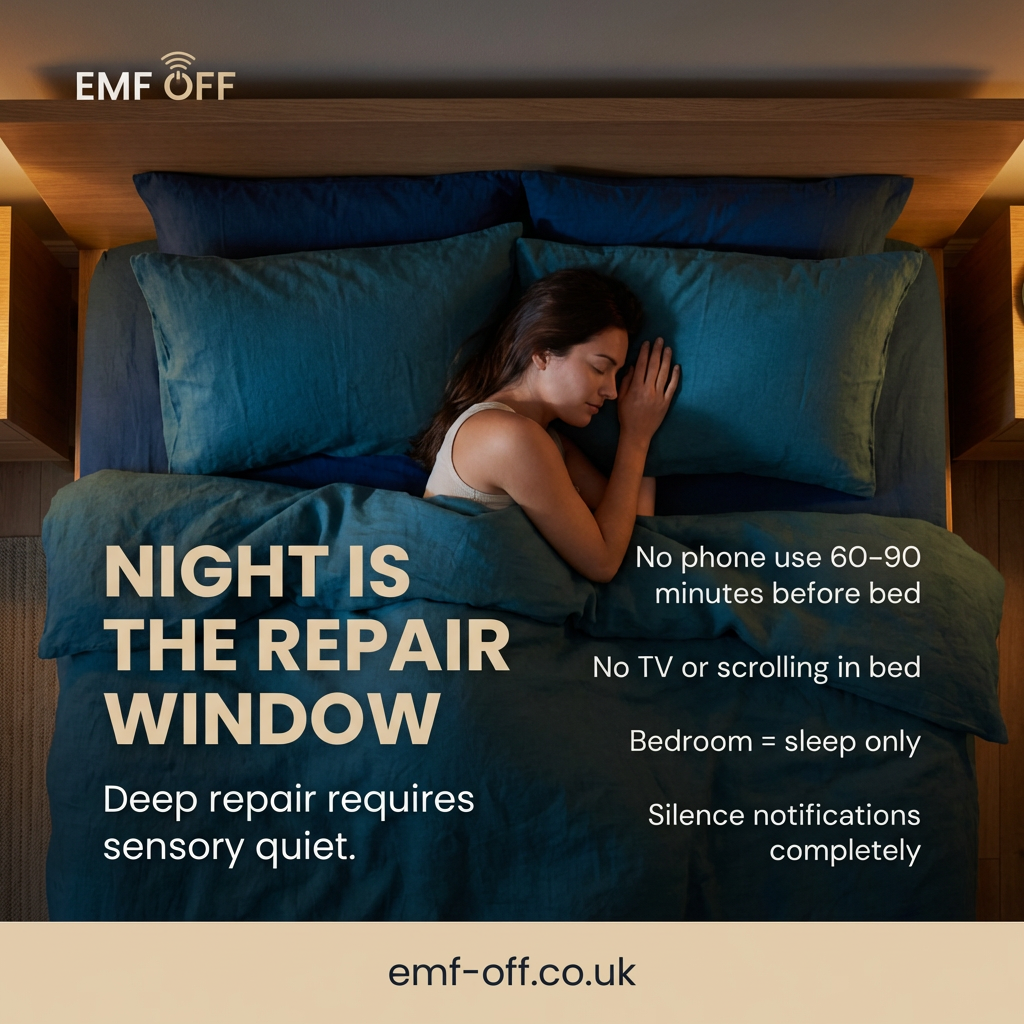
Deep Repair Requires Sensory Quiet Nighttime is when glymphatic clearance, immune recalibration, and cellular repair intensify.

Persistent alerts, light emissions, and near-field device proximity introduce competing signals during that window.

When regulation treats non-thermal emissions as irrelevant, bedrooms become unexamined exposure zones.

Repair competes with stimulation — it does not override it.
Some people get sick in modern wireless environments. And no one knows how to talk about it properly.
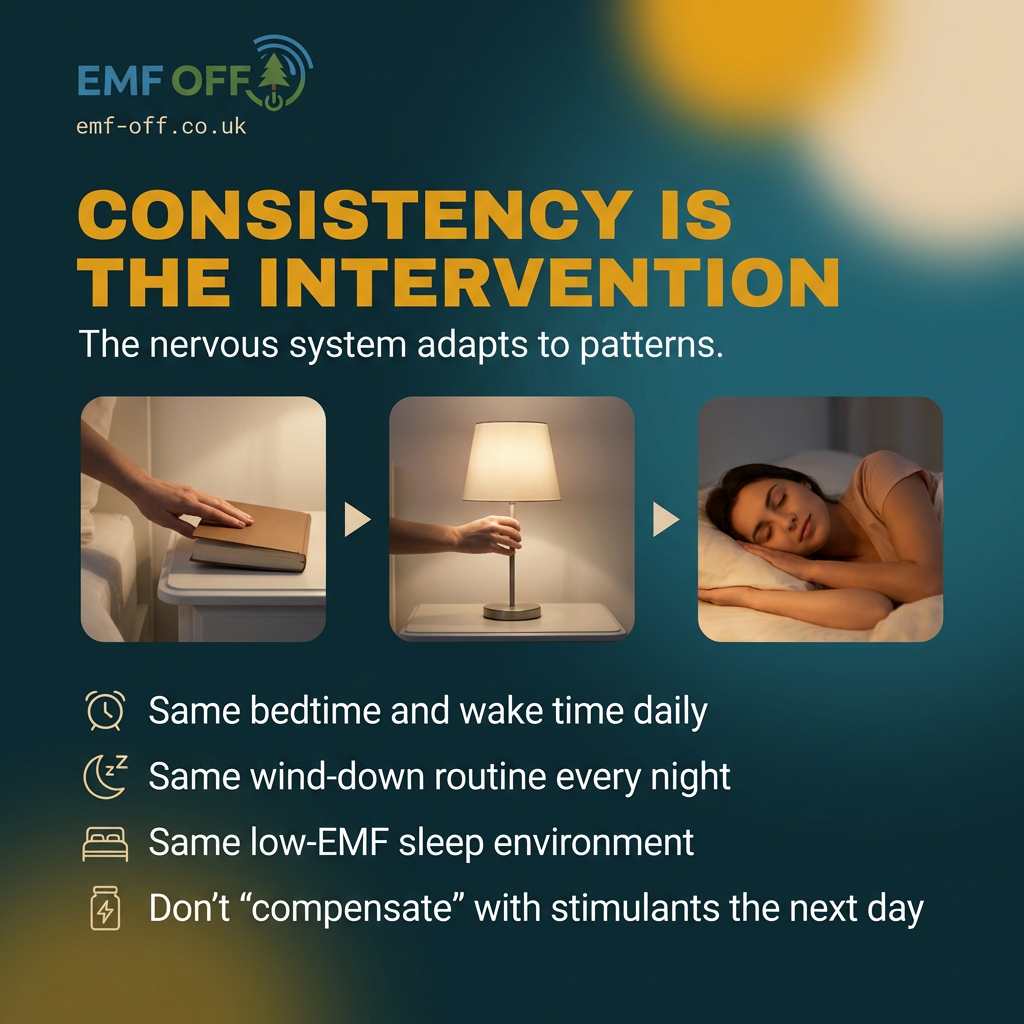
Pattern Stability Builds Nervous System Resilience The autonomic system adapts to repeated cues: sleep timing, light exposure, stimulation levels.

Irregular routines and compensatory stimulant cycles increase volatility and recovery debt.

Consistency is not simplistic advice — it is a regulatory signal to the body.

Resilience emerges from repeated, low-noise patterns.