Some people get sick in modern wireless environments and it's hard to talk about why.
This is where the conversation really starts.
Not with theory. Not with crazy claims.
But with lived experience.
Some people become unwell in modern, high-RF environments — homes, cities, offices — and when they try to talk about it, they’re often dismissed misunderstood, or told it’s “impossible.”
That reaction matters.
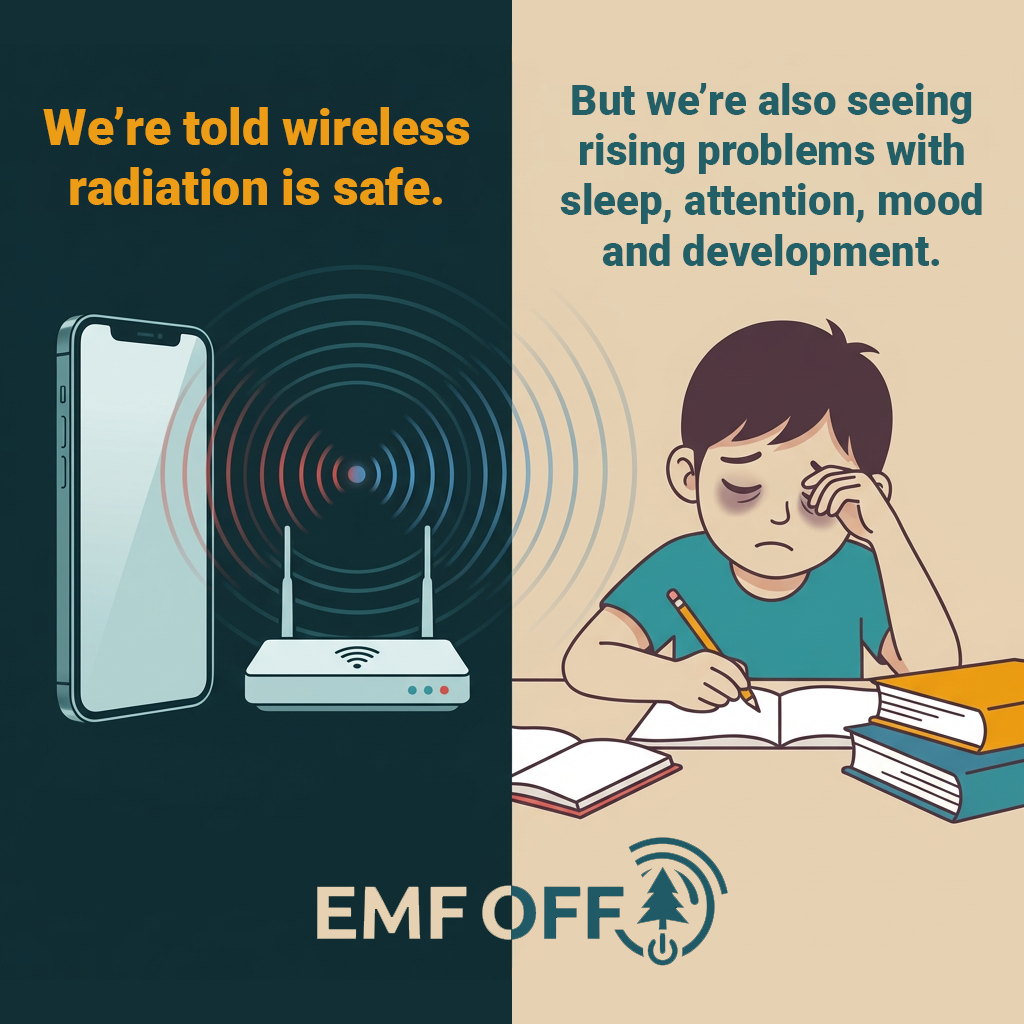
We’re repeatedly assured......that everyday wireless exposure is harmless.
At the same time, rates of sleep disruption, anxiety, attention issues, and developmental concerns are climbing — especially in children
Correlation isn’t proof.
But ignoring patterns isn’t science either.
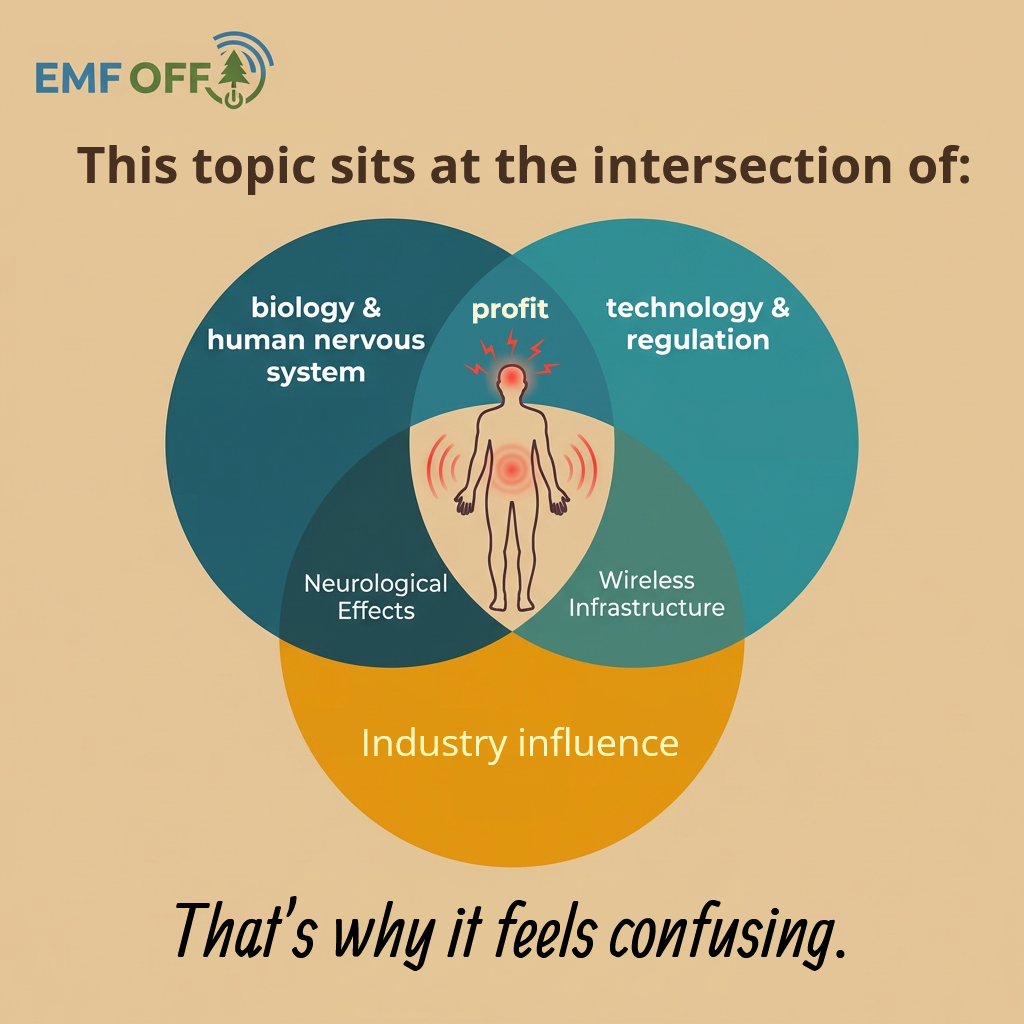
This isn’t a simple health question.
It sits at the overlap of:
human biology and the nervous system
rapidly evolving wireless technology
regulatory standards
and powerful commercial interests
When all of these collide, clarity gets lost — not
because there’s nothing there, but because
the conversation is fragmented.
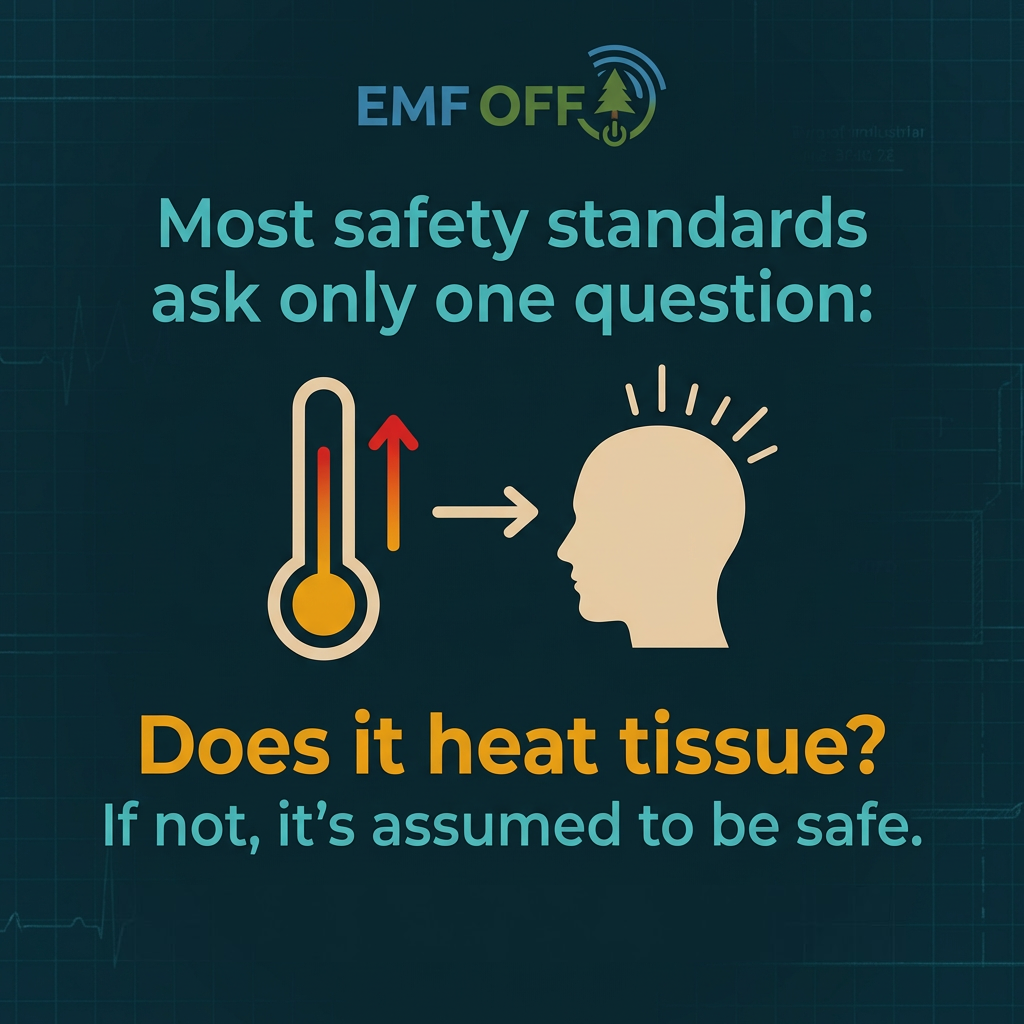
Current safety standards......focus almost entirely on short-term heating effects.
They largely ignore:
electrical signalling in cells
oxidative stress
calcium channel activation
long-term, low-level exposure
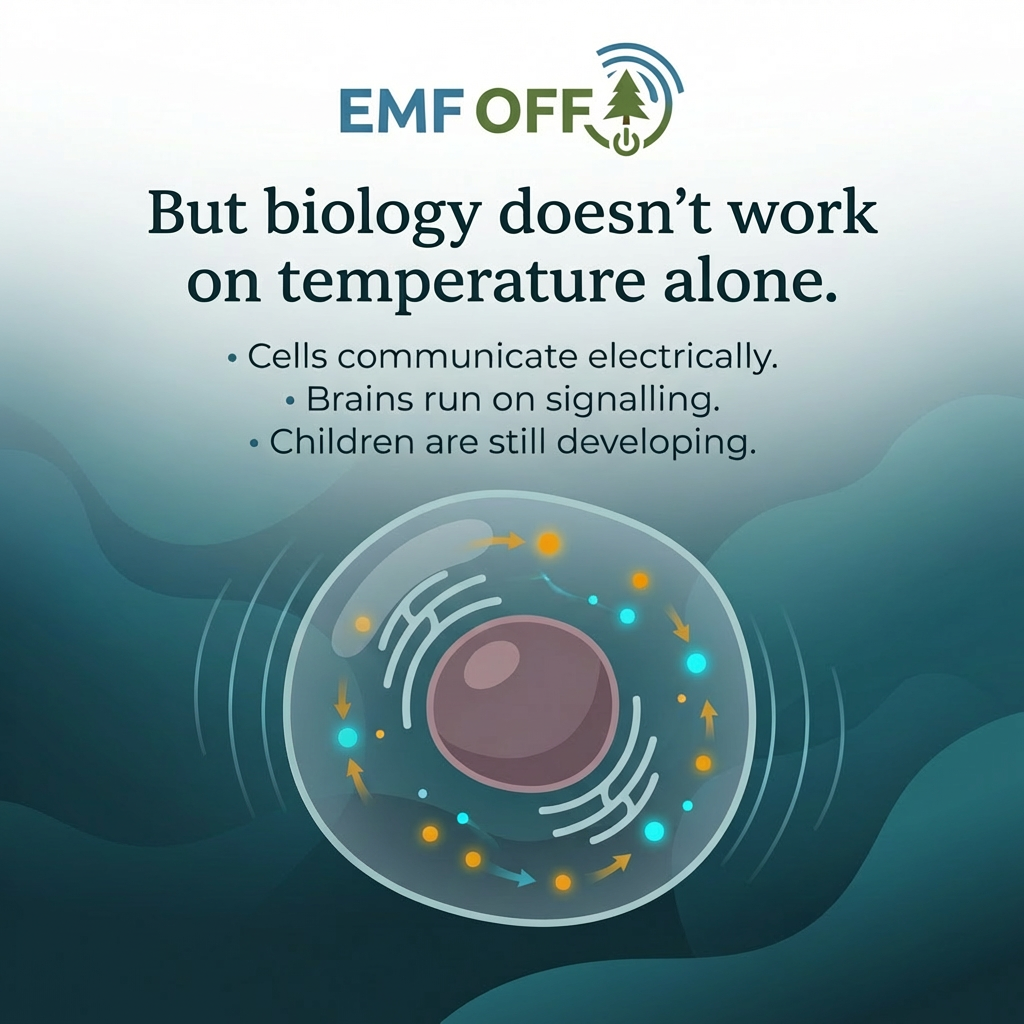
Biology doesn’t work on temperature alone.
The human body is an electrical system.
Brains, nerves, and cells rely on delicate signalling — especially during development.
Assuming that "no heating = no harm” skips the very systems that define neurological health.
If this topic feels strangely hard to pin down......that’s not an accident. It’s:
scientifically complex
commercially inconvenient
politically awkward
Which often leads to uncertainty being framed as reassurance, rather than a reason for caution.
This project didn’t begin as activism or ideology.
It began with unexplained illness — and a pattern: feeling worse in dense wireless environments, and better when away from them.
That pattern was consistent enough to demand investigation.
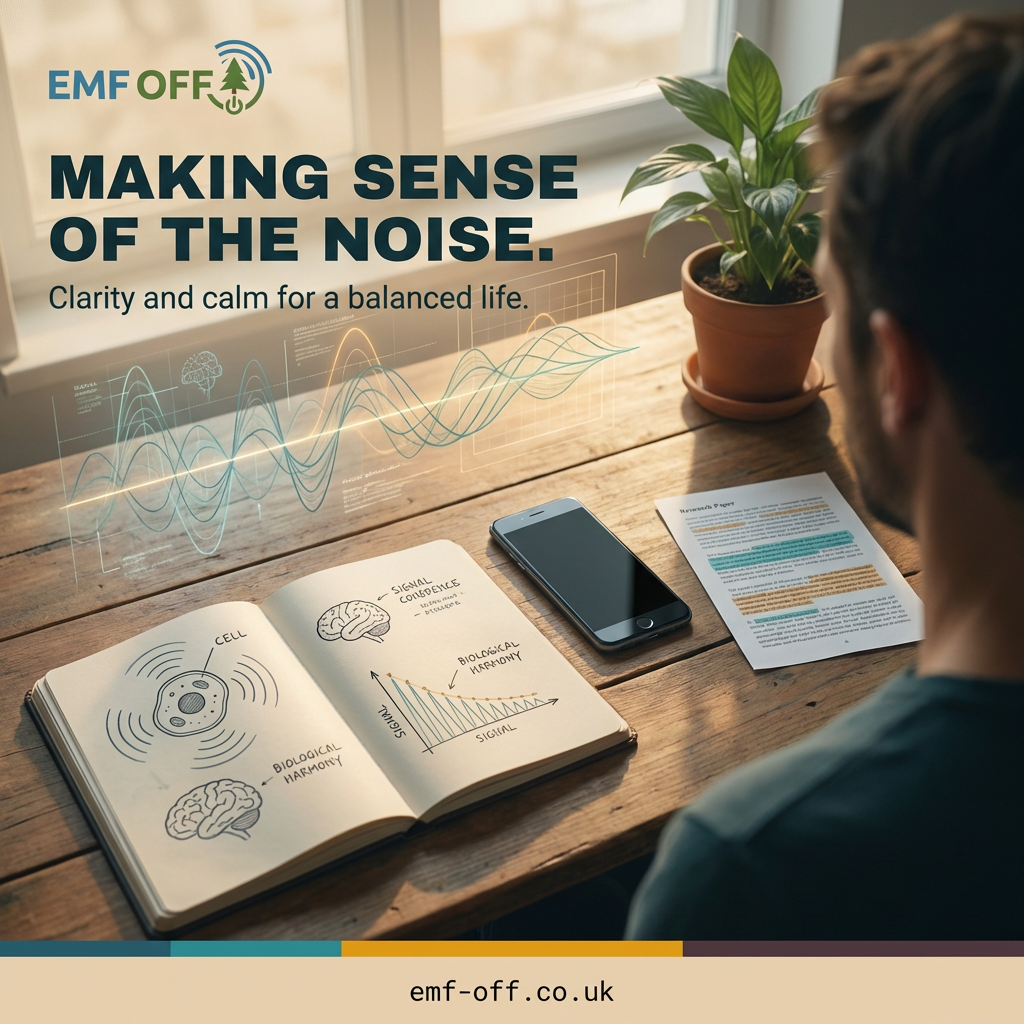
This series isn’t about panic or purity.
It’s actually very simple; it's about understanding:
what the science actually says
where assumptions replace evidence
and how people can make informed, practical choices