Exposure is not a single number. Biology is not a single template.
Health responses emerge from the interaction between load and recovery capacity — shaped by environment, physiology, timing, and total stress burden.
Variability is expected. Uniformity would be surprising.
This is not about fear. It is about thresholds.
Uniform reactions are not how biology works
The expectation that everyone should feel the same effect at the same intensity assumes a mechanical model of health.
Human systems are adaptive, buffered, and variable — especially in early or subclinical stages.
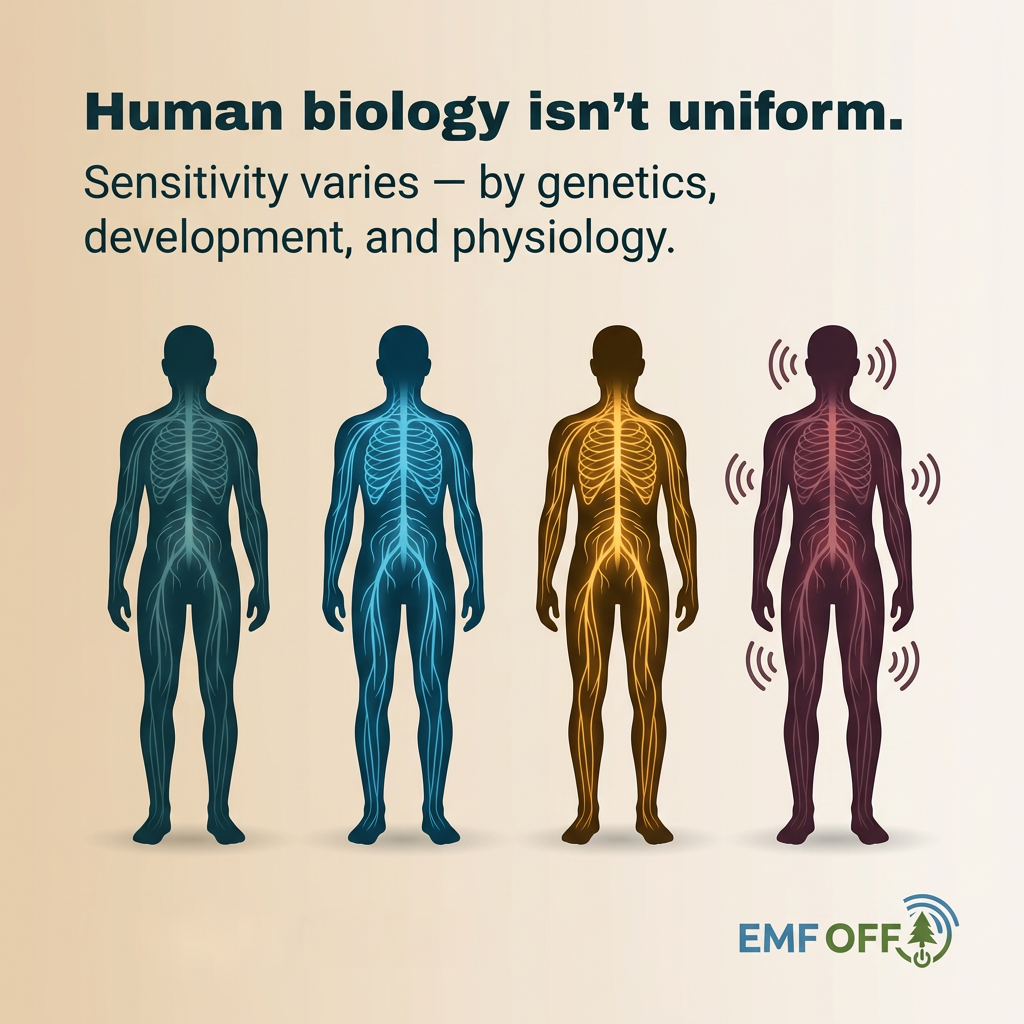
Variation is the rule, not the exception
Genetics, developmental stage, immune tone, hormonal state, prior illness, and nervous system regulation all shape how signals are processed.
The same input does not produce the same output in every organism.
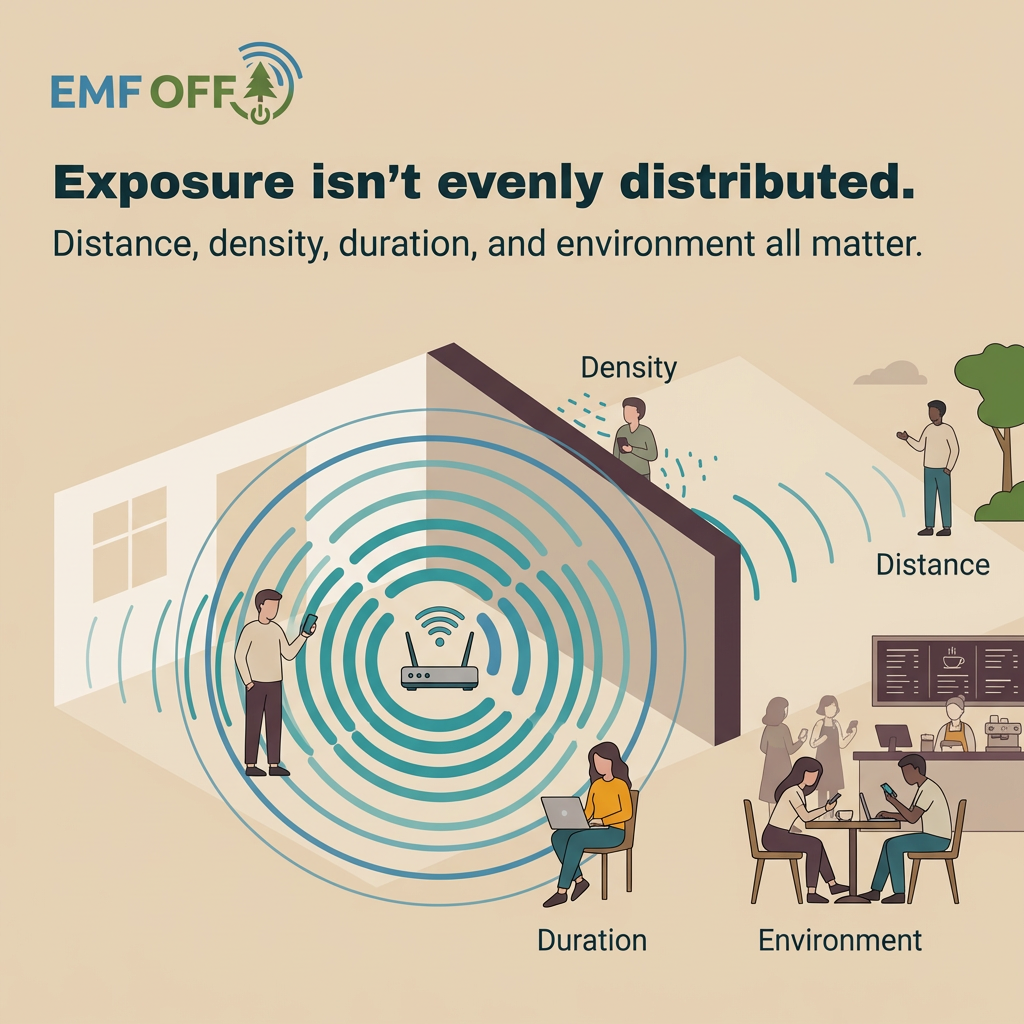
Exposure itself is uneven
Signal intensity falls rapidly with distance. Reflection, building materials, device proximity, and usage patterns create micro-environments.
Two people in the same house may be living in very different electromagnetic conditions.
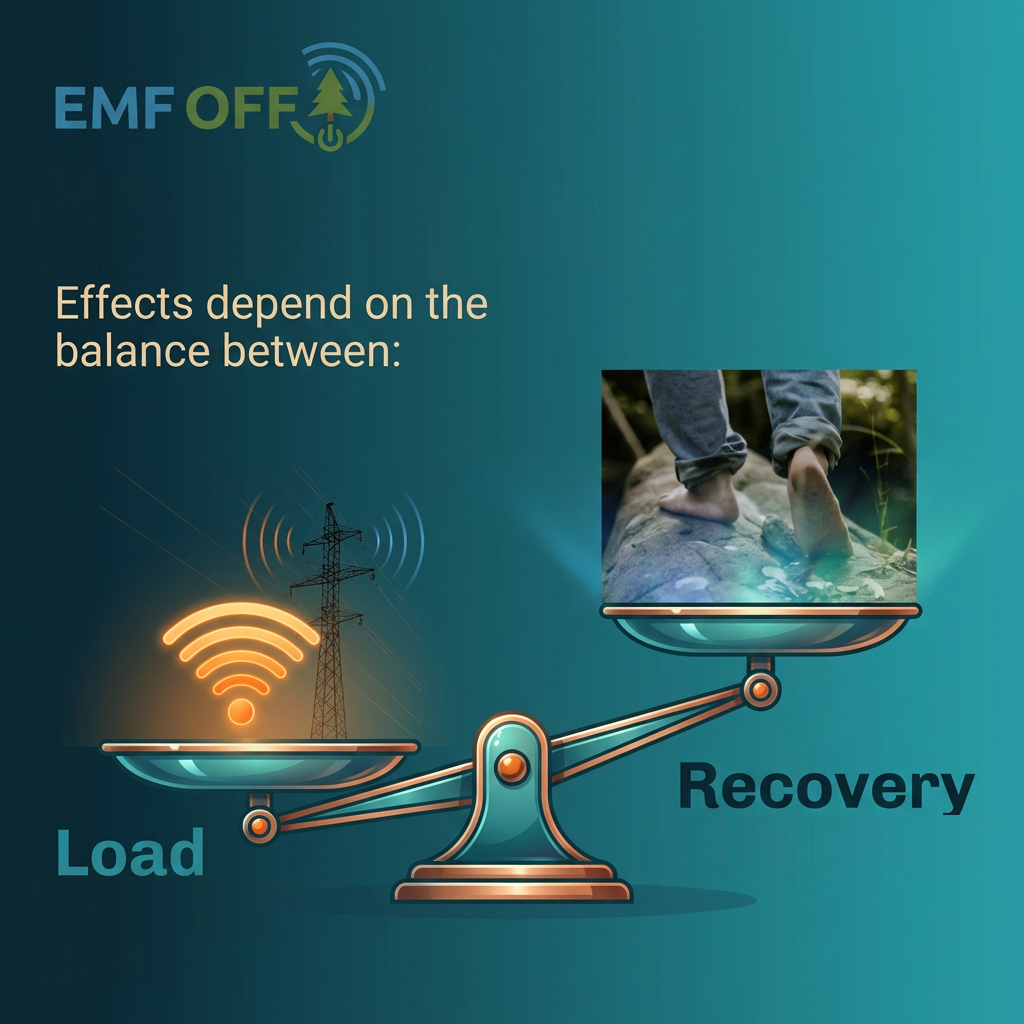
Health effects emerge from balance
Exposure interacts with recovery capacity.
When regulatory systems are robust, signals are absorbed without disruption.
When resilience is reduced, the same load may become a problem.
Lower thresholds don’t mean imaginary symptoms
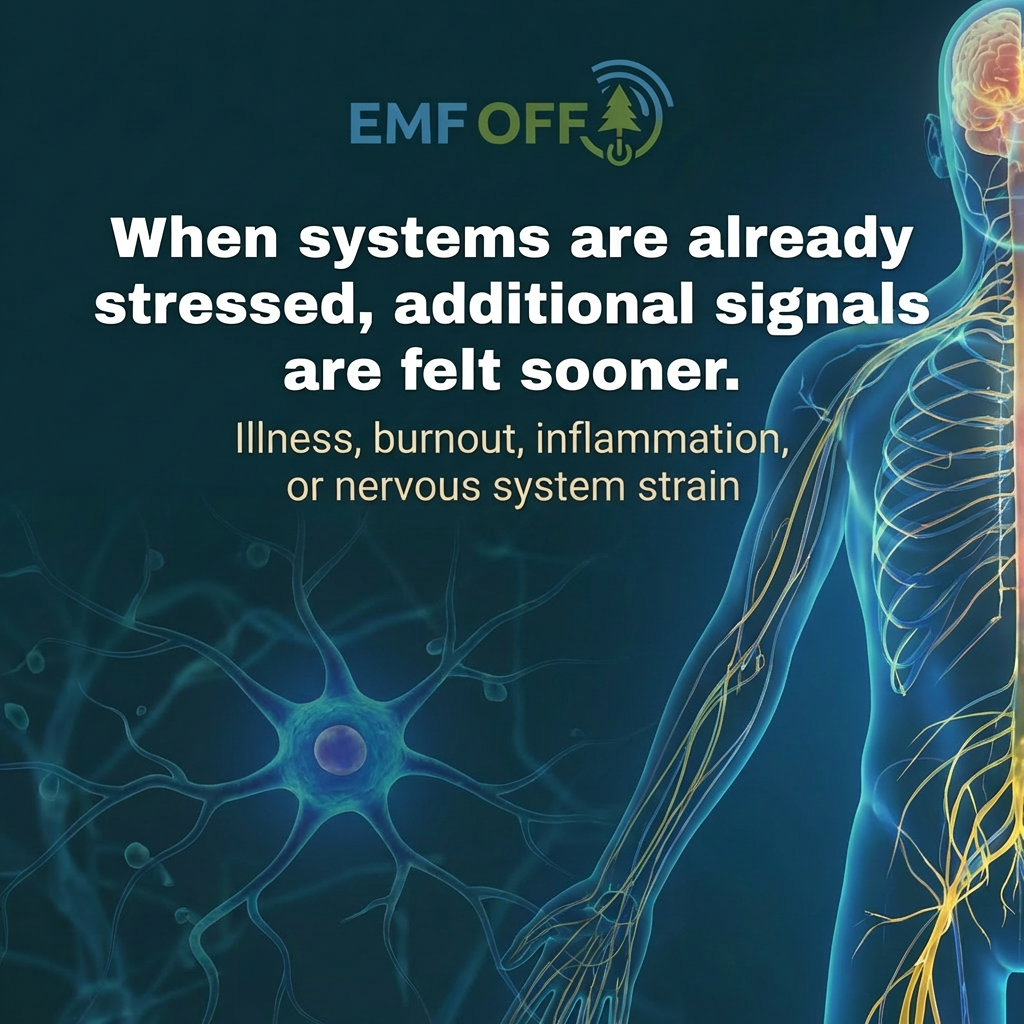
Chronic stress, inflammation, infection, sleep disruption, or neurological strain can narrow tolerance windows.
A stressed system reacts sooner — not because it is weak, but because it is closer to its limits.
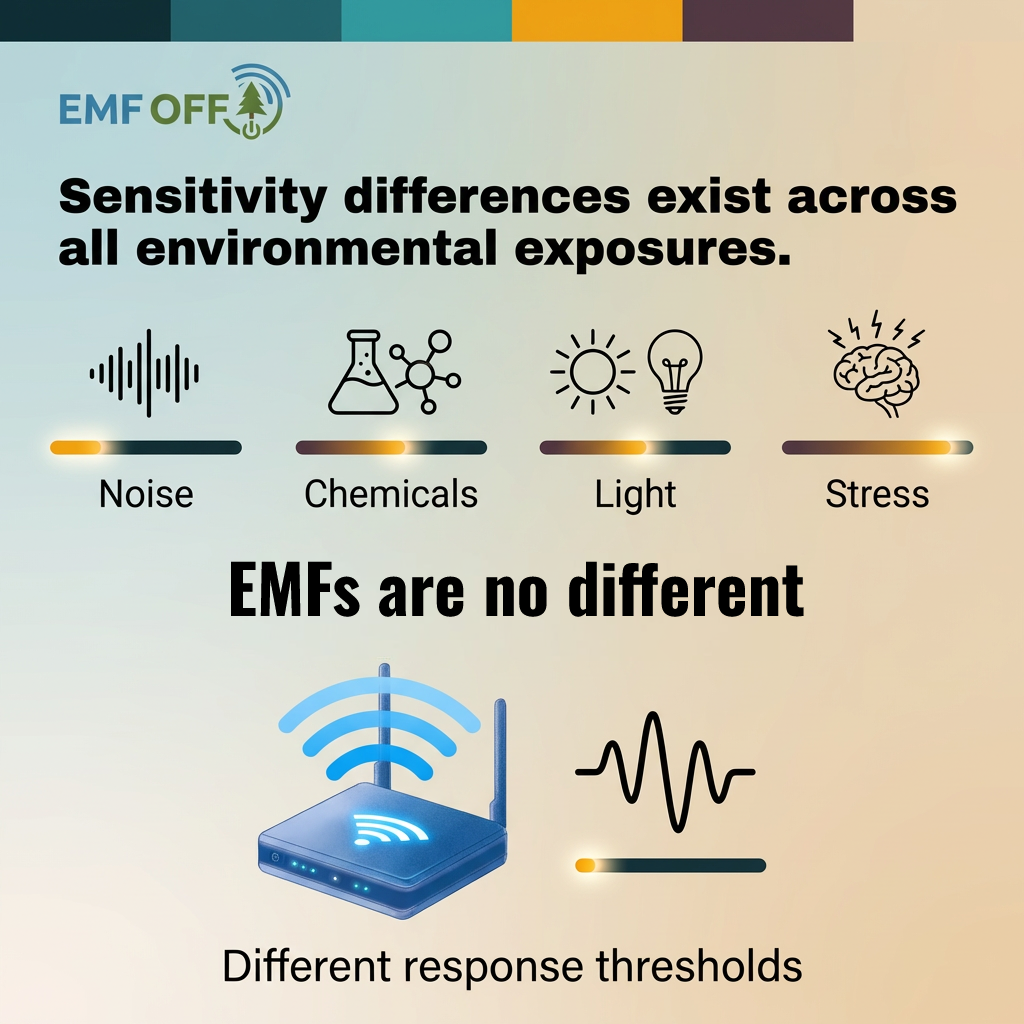
This pattern exists across environmental health.
Some people are more sensitive to noise.
Others to chemicals.
Others to light.
Differential thresholds are a standard feature of biology — EMFs would not be the one exposure exempt from variability.
Sensitivity can be diagnostic.
Early responders sometimes detect system stress before population averages shift. Like the canary in the coal mine, they warn of impending danger.
Dismissing variability may overlook the very signals that help us understand emerging effects.