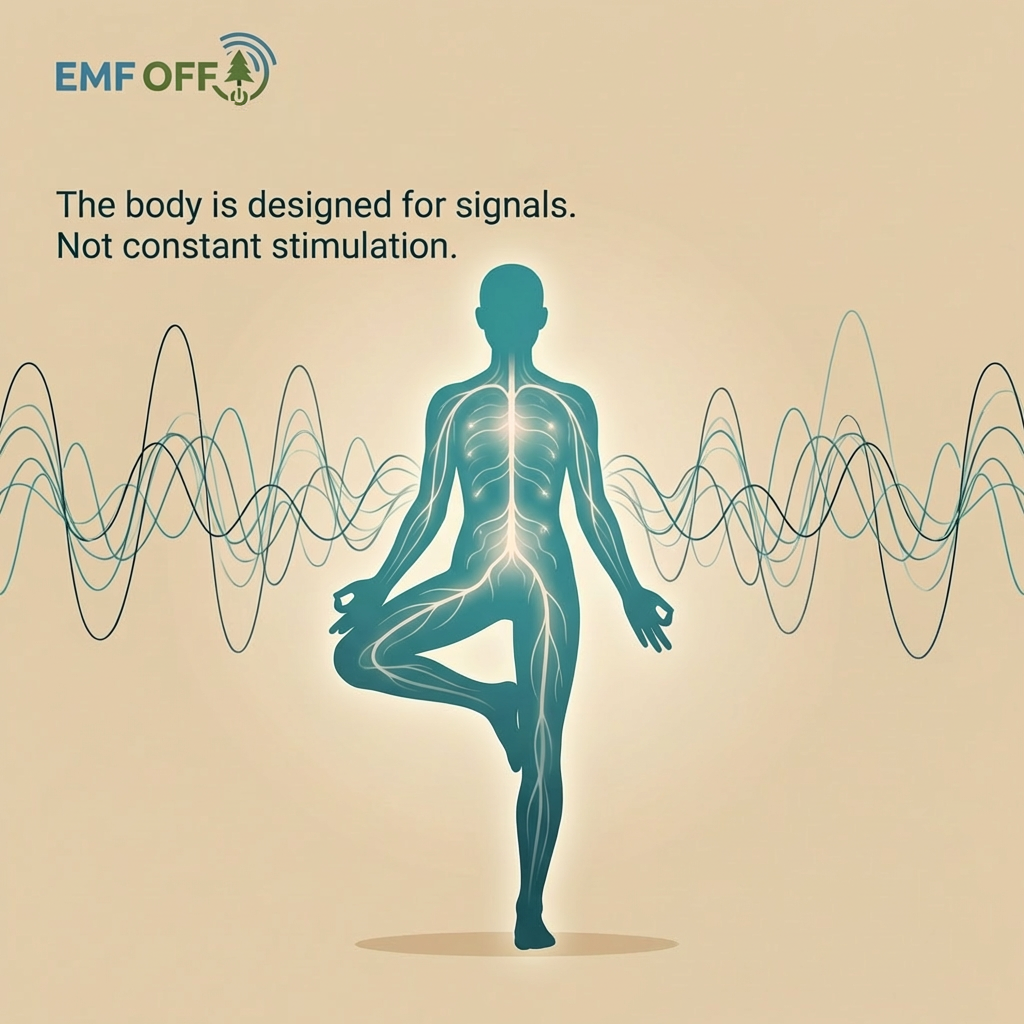
Regulation depends on rhythmCells evolved for pulses — fluctuations followed by recovery.
Constant input compresses that recovery time.
The question is not whether signals exist.
It is whether the system can reset between them.
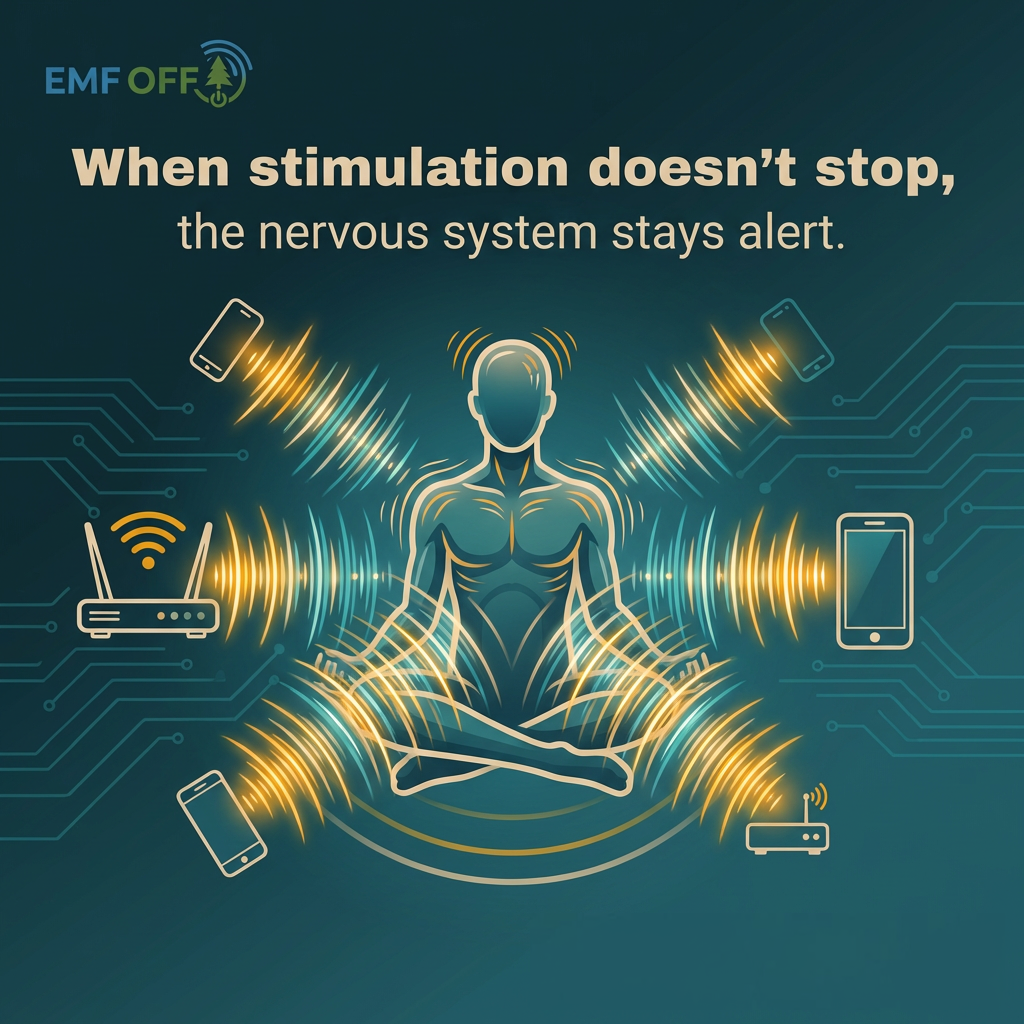
Alert becomes baselineThe nervous system is built to detect change.
When stimuli are persistent, vigilance can become the default state.
A system that never powers down eventually reallocates energy away from repair.
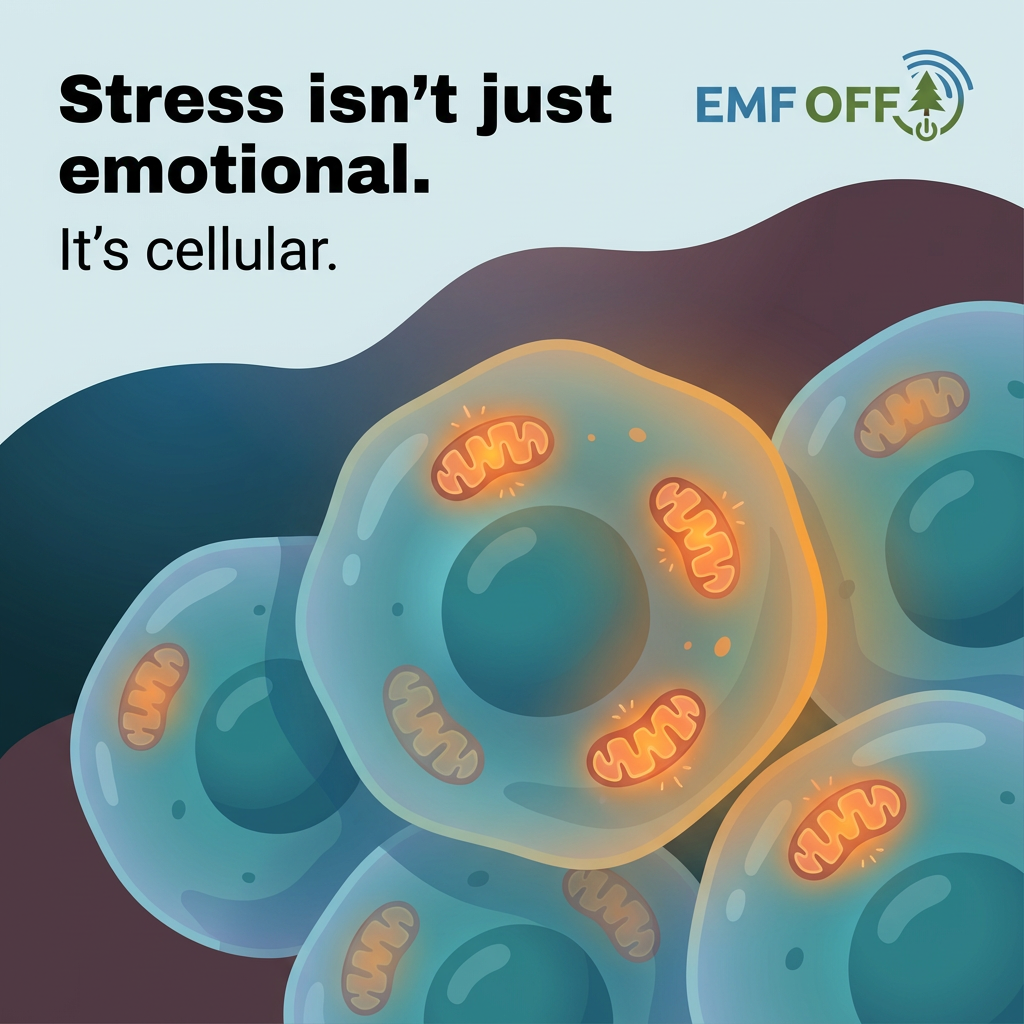
Stress is a biochemical conditionOxidative stress reflects imbalance between reactive species and antioxidant capacity.
It does not require fear or belief.
It is measurable physiology.
Emotion and biology can interact —
but cellular stress is not imaginary.
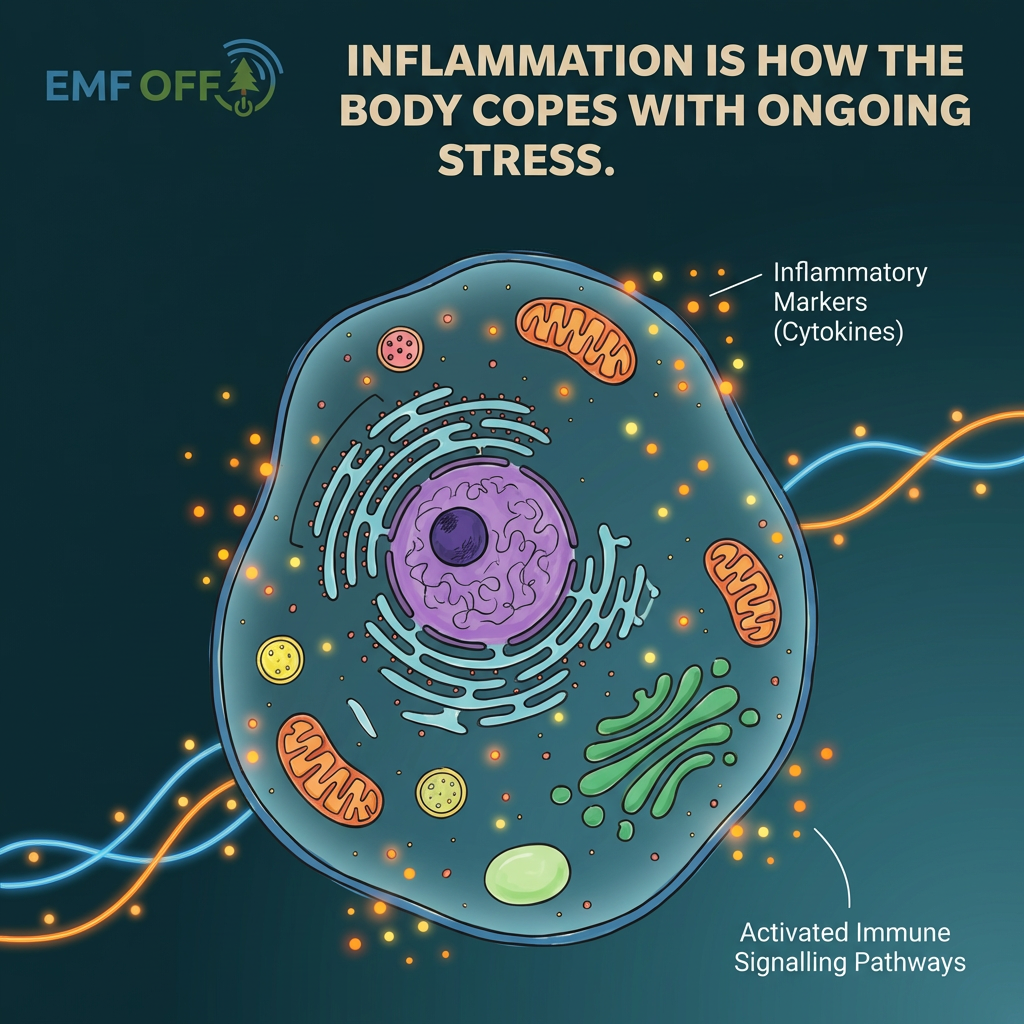
Inflammation is a response, not a defectCytokines coordinate repair.
Short-term activation protects.
When activation persists, signalling meant for recovery becomes background noise.
Chronic inflammation is often the system trying — and failing — to recalibrate.
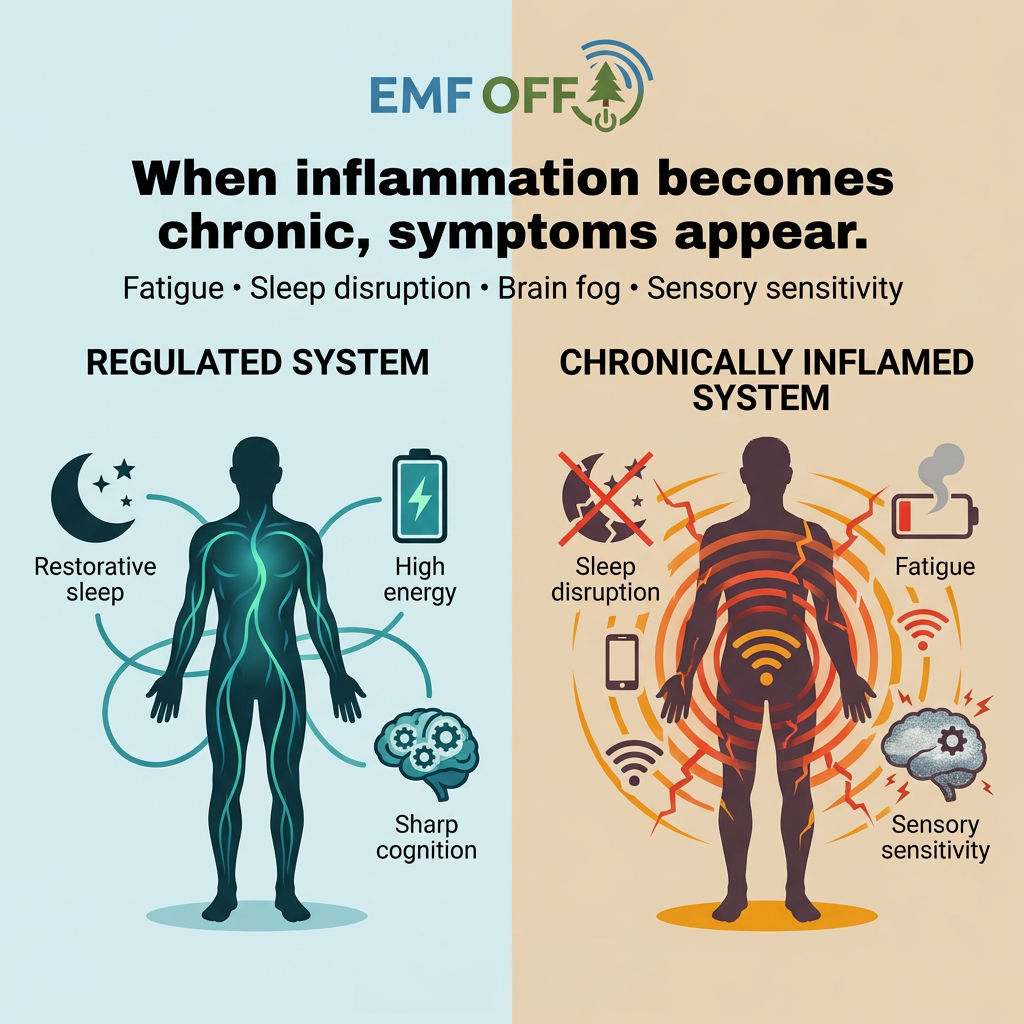
Function shifts before failure
Symptoms like fatigue, sleep disruption, and brain fog reflect regulation strain.
The system may still be operating —
but not efficiently.
This is dysregulation, not necessarily damage.
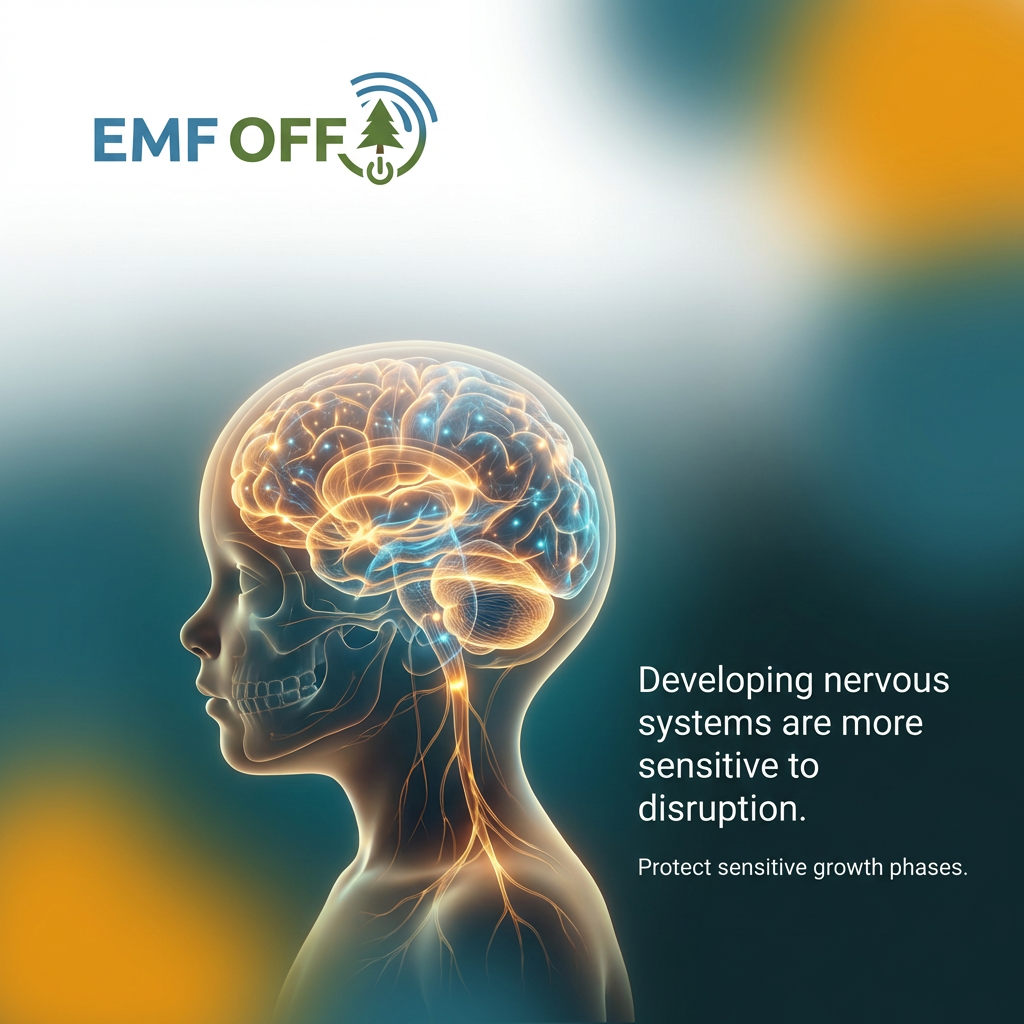
Timing changes impact
During development, signalling pathways guide growth and neural wiring.
Disruption during sensitive windows can have disproportionate effects.
The same exposure at 40 is not the same as exposure at 4.
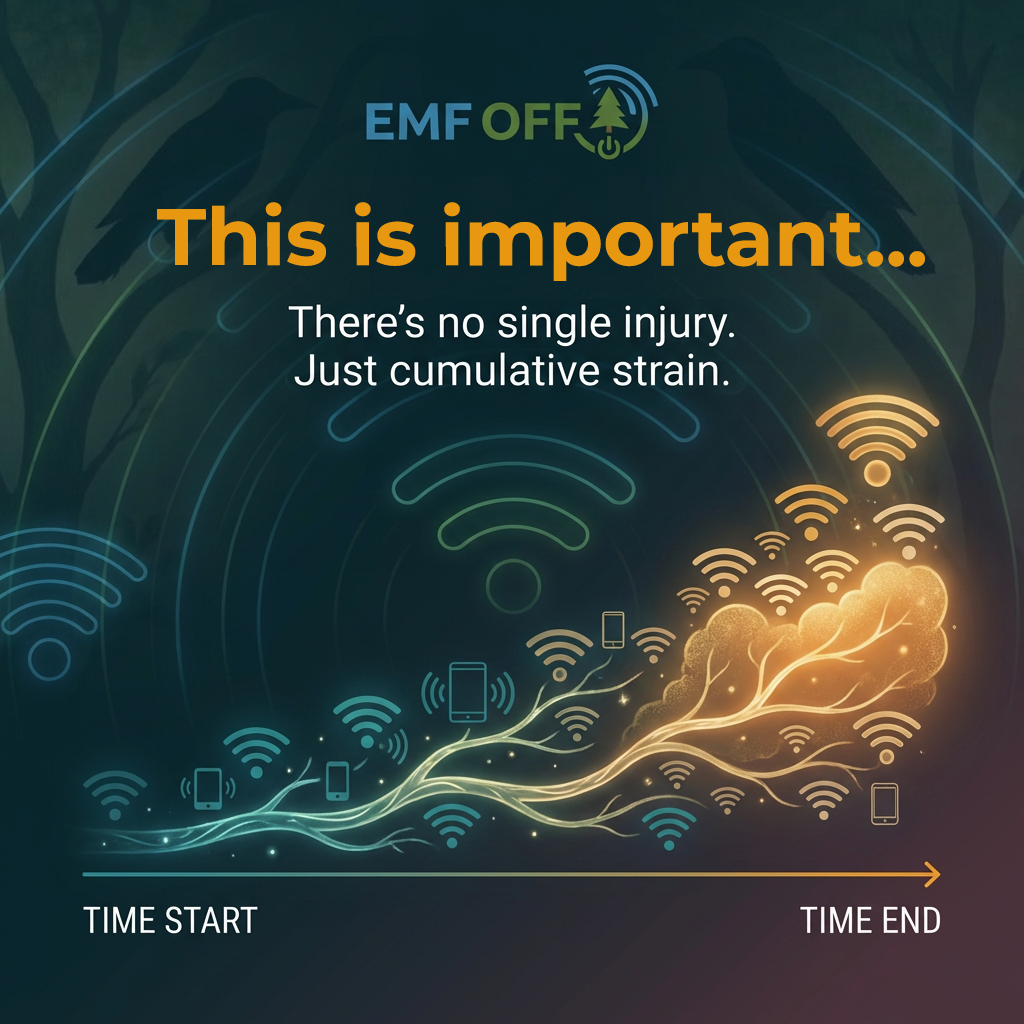
Load accumulates quietly
There may be no single event.
Instead:
Small stresses
Repeated
Without sufficient recovery
Over time, thresholds narrow.
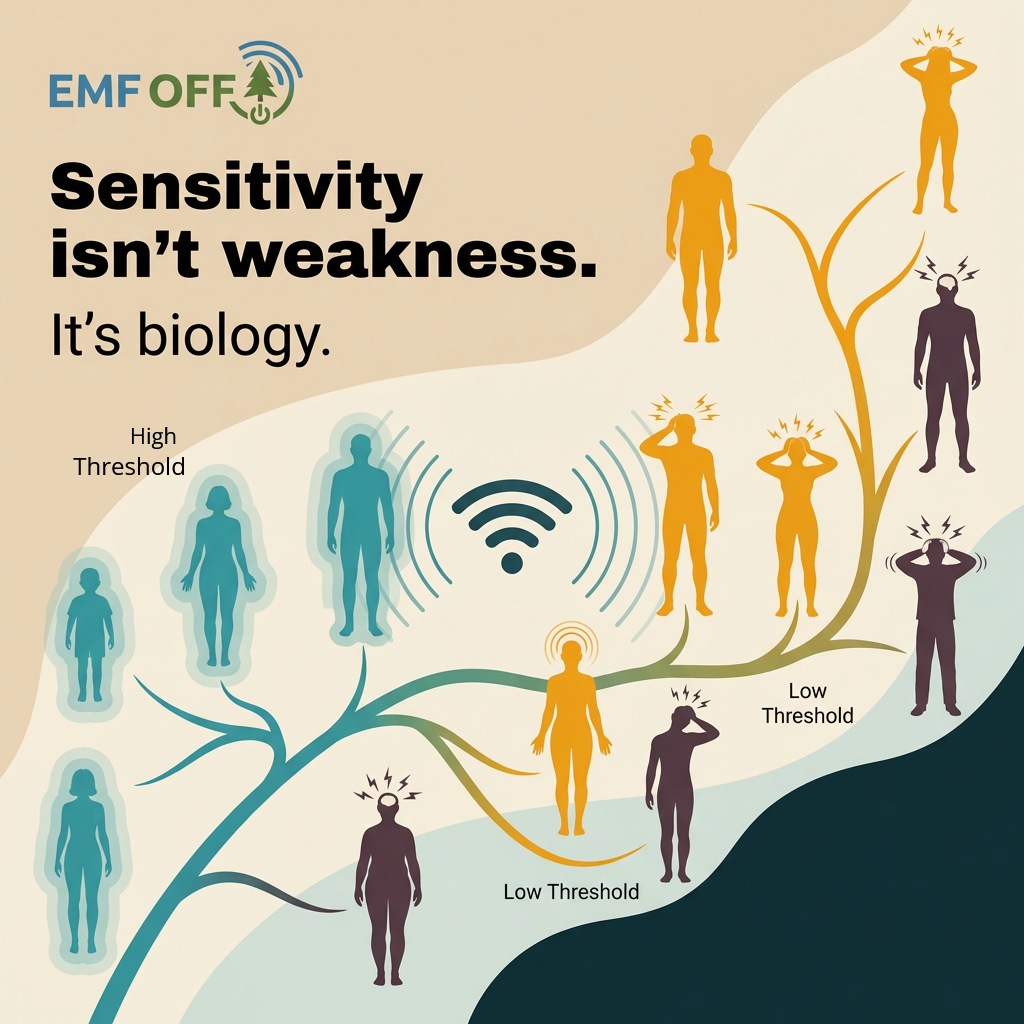
Thresholds are not character traits
People vary in detox capacity, antioxidant reserves, channel density, immune tone, and stress load.
Some compensate longer.
Some signal sooner.
Sensitivity reflects system dynamics —
not psychological fragility.