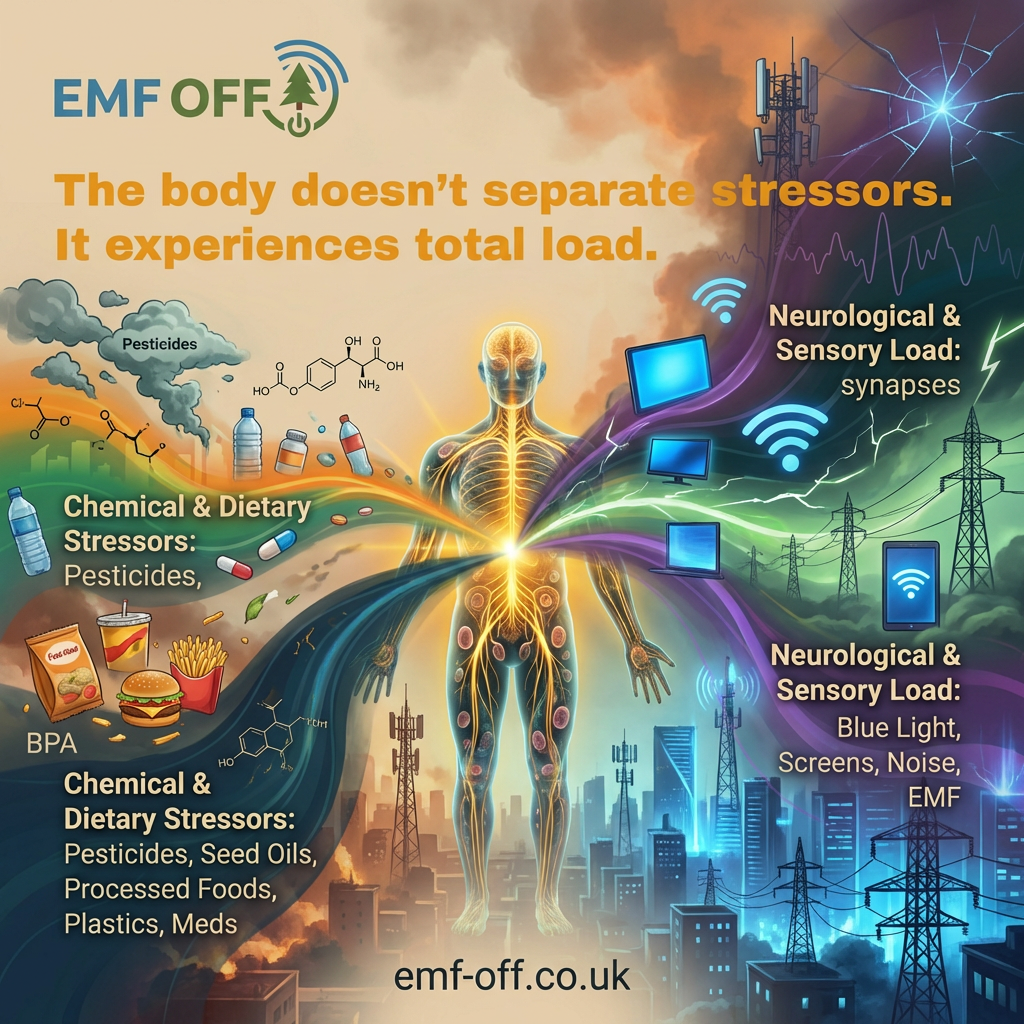
This series explores how modern environmental stressors accumulate rather than act in isolation. It examines the interaction between chemical, dietary, neurological, and electromagnetic pressures — and challenges the regulatory habit of isolating one mechanism at a time.
The central question is not whether a single exposure exceeds a narrow safety threshold, but how combined loads alter resilience, recovery, and long-term system stability.
Single Causes Are Rare in Complex Systems Biological systems fail cumulatively, not theatrically.
If one stressor were operating in isolation, most organisms could compensate.
It is the stacking — chemical, metabolic, neurological, electromagnetic — that pushes regulation toward overload.
Risk emerges from interaction, not from a single headline exposure.
The Body Registers Burden, Not Categories Cells do not separate “chemical” from “electrical” from “sensory.”
They integrate signals into inflammatory tone, oxidative pressure, hormonal shifts, and neural activation.
Regulatory silos may divide exposures neatly.
Biology does not.
What Many Are Carrying Simultaneously Financial stress, processed diets, environmental toxins, chronic screen exposure, persistent wireless signalling, microplastics, glyphosate, seed oils, PFAs, the list is long.
Each may be defended individually under narrow assessment models.
Together they create a sustained allostatic load.
Modern life is layered stress architecture.
Food as a Biological Cost Center Industrial processing changes not just calories, but signalling: additives, oxidised oils, chemical residues, endocrine disruptors.
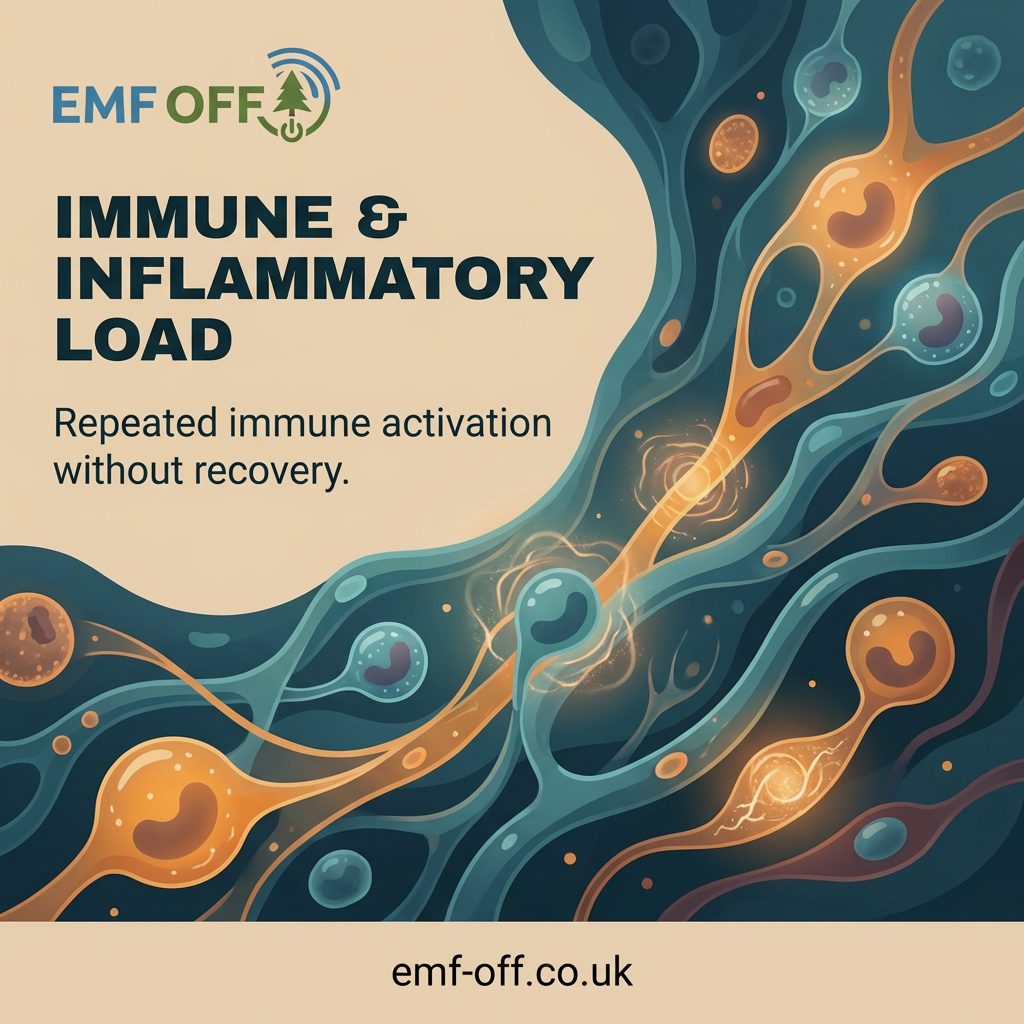
Metabolic strain and inflammatory priming alter baseline resilience.
When underlying physiology is already taxed, additional stressors land harder.
Energy intake is not the same as biological support.
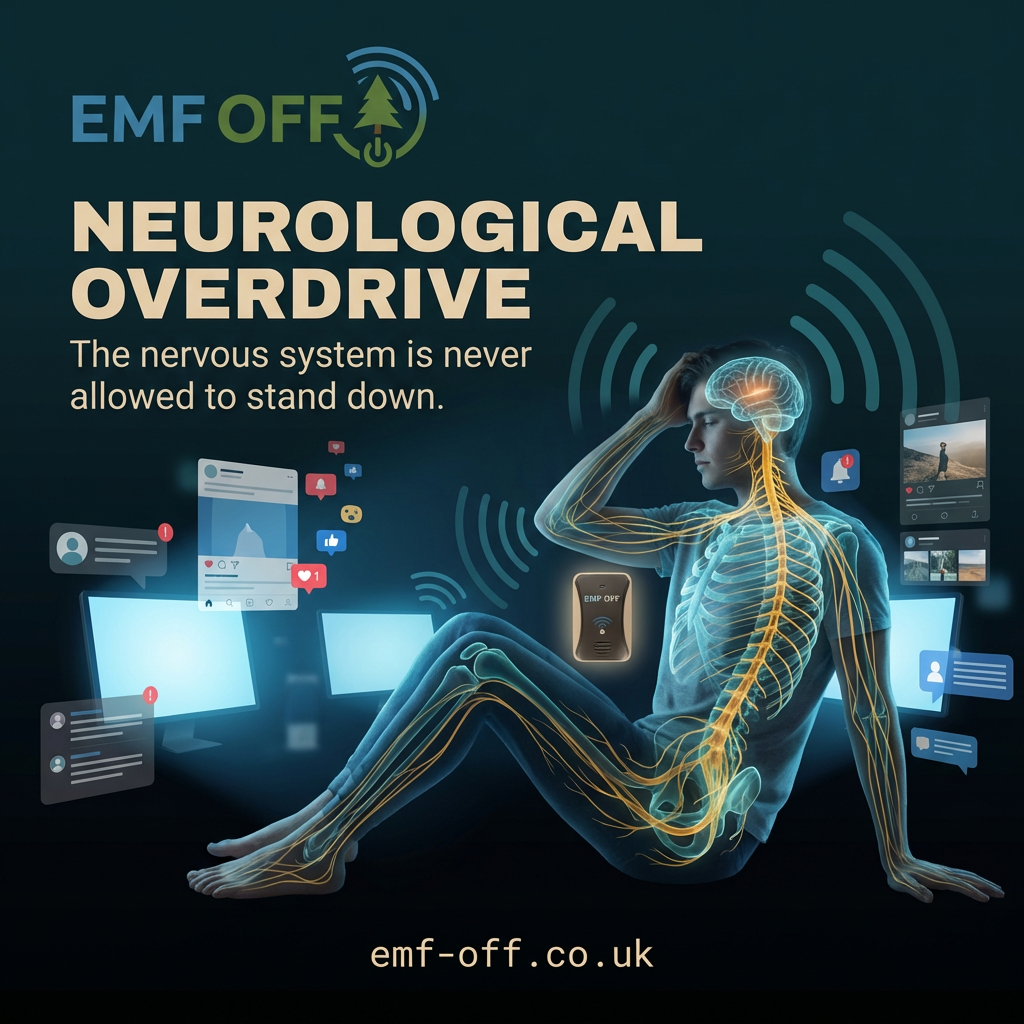
When the Nervous System Cannot Downshift Continuous alerts, blue light, cognitive demand and ambient wireless signalling sustain sympathetic activation.
Sleep fragmentation and reduced parasympathetic recovery limit repair cycles.
Chronic activation alters immune tone and hormonal regulation.
Recovery is as biologically necessary as stimulation.
Low-grade activation may not trigger acute alarm, yet it shifts long-term equilibrium.
Regulatory models focused on acute injury often overlook chronic modulation.
Absence of crisis does not equal absence of strain.
EMFs as Load Multipliers Electromagnetic exposures are typically assessed only for thermal effects.
However, biological systems rely on finely tuned electrochemical gradients for signalling and repair.
Evidence of non-thermal modulation is frequently discounted because it falls outside existing regulatory frameworks.
Exclusion from a model does not equal exclusion from biology.
Why Some Systems Tip Before Others Genetic variability, developmental windows, cumulative toxic load, and recovery capacity differ between individuals.
Those closer to threshold will manifest dysfunction first.
This does not invalidate the exposure.
It reveals differential resilience.
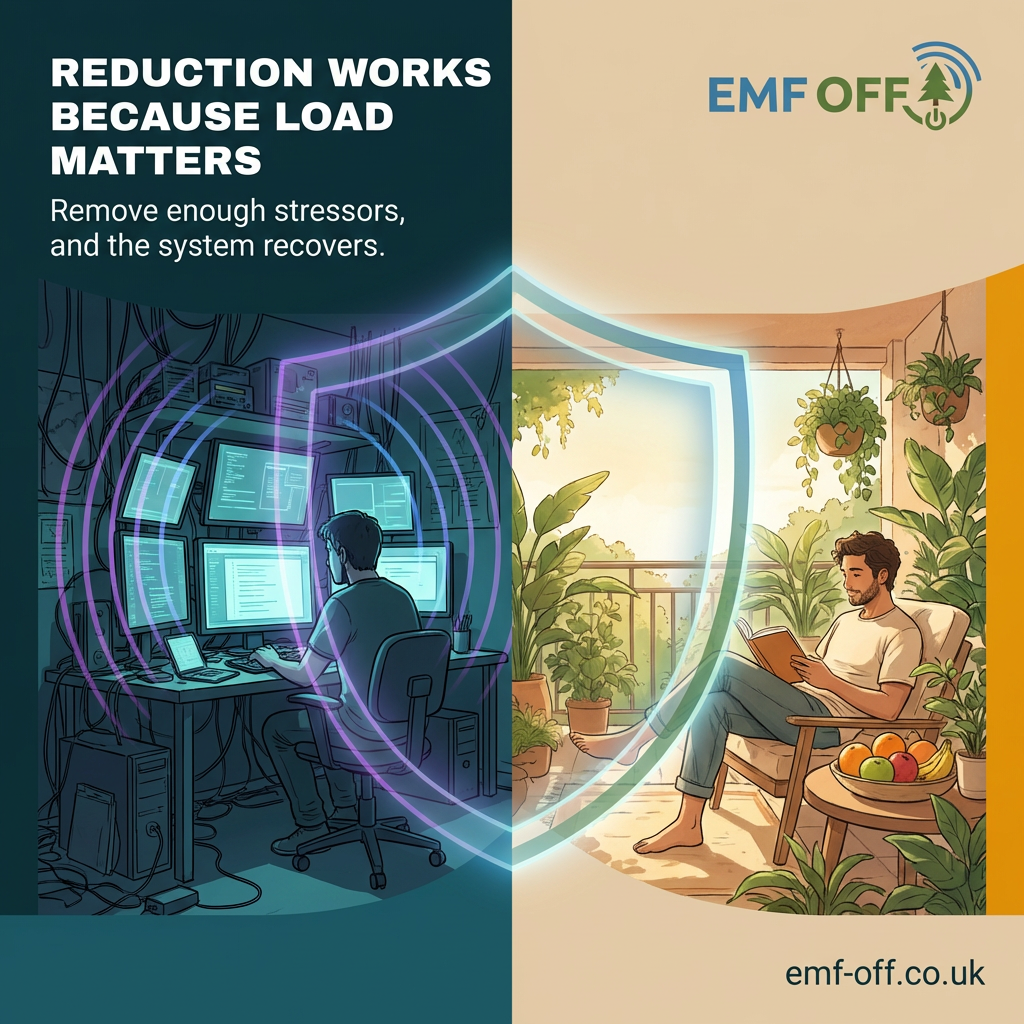
Reduction Demonstrates Causation When sufficient stressors are removed, physiological markers and subjective wellbeing often improve.
This pattern challenges the assumption that each exposure is benign in isolation.
If load reduction restores function, the load was relevant.