Across countries, cultures, and demographics, the same sequence appears: symptoms emerge under high exposure, improve when exposure drops, and are dismissed when they do not fit regulatory definitions of harm.
This set traces that pattern — from lived experience, to historical precedent, to institutional playbooks used to delay accountability.
The central issue is not whether regulations currently recognise these harms. It is whether regulatory narrowing is being used to exclude biologically meaningful effects because acknowledging them would disrupt powerful economic interests
A Recurring Exposure Pattern Across age groups and environments, people report similar clusters: exhaustion, anxiety, headaches, sleep disruption, agitation, cognitive fatigue.
When exposure drops — at home, outdoors, or in lower-signal environments — relief is frequently described.
Consistency across contexts is not coincidence; it is a signal.
Symptom Shift Following Signal Reduction Reports of improvement following exposure reduction appear repeatedly in clinical anecdotes, occupational accounts, and self-tracked case histories.
This does not require mass hysteria or suggestion to explain. It reflects a simple variable change: intensity and proximity of RF emissions.
Remove the stimulus, and biological stress often subsides.
A Global Reporting Convergence Similar narratives emerge in Europe, North America, Asia, and Australia — without coordination and often without awareness of one another.
When geographically dispersed populations describe the same exposure–symptom–relief cycle, the pattern deserves investigation, not dismissal.
Distributed testimony strengthens, rather than weakens, the evidentiary picture.
Sleep as a Sentinel Indicator Sleep architecture is exquisitely sensitive to environmental stressors, including light, noise, and electromagnetic signalling.
Early disturbance in sleep quality is often the first measurable sign that regulatory thresholds are misaligned with biological thresholds.
If rest deteriorates under exposure and improves without it, the body is communicating clearly.
Energy Restoration After Load Reduction Chronic exposure can contribute to sustained autonomic activation and oxidative stress markers in experimental settings.
When that load decreases, individuals frequently report improved vitality and reduced fatigue.
Energy returning after removal of a stressor is physiologically coherent, not mysterious.
Neurological Irritation and Signal Density Tinnitus, inner restlessness, and cognitive strain are among the most commonly described effects in high-exposure environments.
These symptoms align with emerging research on calcium channel activation, oxidative stress, and neuroinflammatory pathways under non-thermal RF exposure.
Regulatory silence does not invalidate neurobiological response.
From Anecdote to Pattern Recognition One case is anecdote. Thousands forming similar trajectories across regions constitute a pattern demanding structured inquiry.
Dismissing aggregated lived experience because it is not yet mechanistically finalised is a methodological evasion.
Patterns precede paradigm shifts.
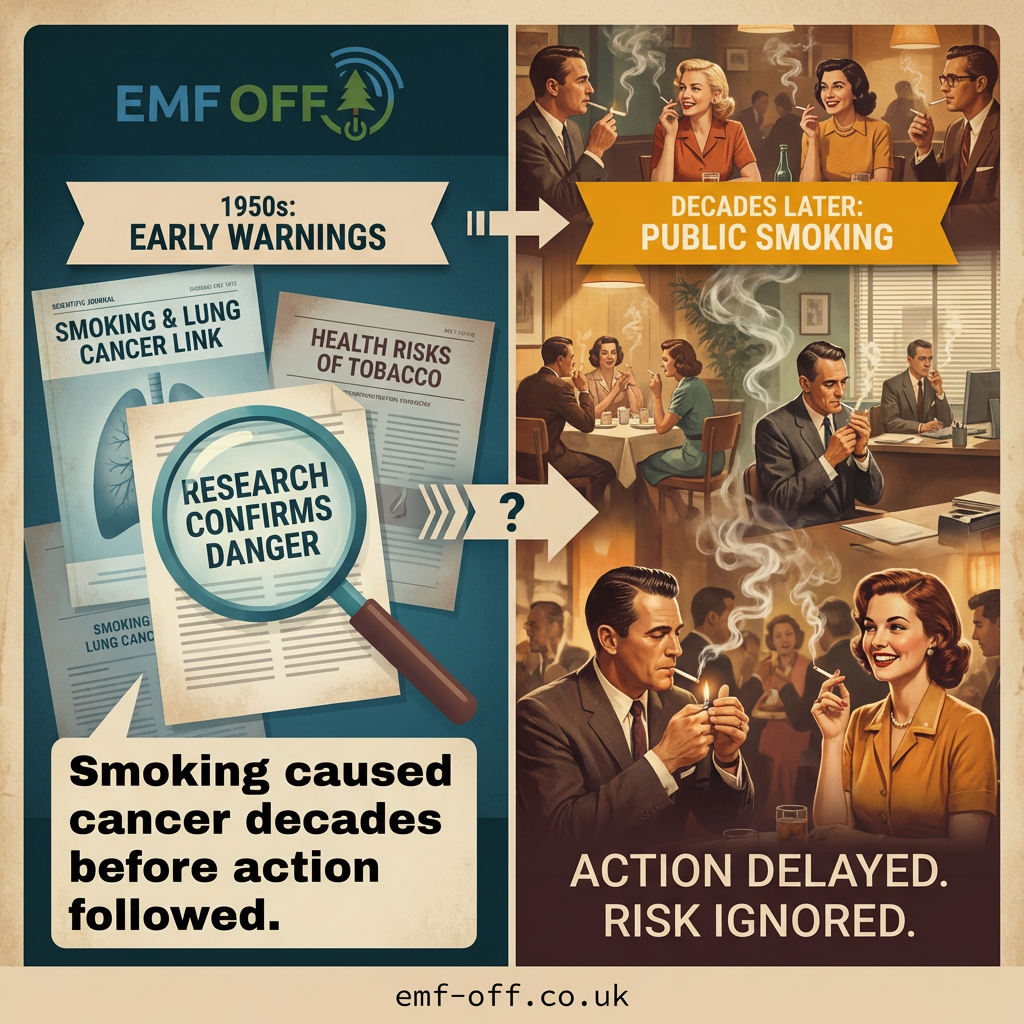
Historical Delay as Institutional Strategy Industries facing existential liability have historically funded doubt, emphasised uncertainty, and postponed regulatory action.
The mechanism is familiar: challenge methodology, amplify counter-studies, call for more time.
Delay protects revenue streams while exposure continues.
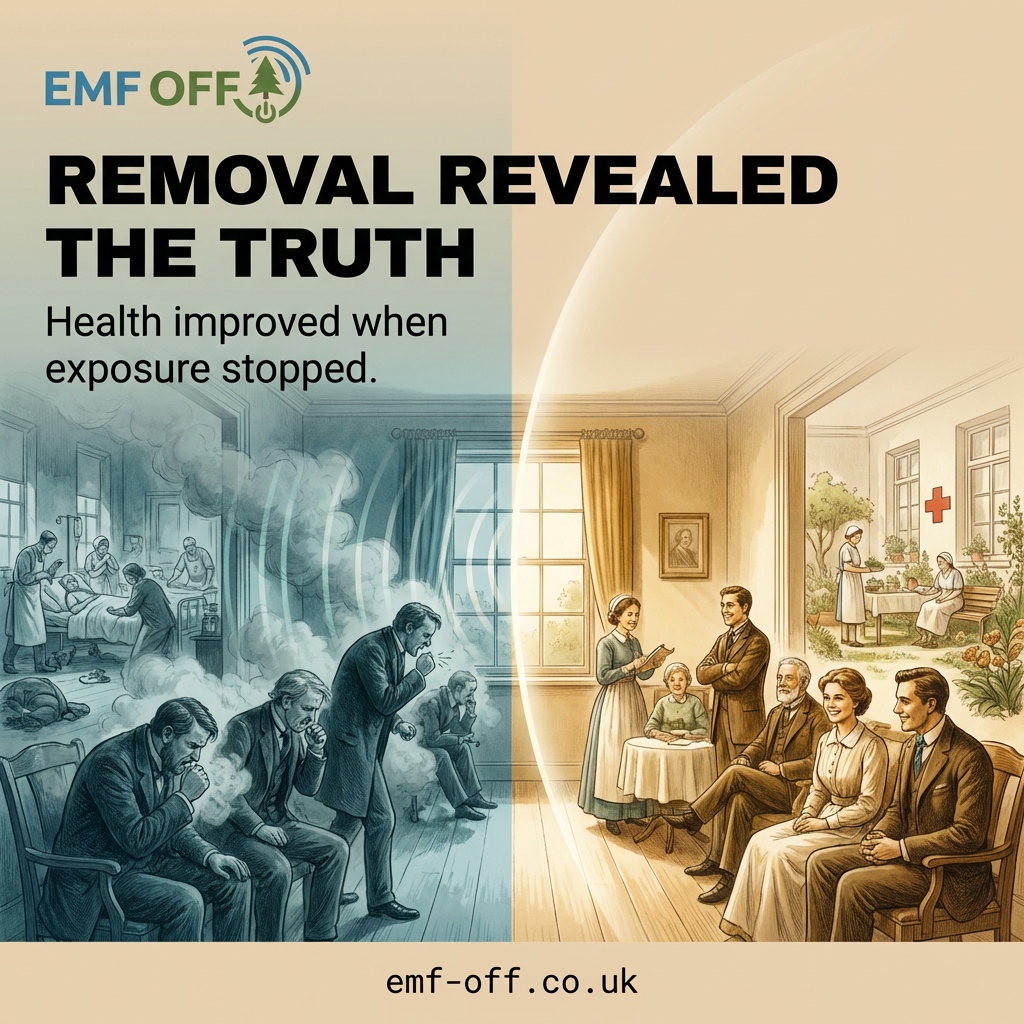
Health Recovery Following Exposure Removal When harmful exposures are curtailed — whether asbestos, lead, or tobacco smoke — population health improves measurably.
Biology does not require regulatory permission to respond.
Improvement after removal is among the strongest causal indicators available.
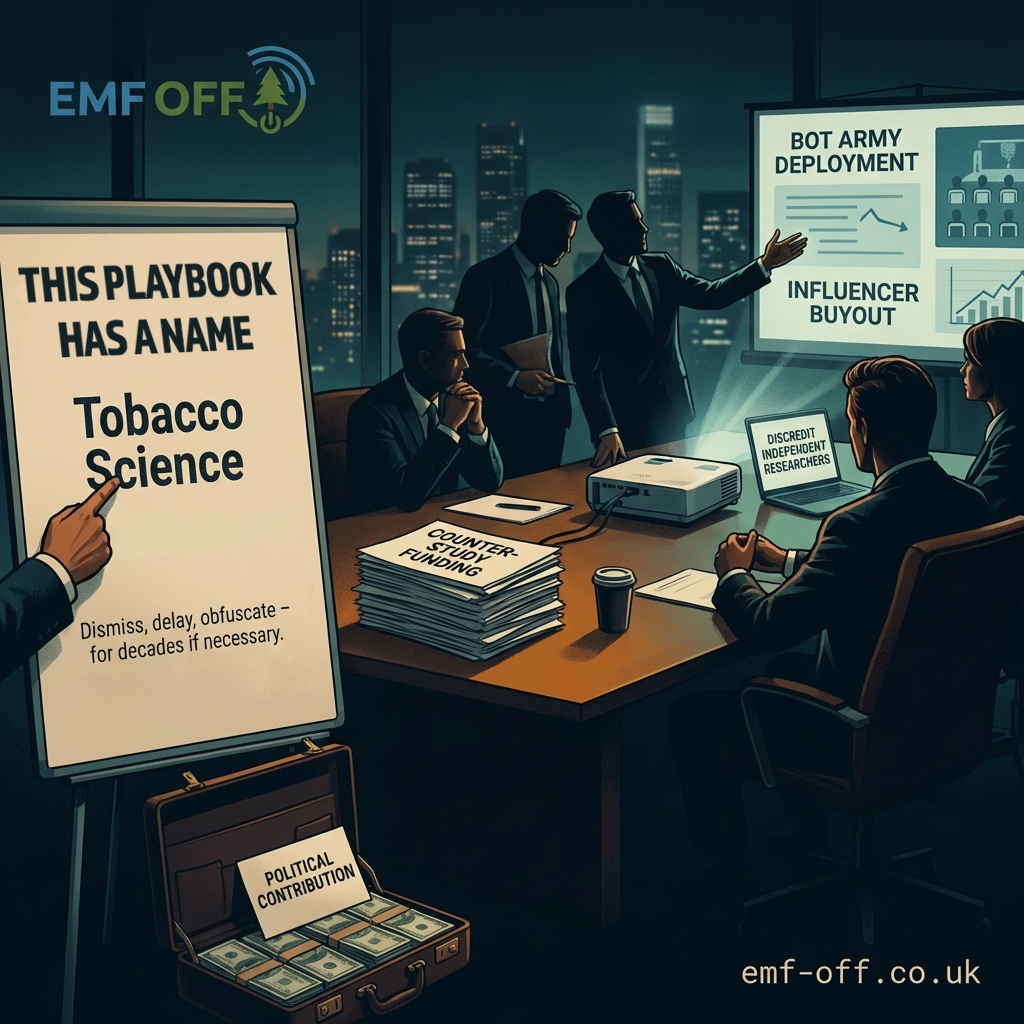
The Codified Playbook of Obfuscation Funding counter-research, influencing policymakers, shaping media narratives, and marginalising independent scientists are documented tactics in prior public health controversies.
When similar structural patterns appear around RF policy, scrutiny is rational, not conspiratorial.
Regulatory narrowing functions as economic insulation.
Naming the Pattern to Break It Recognising coordinated delay mechanisms is not alarmism; it is institutional literacy.
When evidence accumulates yet standards remain static, the question shifts from biology to governance.
Accountability begins by identifying who benefits from inaction.