Devices in a modern wireless environment
Slides - part twenty one
Practical Everyday Reduction
Regulatory models focus on thermal thresholds — what heats tissue measurably. They do not meaningfully address chronic signalling effects, cumulative modulation, or proximity-based load on electrochemical systems.

That narrowing of scope protects infrastructure and profit models that depend on constant transmission. It does not necessarily protect biological resilience.

These slides translate that reality into practical action. Not fear. Not extremism. Just intelligent load reduction in a system that was never designed for uninterrupted broadcast.
Some people get sick in modern wireless environments. And no one knows how to talk about it properly.
Begin With the Obvious Levers Systemic change is slow — especially when regulatory frameworks protect commercial continuity.

Personal behaviour, however, is immediate.

You do not need institutional permission to reduce avoidable exposure.

Precaution begins where control is highest: your own environment.
Some people get sick in modern wireless environments. And no one knows how to talk about it properly.
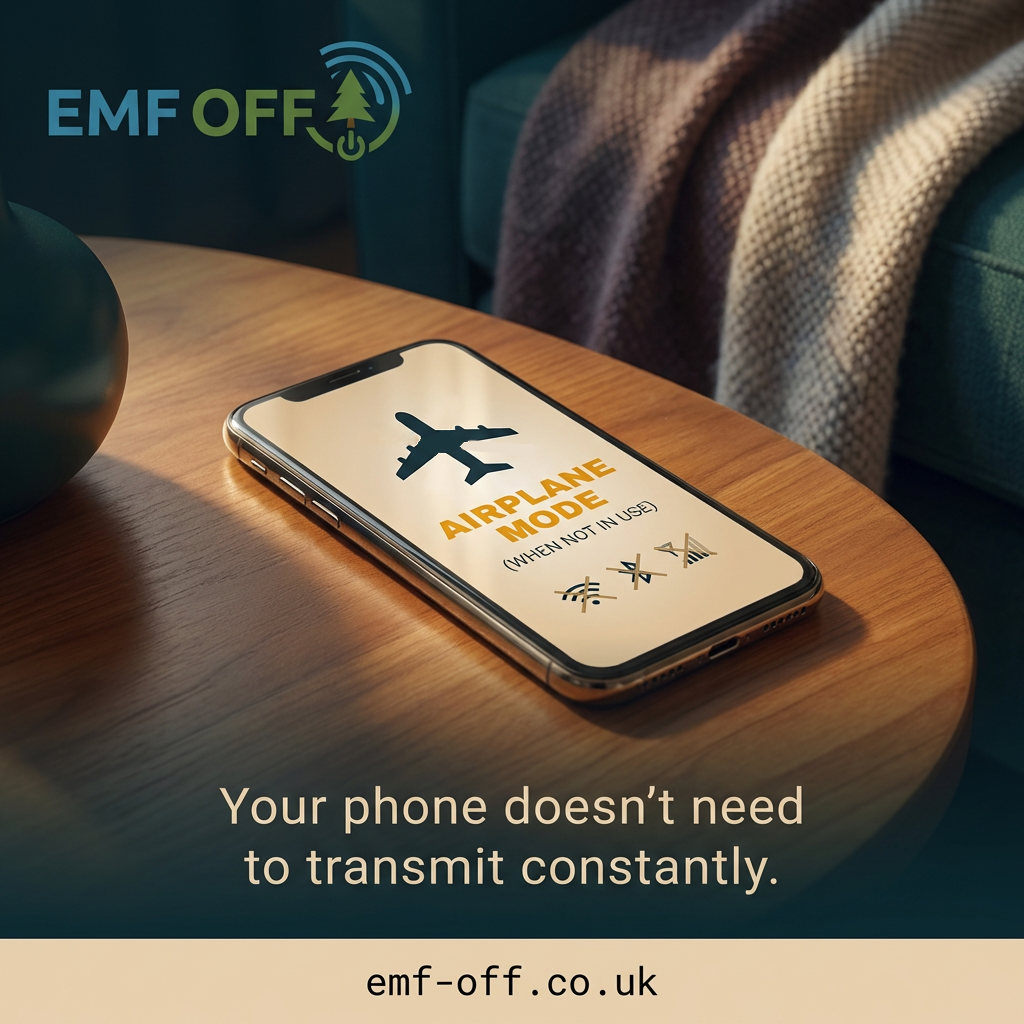
Idle Transmission Is Still Transmission Devices continuously handshake with networks, update, ping towers and maintain signal readiness.

Regulatory limits measure peak heating, not constant signalling density.

Airplane mode interrupts that stream at the source.

If data is not needed, transmission is optional.
Some people get sick in modern wireless environments. And no one knows how to talk about it properly.
Proximity Multiplies Biological Load Exposure intensity decreases rapidly with distance.

Holding a transmitting device directly against the head concentrates energy in the most electrically active tissue in the body.

Speaker mode or wired audio increases spatial separation.

Distance is not symbolic — it is physical risk reduction.
Some people get sick in modern wireless environments. And no one knows how to talk about it properly.
Not All “Wireless” Is Equal Bluetooth operates at lower power than cellular transmission — but it is still pulsed radiofrequency radiation in direct proximity to neural tissue.

Wired connections eliminate active transmission entirely.

Convenience has been normalised; biological neutrality has not been demonstrated.

Elimination reduces more than optimisation.
Some people get sick in modern wireless environments. And no one knows how to talk about it properly.
The Body Is Not a Storage Shelf Carrying an active phone against reproductive organs or major blood vessels creates continuous near-field exposure.

Safety testing is based on short-term compliance metrics, not lifelong daily carriage.

Real-world behaviour exceeds laboratory assumptions.

Move the device. Lower the load.
Some people get sick in modern wireless environments. And no one knows how to talk about it properly.
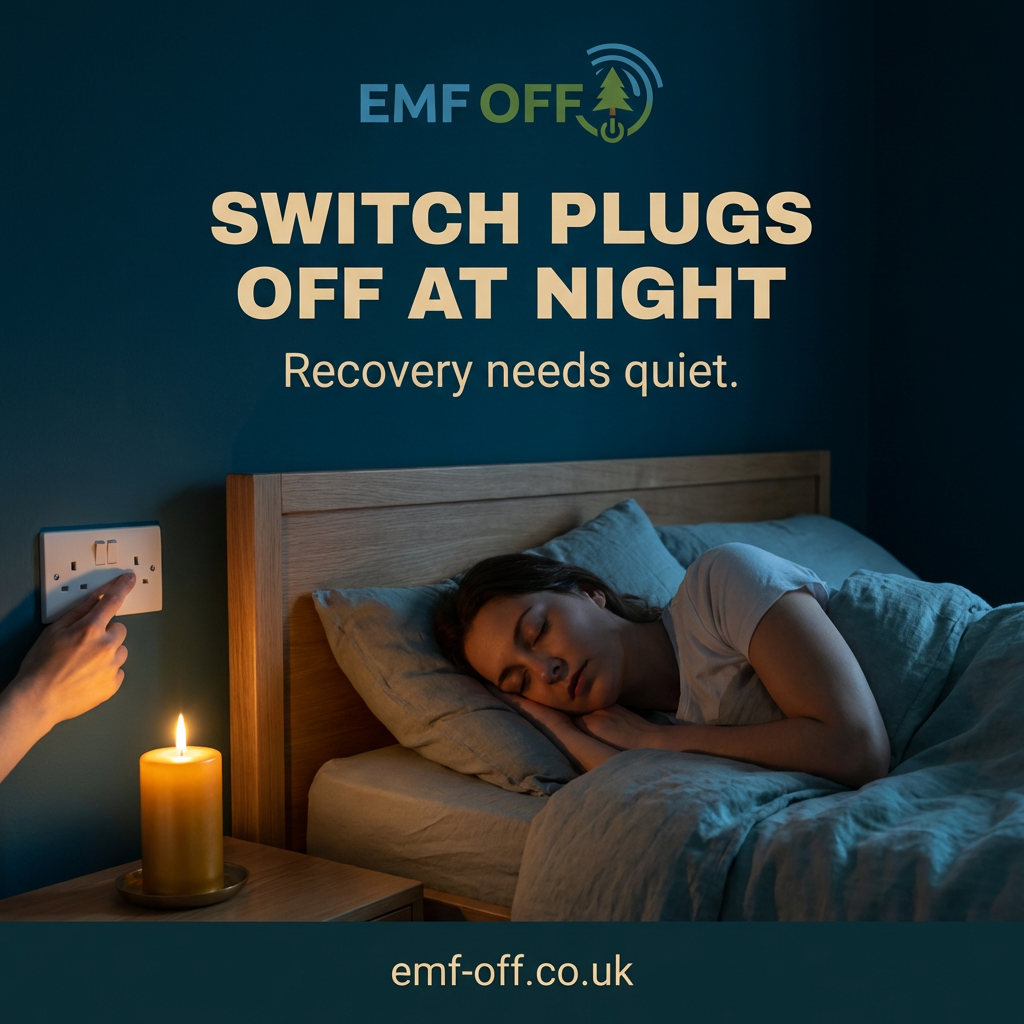
Night Is a Biological Repair Window Deep sleep regulates inflammation, metabolic balance, lymphatic clearance and neural recalibration.

Constant ambient transmission fragments that recovery window.

Switching routers and wireless devices off restores an uninterrupted signalling environment.

Recovery requires genuine quiet — not reduced brightness.
Some people get sick in modern wireless environments. And no one knows how to talk about it properly.
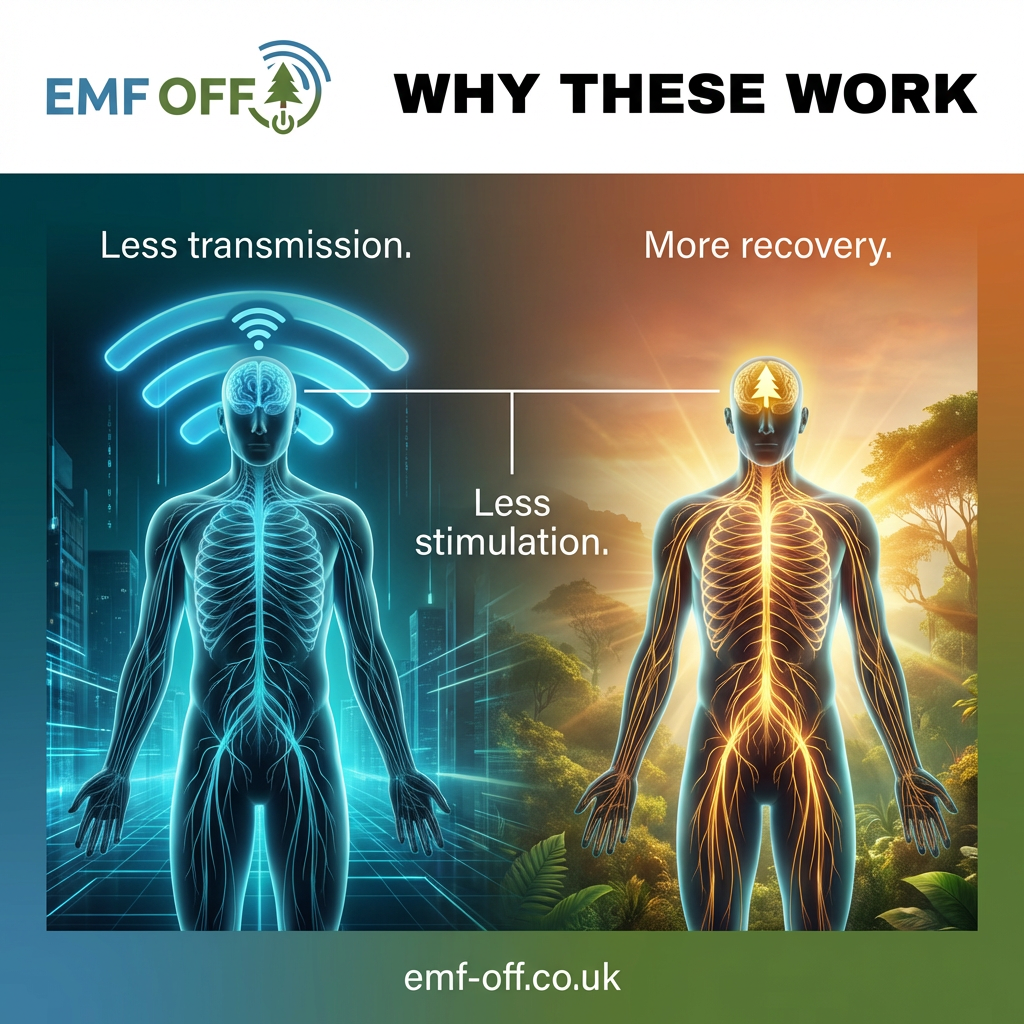
Reduced Signal, Increased Recovery Capacity When transmission load drops, autonomic tone shifts toward parasympathetic dominance.

Less background stimulation allows endocrine and immune processes to recalibrate.

Regulatory language may exclude non-thermal effects — biology does not.

Lower stimulation supports higher repair efficiency.
Some people get sick in modern wireless environments. And no one knows how to talk about it properly.
Outcomes Are Often Noticeable Many people report deeper sleep, reduced agitation, and improved clarity when exposure is reduced.

These experiences are frequently dismissed because they fall outside narrow compliance models.

Anecdote is not proof — but consistency across reports deserves investigation, not ridicule.

Experience can be an early signal of regulatory blind spots.
Some people get sick in modern wireless environments. And no one knows how to talk about it properly.
Incremental Reduction Still Counts This is not about abandoning modern life.

It is about lowering unnecessary, cumulative signalling load wherever practical.

Regulatory inertia reflects economic priorities as much as scientific debate.

Consistency in small reductions compounds over time.