This series follows the convergence point of modern stressors: the nervous system.
Every exposure — chemical, sensory, electromagnetic — is ultimately processed through neural signalling and immune coordination. When regulatory models reduce risk to narrow thermal metrics, they ignore how chronic modulation affects repair, sleep, and systemic resilience.
The question is not whether one exposure exceeds an outdated threshold, but whether constant stimulation is preventing biological recovery.
All Pathways Converge on Regulation Chemical residues, inflammatory signals, sensory overload, wireless radiation — they do not remain separate streams.
They are integrated through neural networks and immune signalling cascades.
The nervous system becomes the clearing house for total exposure.
When multiple stressors accumulate, regulation itself becomes the strain.
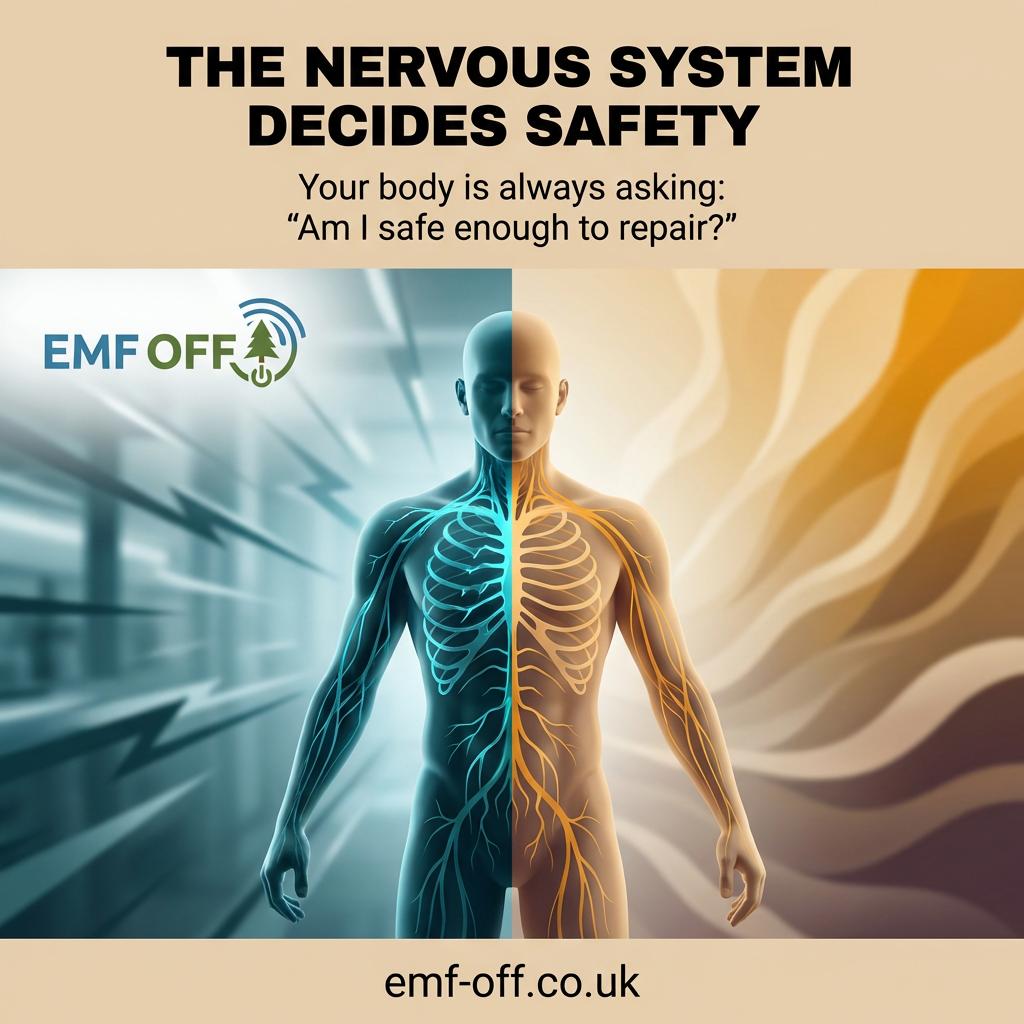
Safety Is a Biological Calculation The autonomic nervous system continuously evaluates the environment for threat or stability.
Repair, detoxification, cellular maintenance and deep sleep require a signal of safety.
Persistent background stimulation alters that signal.
A body that does not register safety will not prioritise repair.
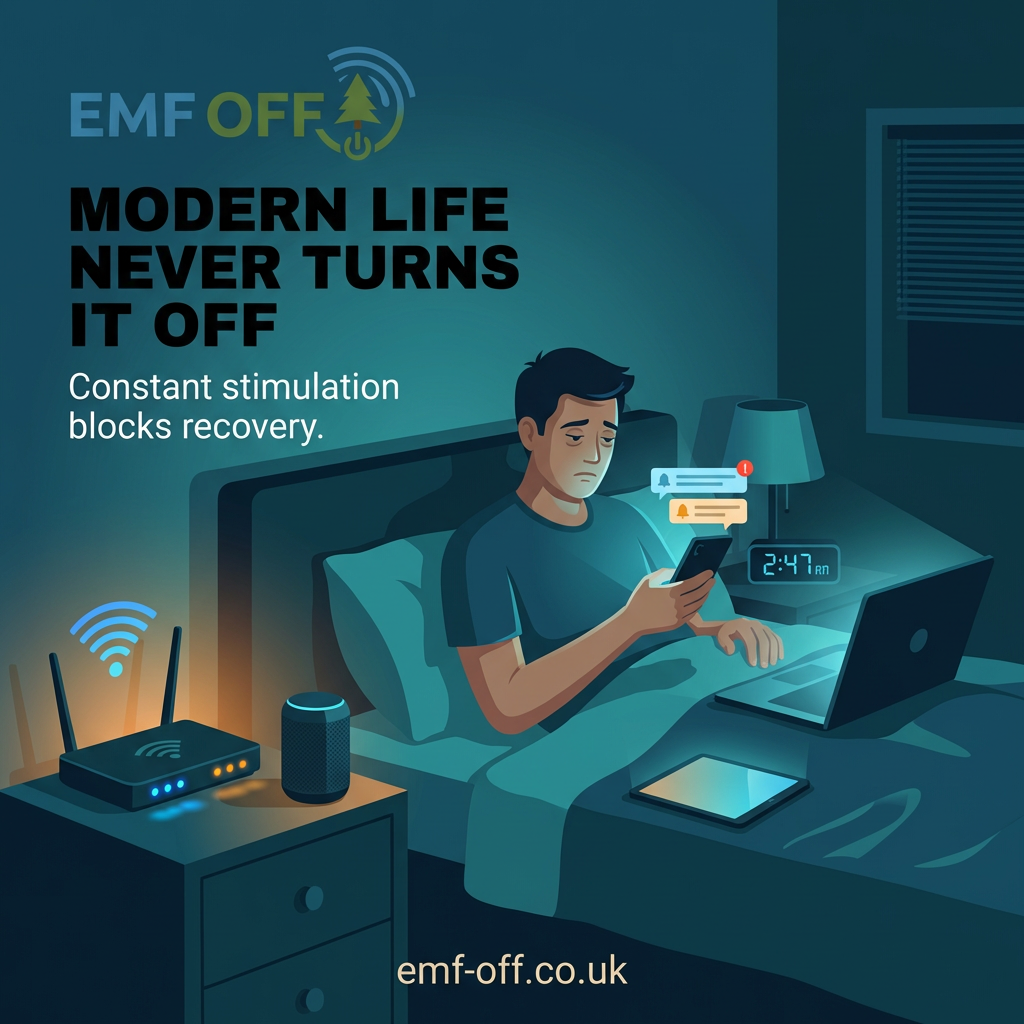
Perpetual Activation as the New Normal Modern environments deliver uninterrupted input: notifications, light at night, network traffic, ambient RF emissions.
Even when we are physically still, signalling continues around and through us.
Regulatory frameworks assess peak heating events.
They rarely assess chronic neurological activation.
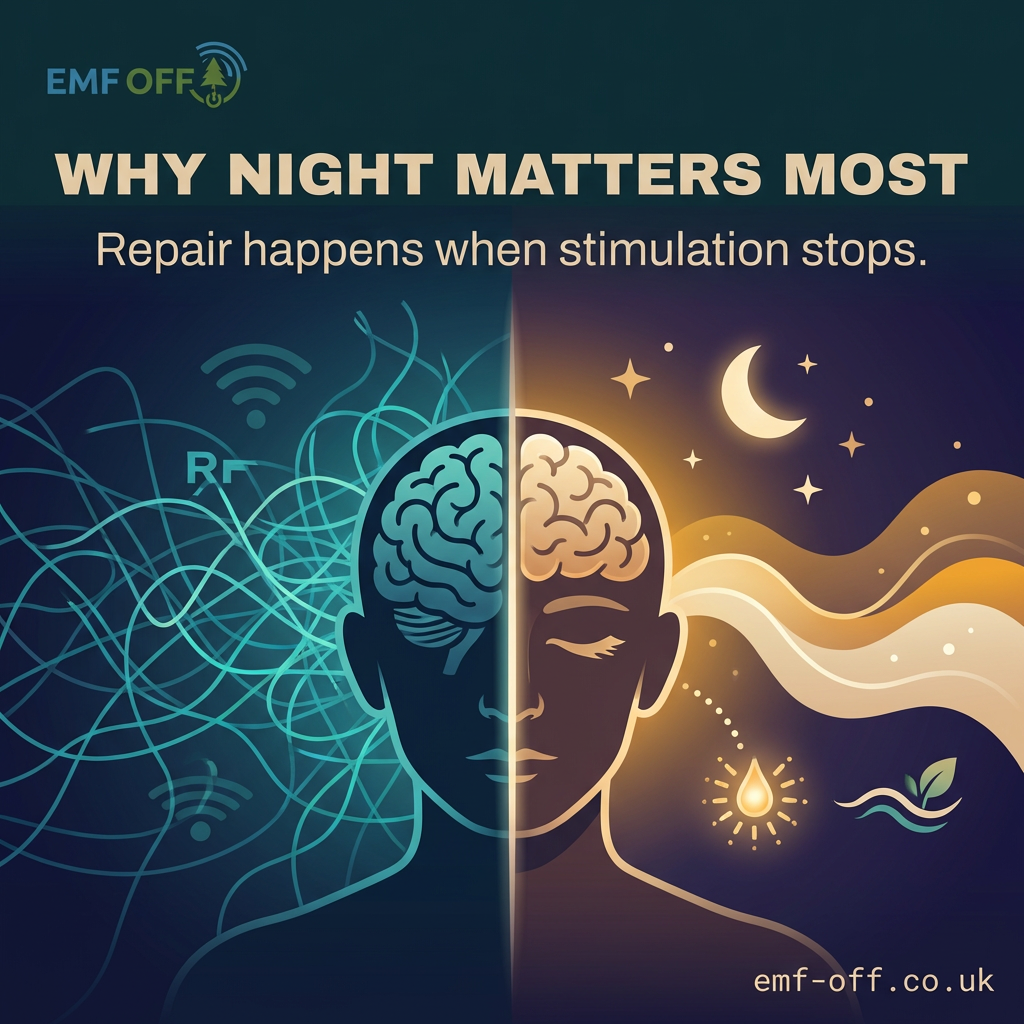
Darkness Is a Repair Signal Night is not merely absence of daylight — it is a coordinated biological phase shift.
Hormonal recalibration, lymphatic clearance, synaptic pruning and immune modulation intensify during true rest conditions.
Interruptions fragment these processes.
Recovery requires reduction of stimulation, not just time in bed.
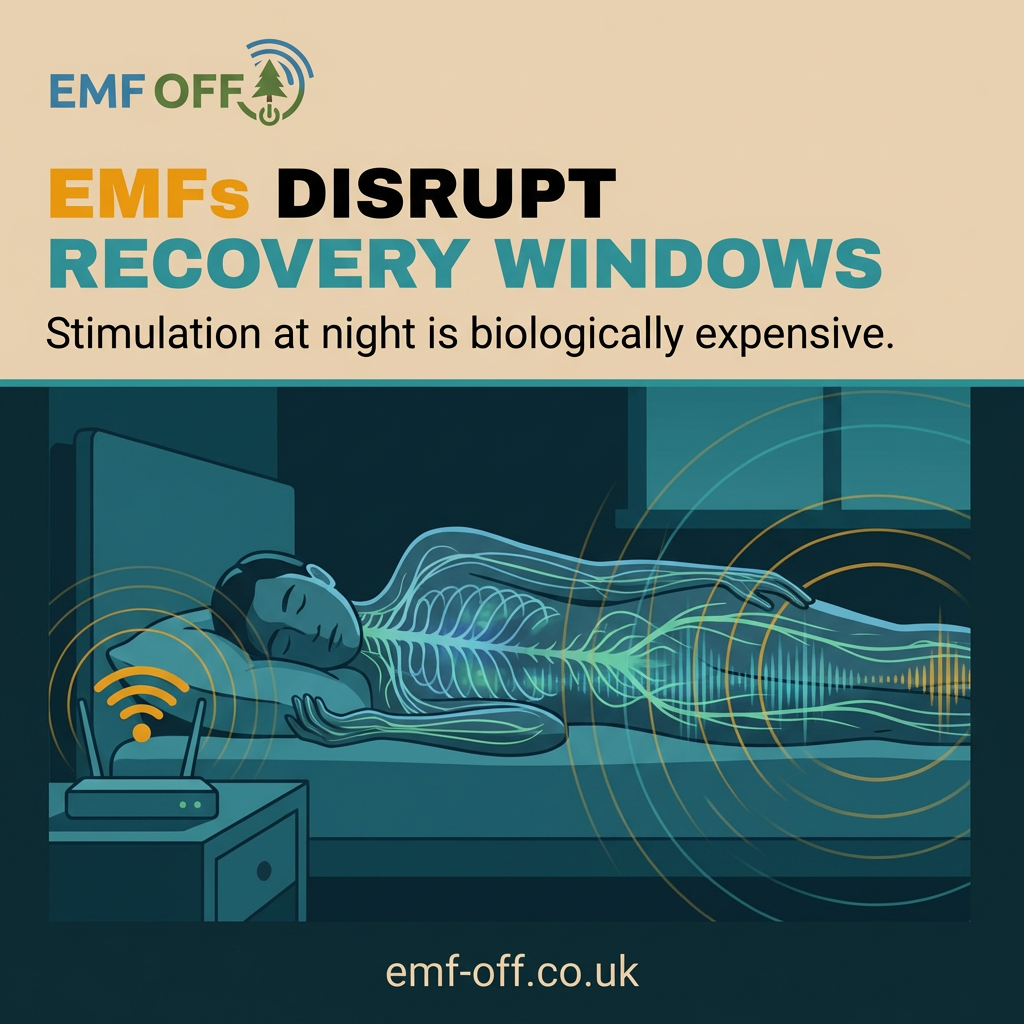
Wireless Exposure and the Loss of Quiet Windows Electromagnetic fields are typically evaluated only for tissue heating.
However, biological systems rely on electrochemical gradients that operate at far lower thresholds than thermal injury.
Emerging research on non-thermal modulation is often excluded from regulatory consideration.
Exclusion from policy does not negate biological interaction.
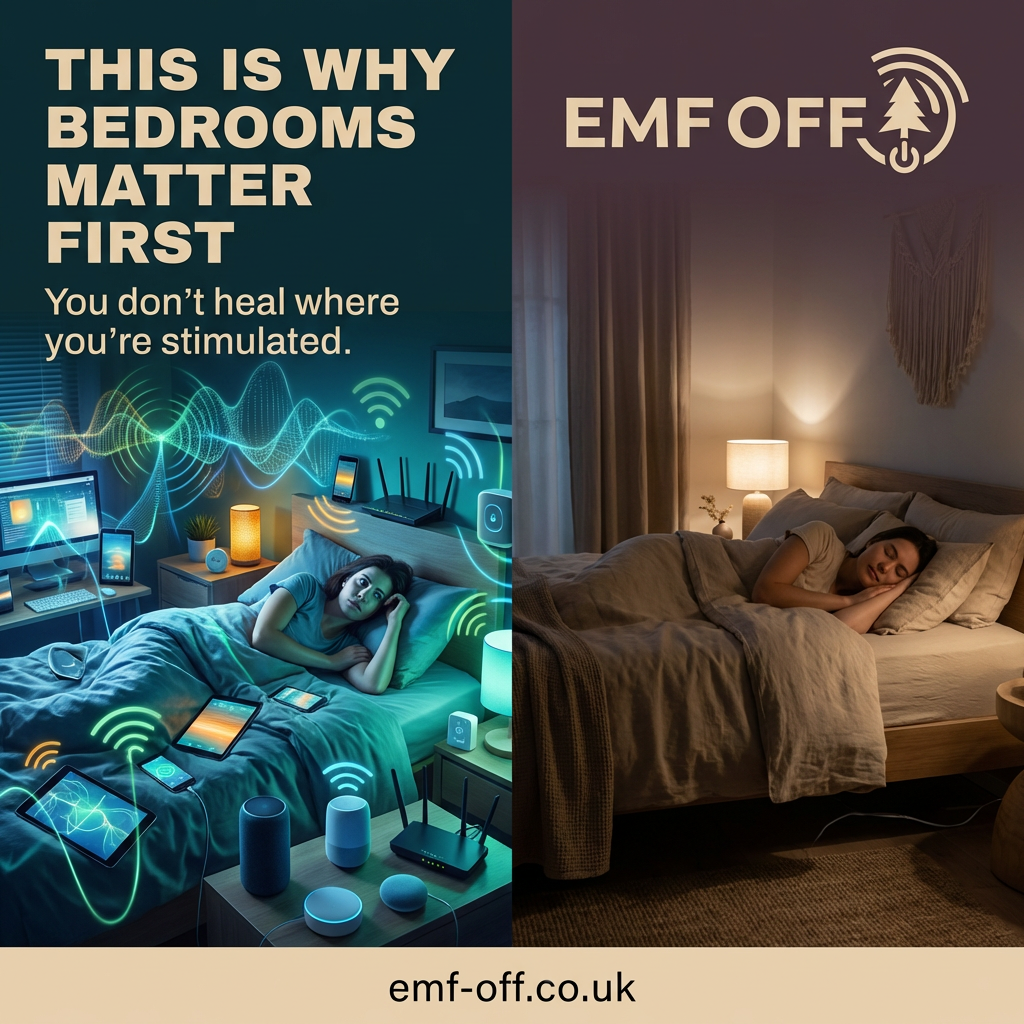
The Bedroom as a Regulatory Lever If recovery depends on reduced input, then the sleep environment becomes strategically important.
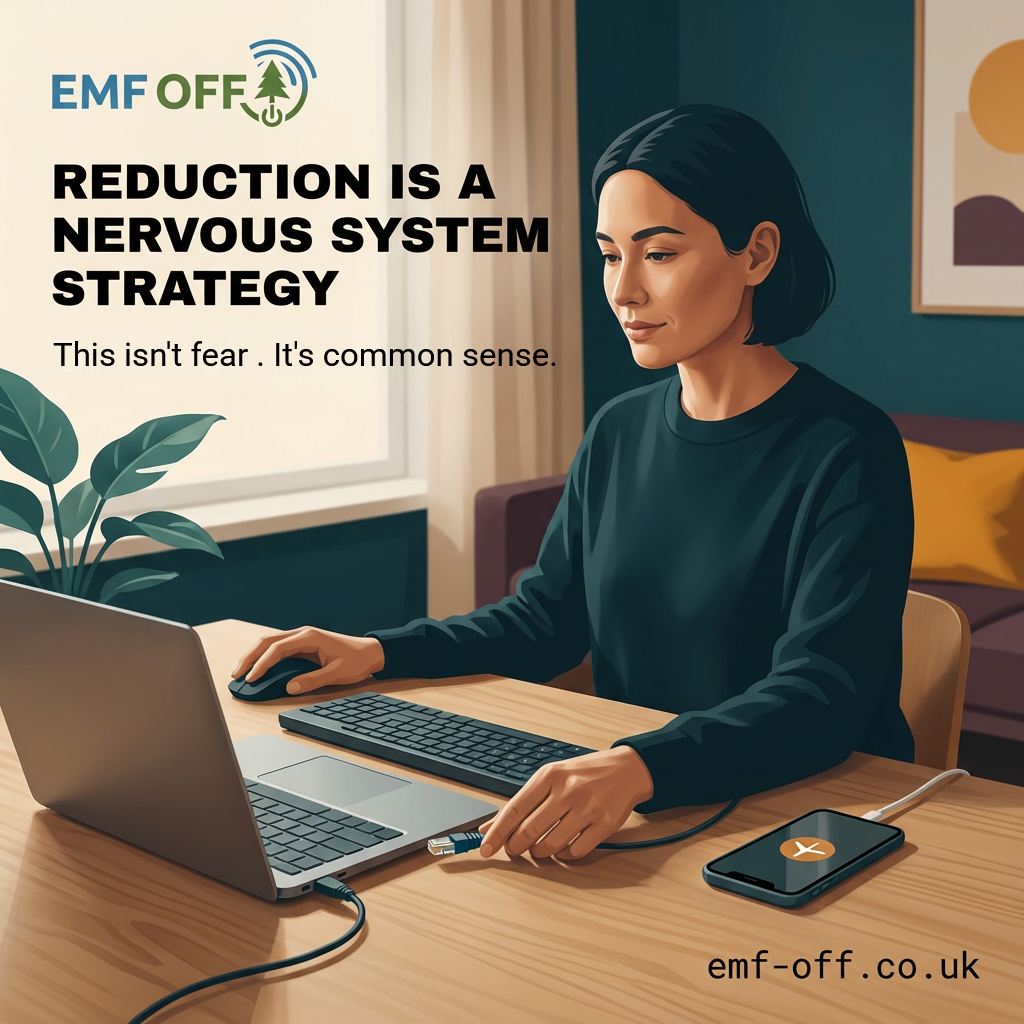
Removing active routers, minimising wireless devices, reducing light and noise restores clearer parasympathetic dominance.
This is not alarmism — it is systems logic.
You cannot heal in the same conditions that sustain activation.
Improvement Is Mechanistic, Not Mystical When stimulation decreases, sleep architecture improves.