Modern exposure is no longer occasional or proximity-based. It is ambient, layered, and continuous. Regulatory limits were built around short-term heating thresholds, not lifelong background signalling density inside homes.
When frameworks define harm narrowly, constant low-level exposure is treated as biologically irrelevant by default. That does not mean it is biologically inert. It means it falls outside the model.
This set focuses on cumulative domestic load — what runs all the time, not just what you actively use.
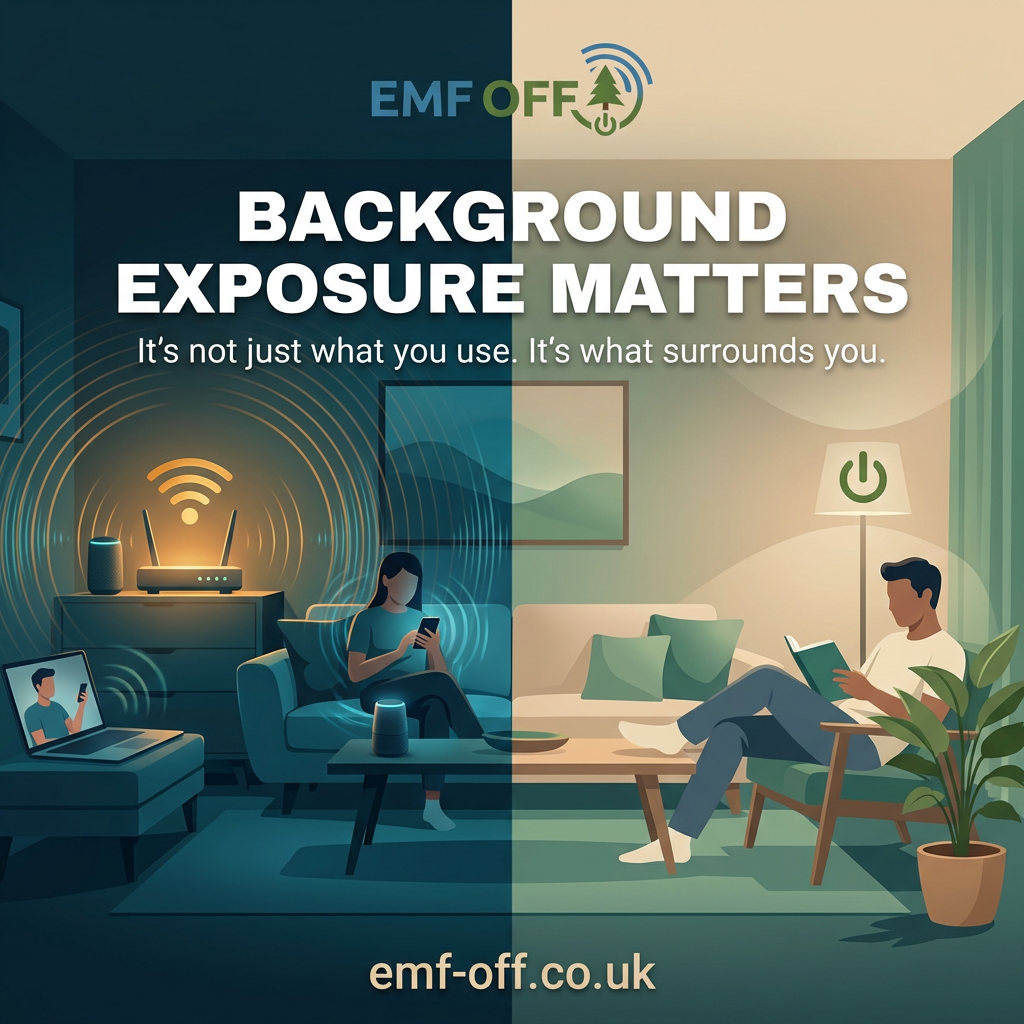
Ambient Fields Are Part of the Environment Now Exposure is no longer limited to the device in your hand.
Routers, smart speakers, TVs, tablets and neighbouring networks create a continuous signalling backdrop.
Regulatory thresholds measure peak heating — not constant environmental modulation.
Chronic background exposure is a design feature of modern homes, not a biological necessity.
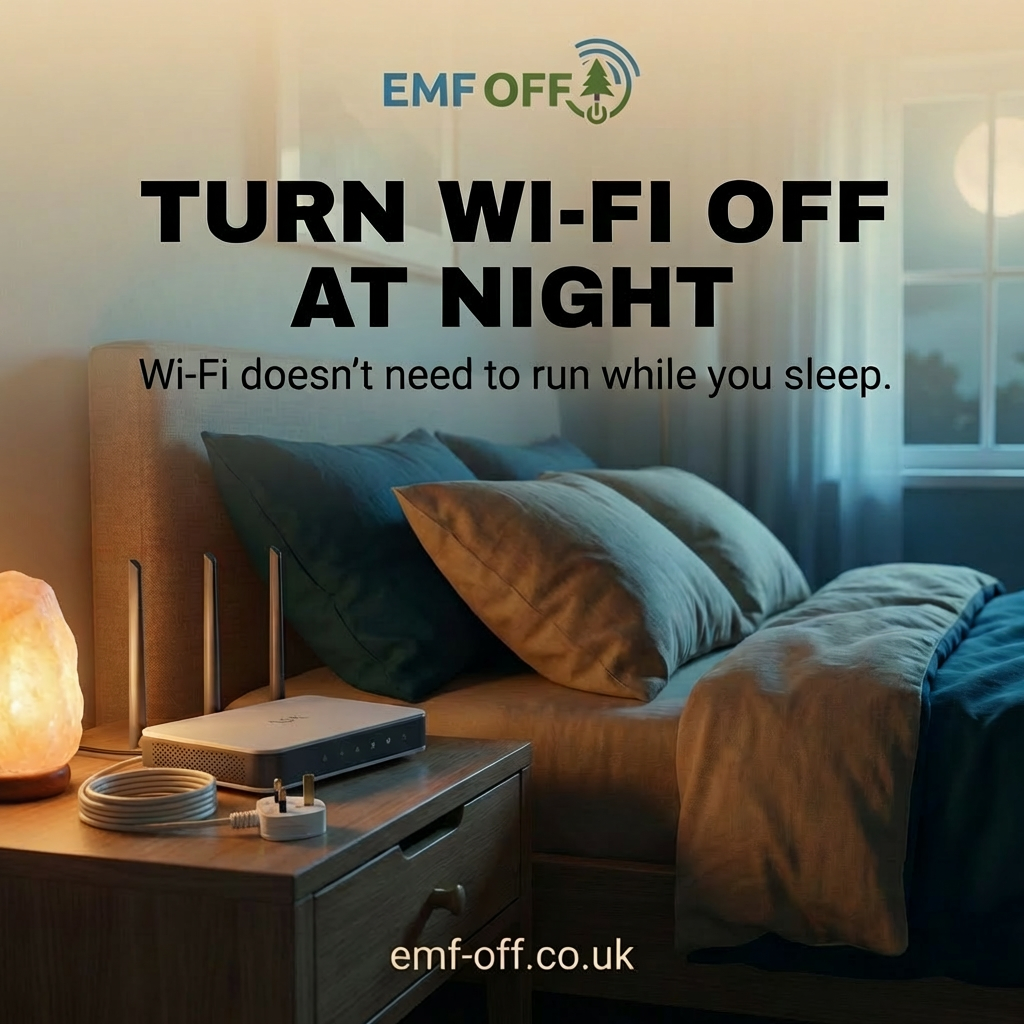
Night Should Not Be a Broadcast Window During sleep, repair processes dominate: immune recalibration, hormonal cycling, neural clearance.
Leaving wireless infrastructure active overnight maintains uninterrupted radiofrequency signalling in the most vulnerable hours of recovery.
The absence of regulatory concern does not equal biological neutrality.
Repair is optimised in genuine environmental quiet.
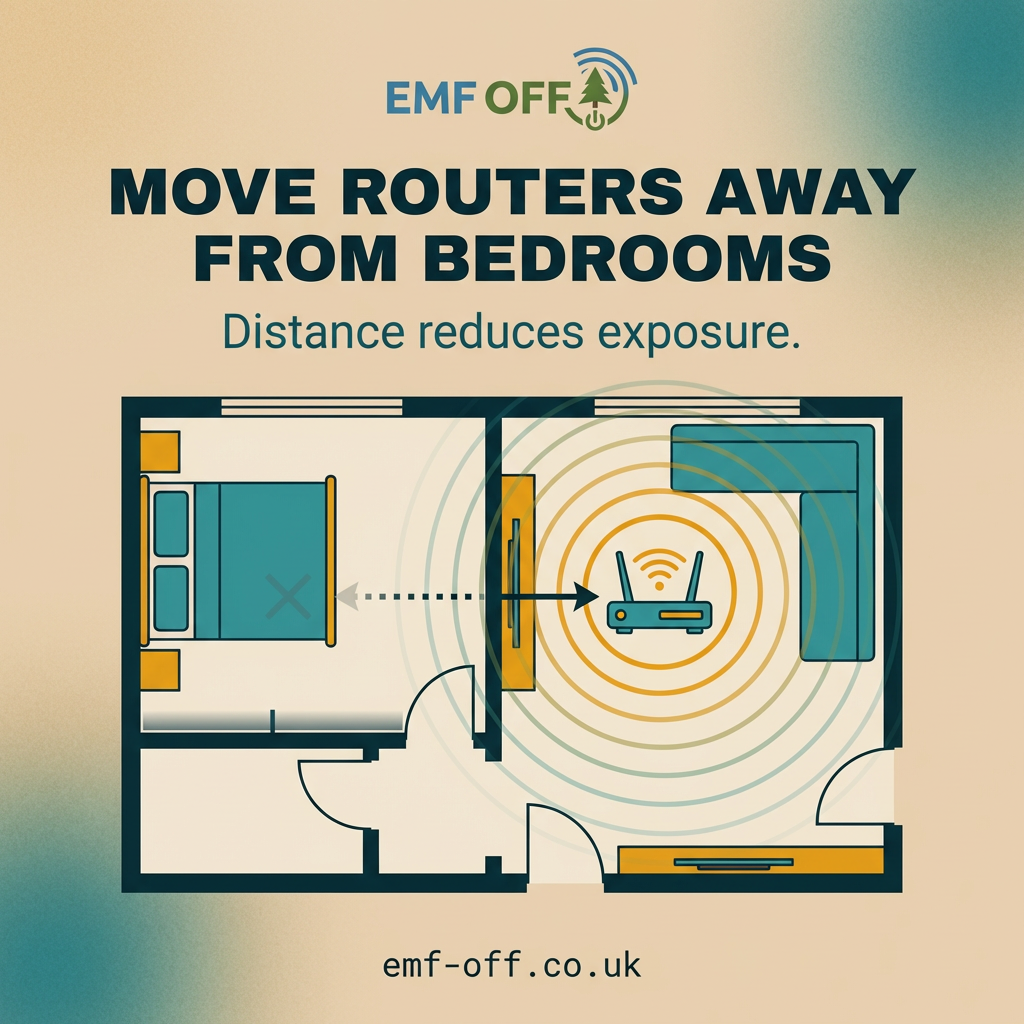
Walls Do Not Equal Distance Field strength decreases with space, not intention.
Placing transmission equipment on the other side of a bedroom wall still creates sustained near-field exposure.
Safety models assume short-duration device use — not eight hours of proximity every night.
Physical separation reduces load. Assumptions do not.
Wired Infrastructure Removes the Emission Source Wireless convenience is framed as default.
Yet Ethernet provides stable connectivity without continuous pulsed RF emission into living space.
Regulatory systems prioritise allowable intensity, not the elimination of unnecessary transmission.
Removing the emitter is more effective than debating exposure limits.
On-Body Devices Create Persistent Near-Field Exposure A device carried against the body does not become passive because the screen is dark.
Background data exchange, network registration and signal polling continue unless transmission is disabled.
Compliance testing does not reflect 24-hour close-contact carriage patterns.
Proximity converts background signalling into concentrated exposure.
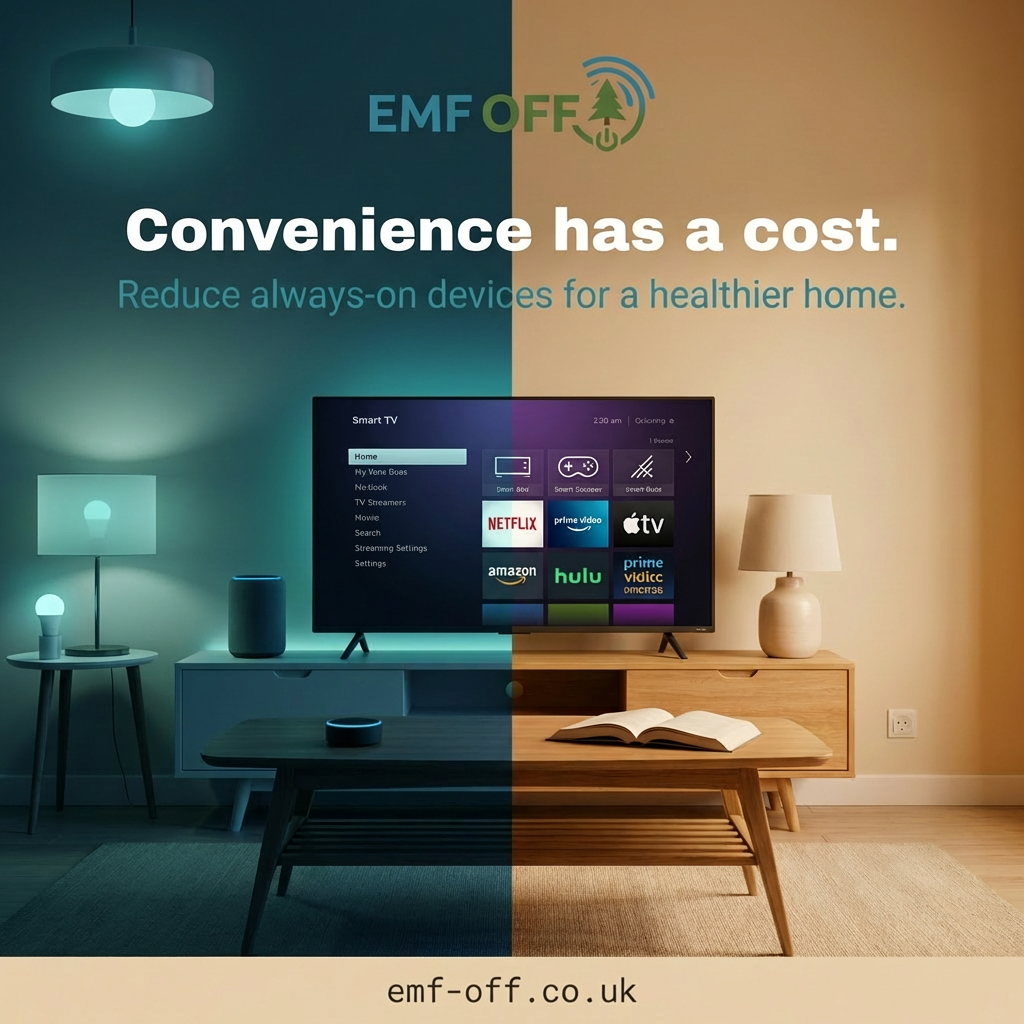
Not Every Object Requires Continuous Connectivity “Smart” has become synonymous with progress.
In practice, many household functions do not require constant wireless polling, syncing or cloud communication.
Each additional connected device increases aggregate ambient load.
Reducing unnecessary connectivity lowers cumulative exposure without reducing function.
Convenience Is Engineered — So Is Exposure Always-on ecosystems benefit commercial platforms: data continuity, engagement metrics, upgrade cycles.
Regulatory models that ignore non-thermal biological signalling effects preserve that ecosystem.
The result is a structural bias toward uninterrupted transmission.
When policy protects infrastructure first, health considerations narrow by design.
People Report Physiological Differences Improved sleep depth, reduced irritability and steadier mood are commonly described when domestic RF load is lowered.
These observations are often dismissed because they fall outside officially recognised endpoints.