Calcium signalling is not inherently harmful.
It is an essential cellular mechanism.
The issue is not activation.
It is duration, frequency, and control.
Biological signals are meant to be brief and tightly regulated.
When stimulation becomes constant, systems designed for pulses become stressed.
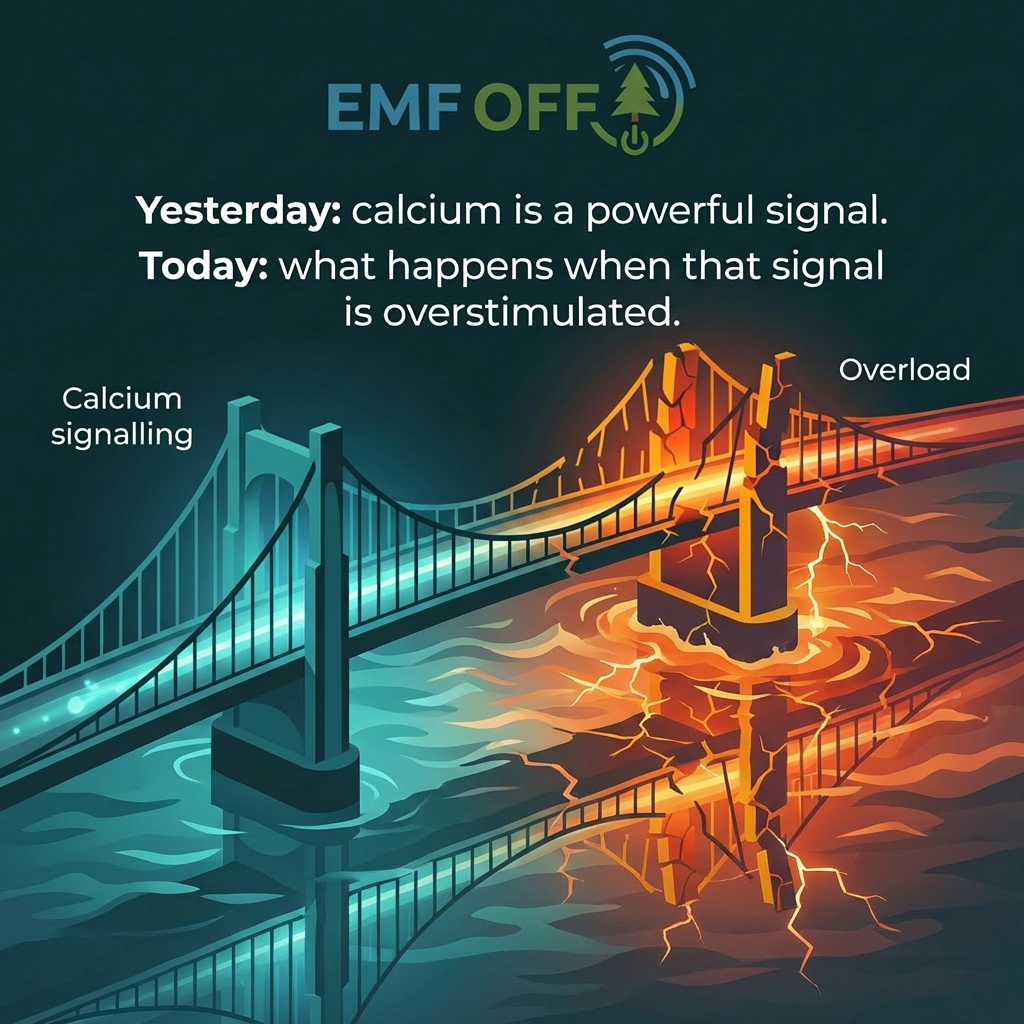
Yesterday: signalling. Today: overload.A well-designed bridge distributes force efficiently.
But repeated or excessive strain causes cracks.
Calcium signalling works the same way.
Short bursts are functional.
Sustained activation becomes stress.
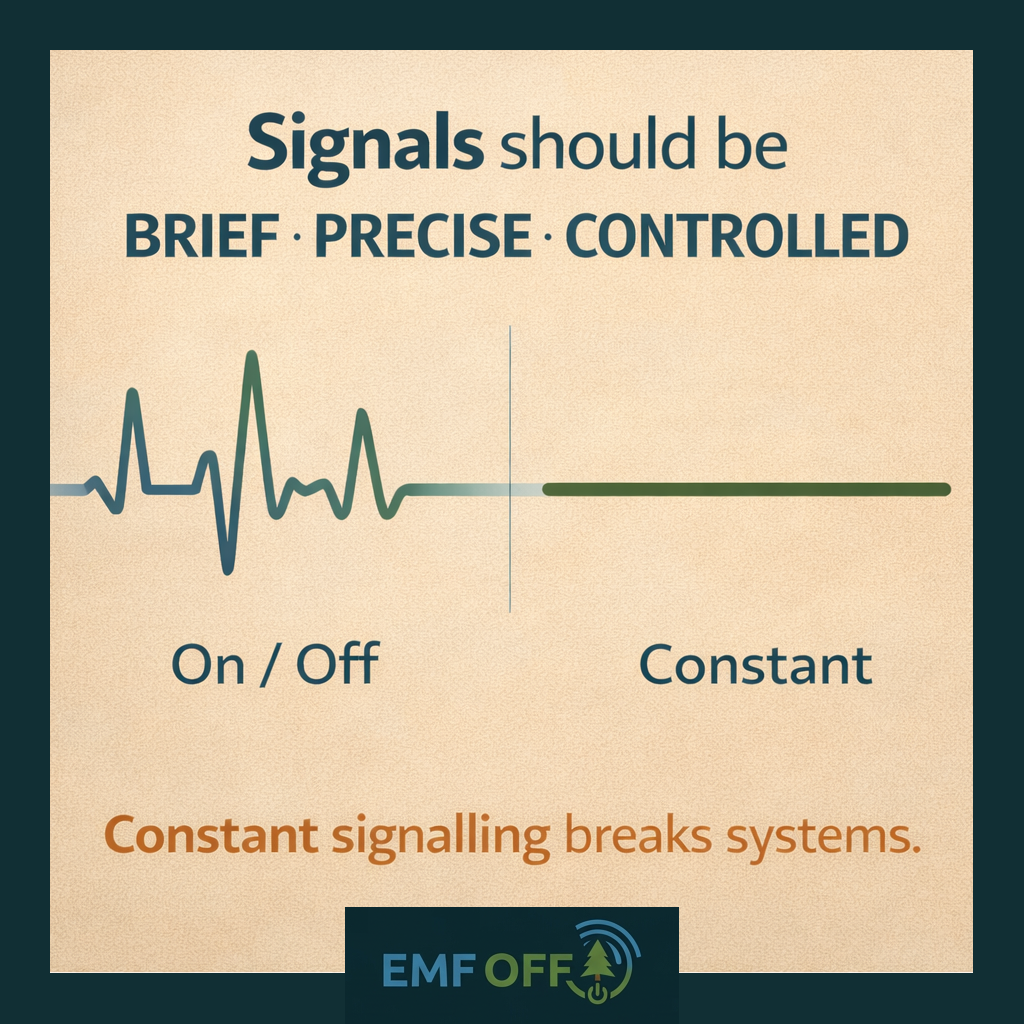
Signals should be brief, precise, controlledCells operate through pulses — on/off cycles.
This allows recovery between signals.
Constant stimulation removes that recovery window.
Biology tolerates intense interference better than it tolerates constant interference. The former leads to injury (brief, recoverable), the latter to sickness (chronic, uncertain).
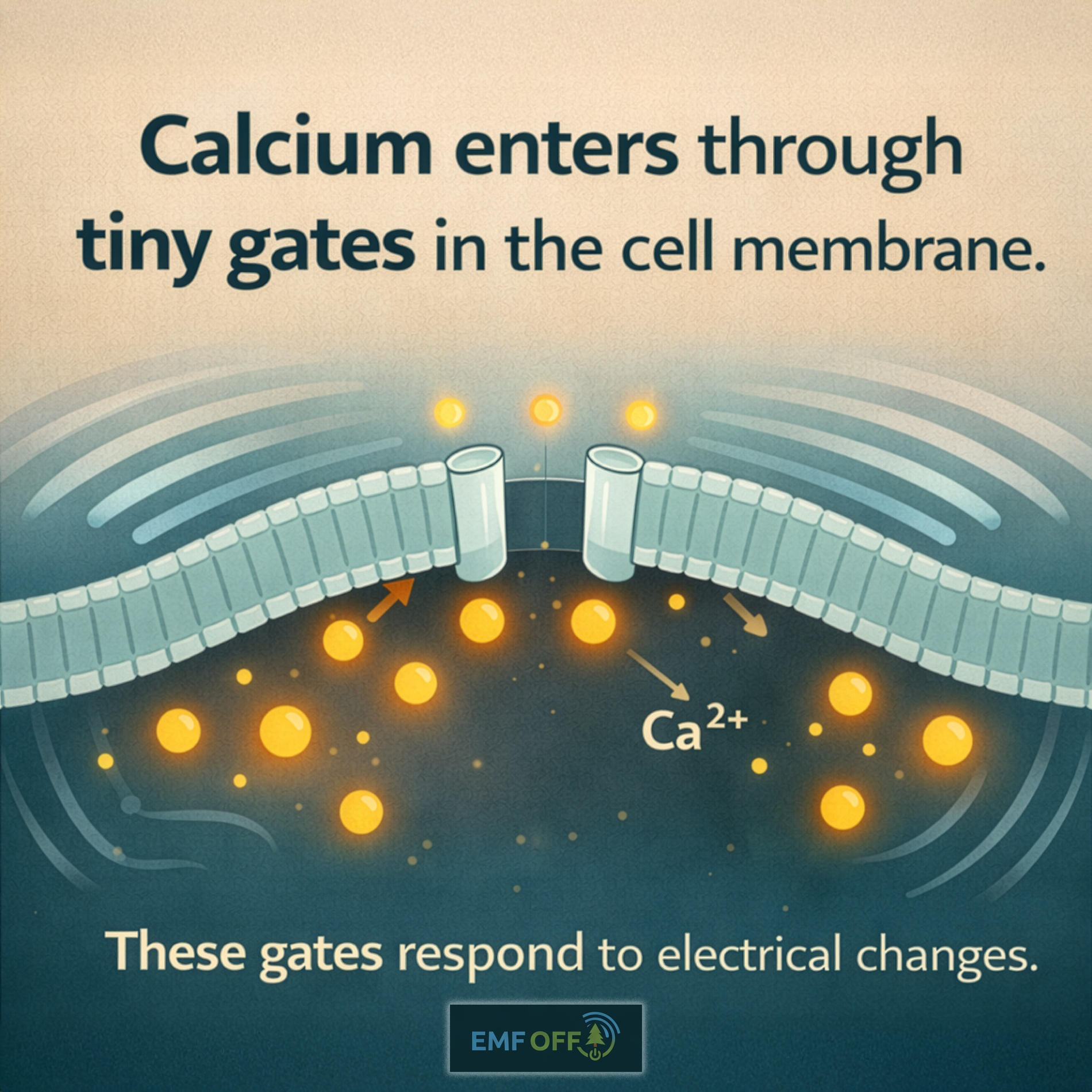
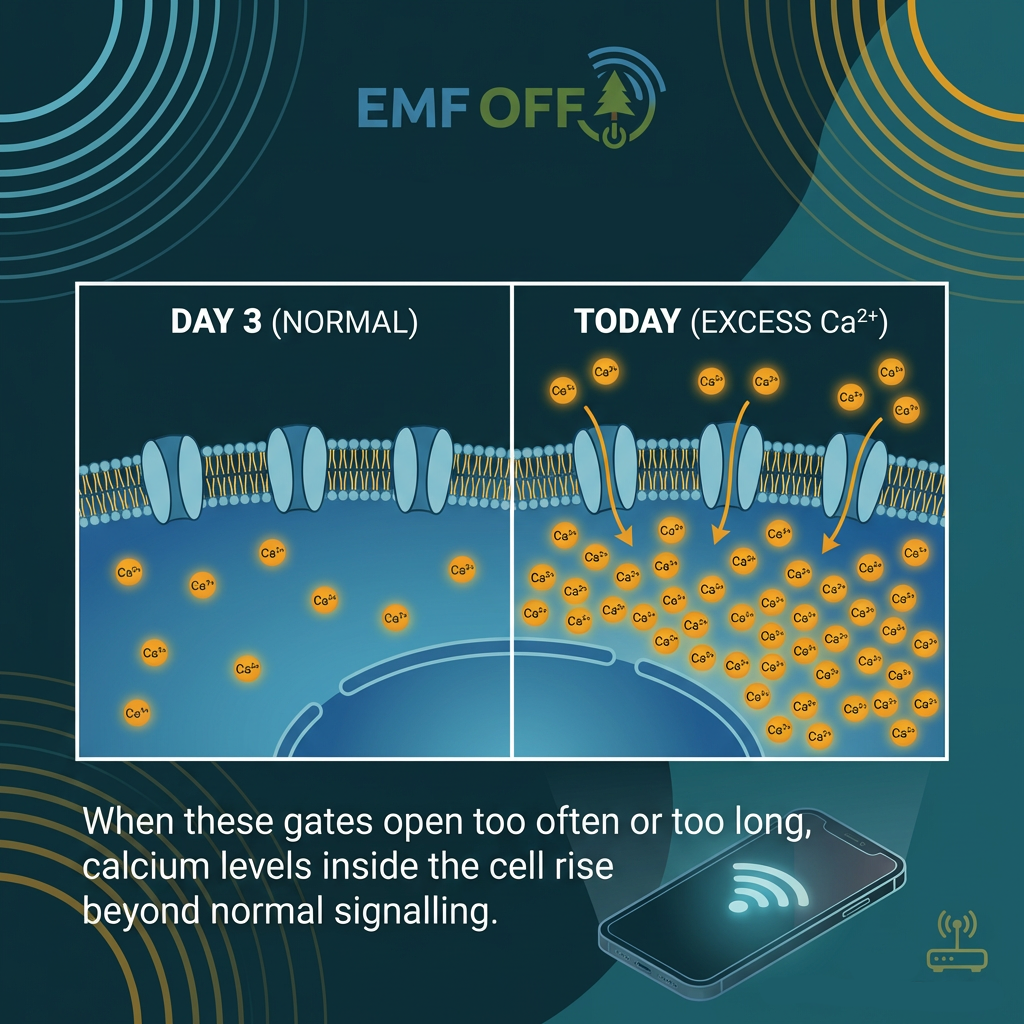
Calcium enters through tiny voltage-sensitive gatesThese voltage-gated calcium channels open in response to electrical changes.
Under normal conditions, they open briefly.
Then they close.
The timing is everything.
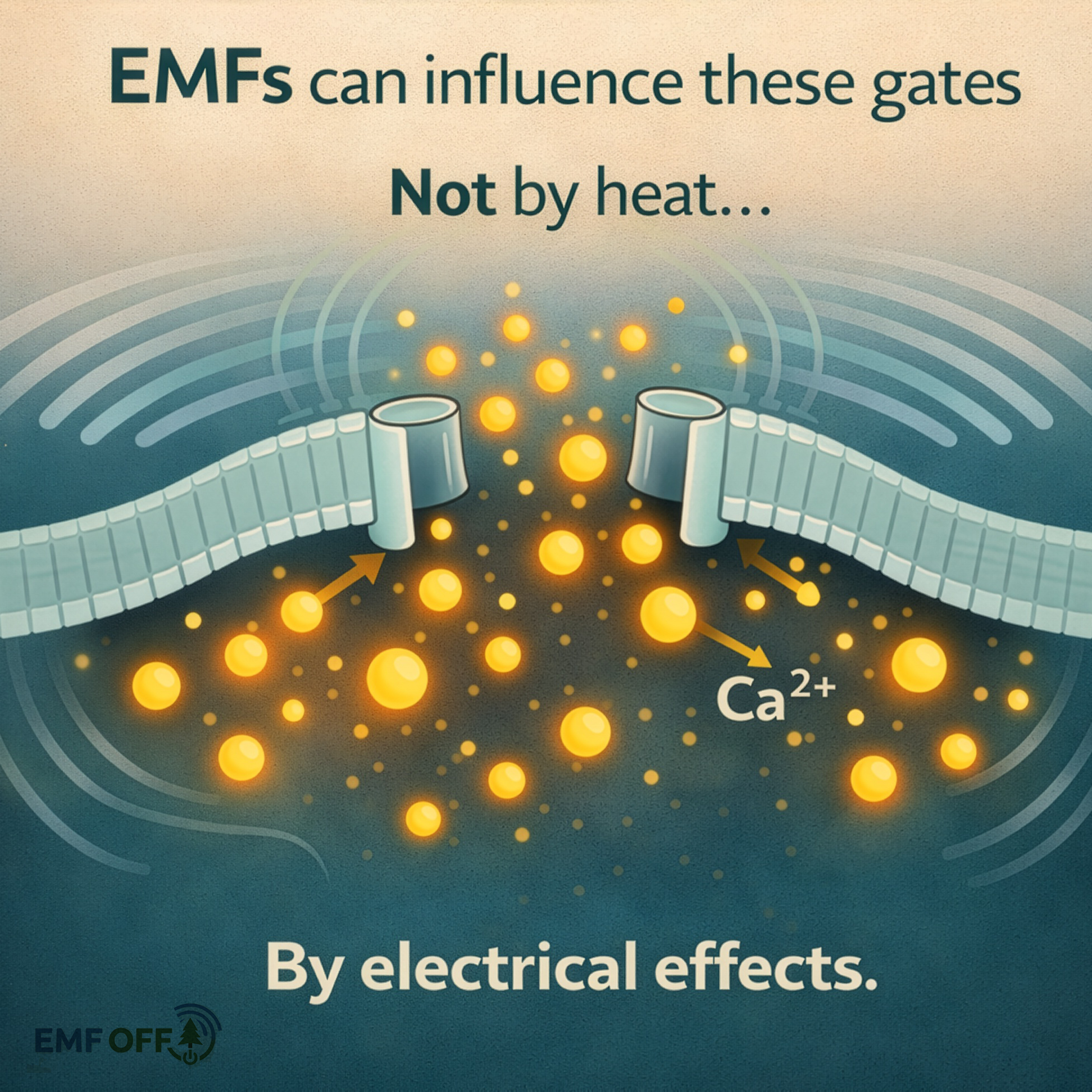
The interaction is electrical, not thermalVoltage-gated channels respond to electrical gradients.
When external fields alter membrane voltage dynamics, gating behaviour is altered.
This is a biophysical mechanism — not a heating mechanism.
The architecture is electrical, not thermal.
When gates open too often, calcium accumulates
Excess intracellular calcium does not behave like a neutral signal.
It activates downstream pathways repeatedly.
What should be a pulse becomes a background condition.
That changes cellular behaviour.
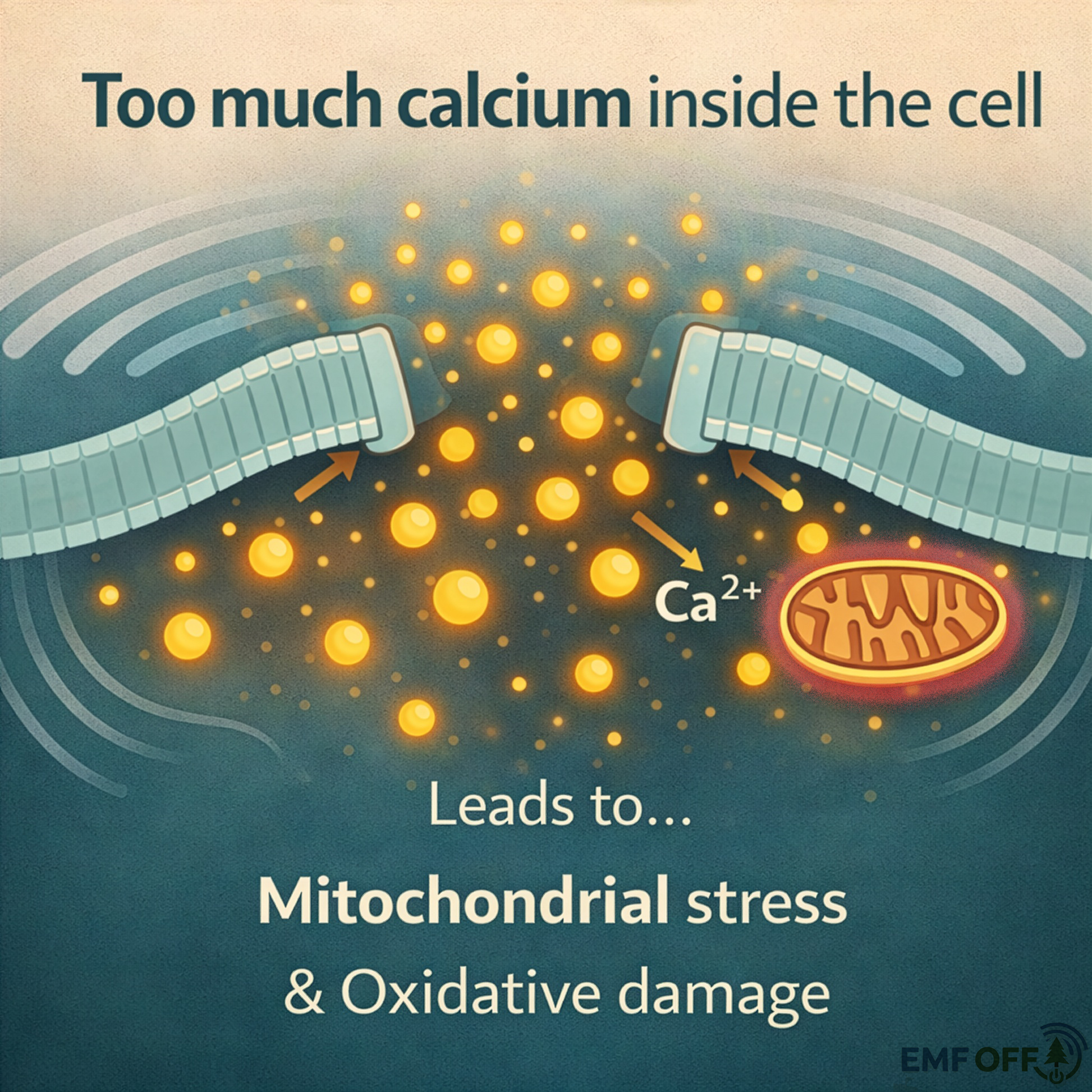
Too much calcium strains mitochondria
Mitochondria buffer intracellular calcium.
Excessive load increases metabolic demand and reactive oxygen species.
Over time, this can shift the redox balance toward oxidative stress.
Stress does not require catastrophe.
It requires persistence.
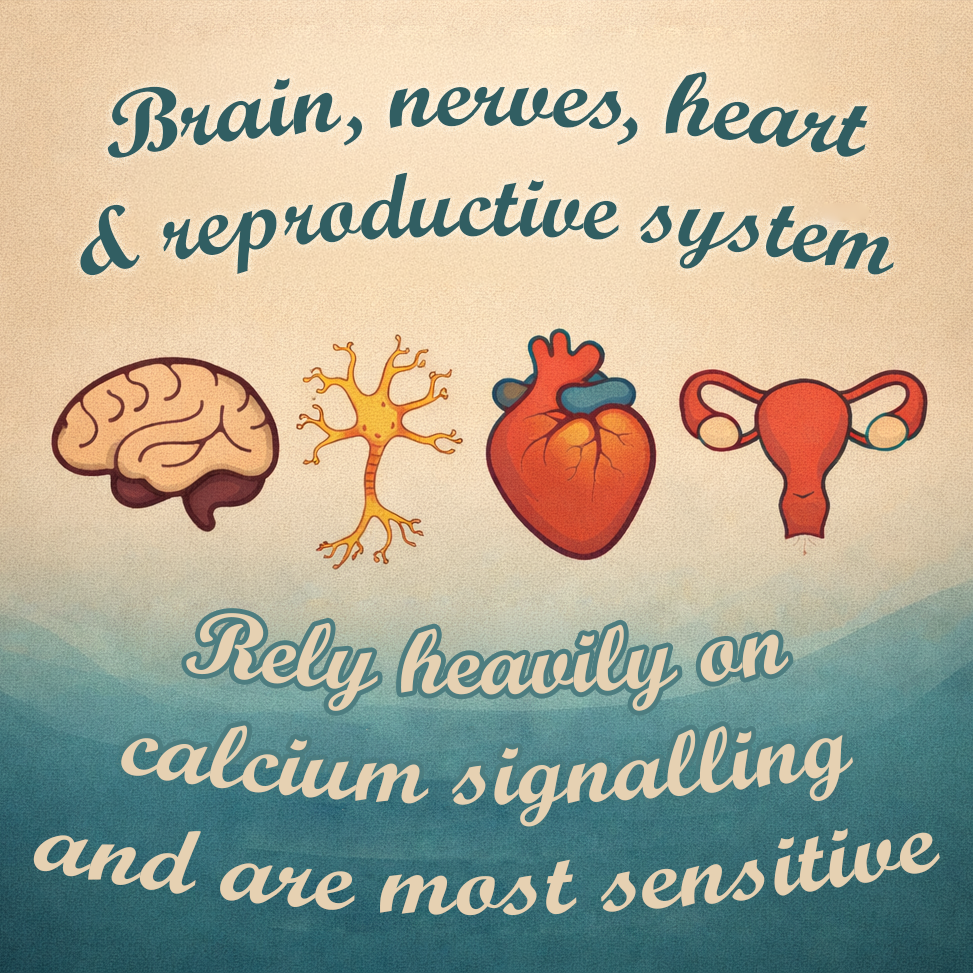
Some systems are more vulnerable
Brain
Nerves
Heart
Reproductive tissue
These rely heavily on calcium signalling and contain dense populations of voltage-gated channels.
Disruption, if it occurs, would likely be felt first in these systems.
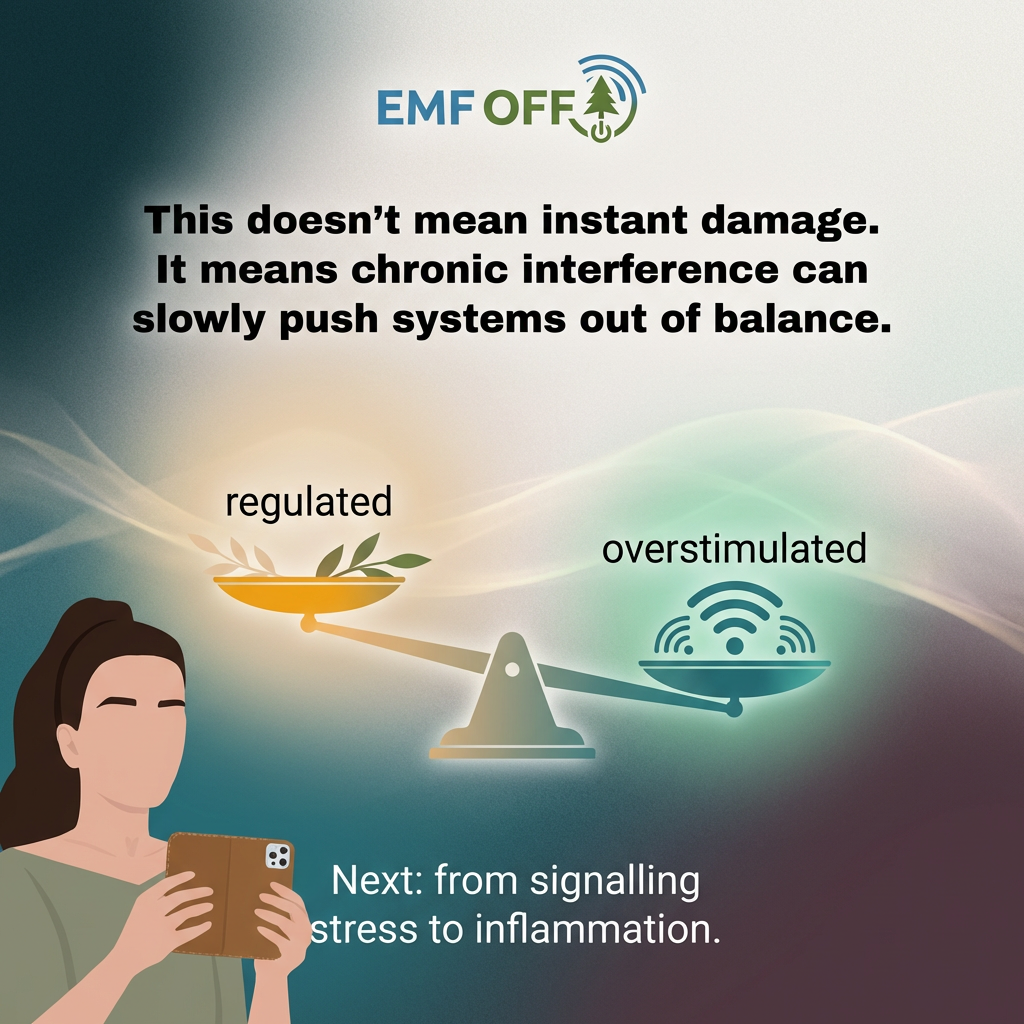
This is about chronic imbalance — not instant damage
A single signal rarely causes harm.
Chronic, repeated interference can gradually shift systems away from regulation.
The outcome is not immediate injury.
It is loss of equilibrium.
Next: how signalling stress links to inflammation.