We often describe the body in chemical terms — hormones, neurotransmitters, nutrients.
But underneath all of that is something even more fundamental: electrical signalling.
At the cellular level, life depends on finely tuned electrical gradients.
Nowhere is this more delicate — or more important — than in calcium signalling.
This is where the mechanism begins.
The body is chemical. But it’s also electrical.Every cell maintains a voltage difference across its membrane.
That tiny electrical gradient allows signals to travel, muscles to contract, and neurons to fire. Without electrical balance, chemistry doesn’t coordinate.
Biology runs on charge.
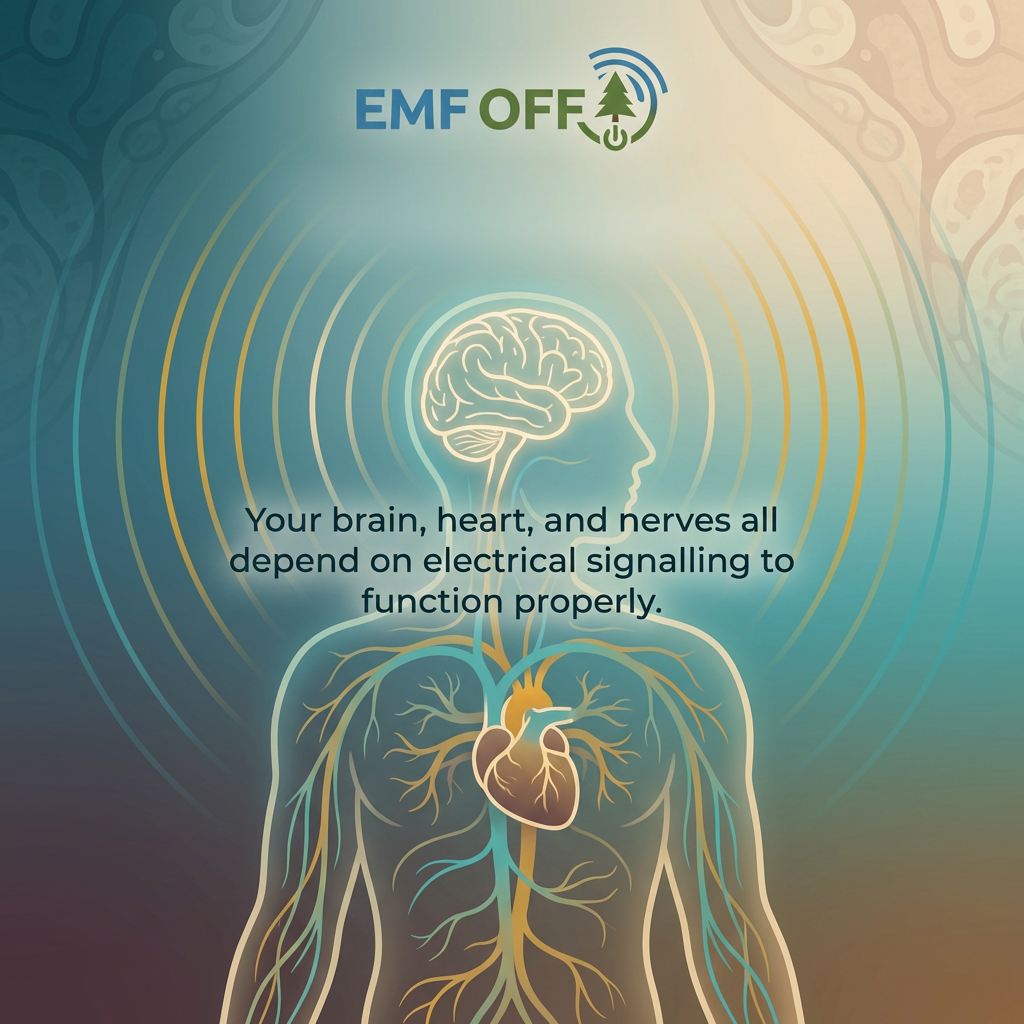
Your brain, heart, and nerves use electrical signalingNeurons transmit impulses electrically.
Heart rhythm is governed by voltage waves.
Nerves relay information through rapid changes in membrane potential.
These systems are not just influenced by electricity.
They are built on it.
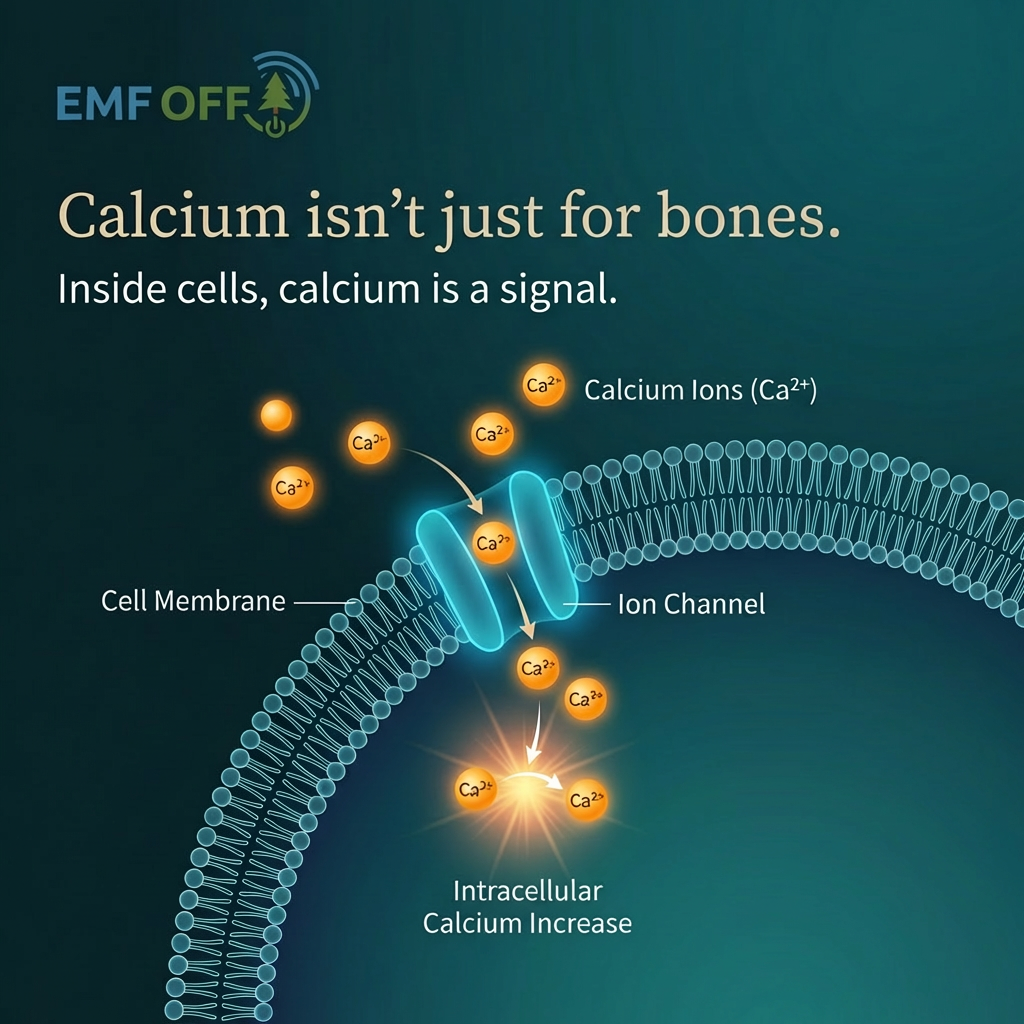
Calcium isn’t just structural — it’s a signalInside cells, calcium acts as a messenger.
When it enters, it tells the cell to activate processes — growth, contraction, neurotransmitter release.
Calcium is one of biology’s master switches.
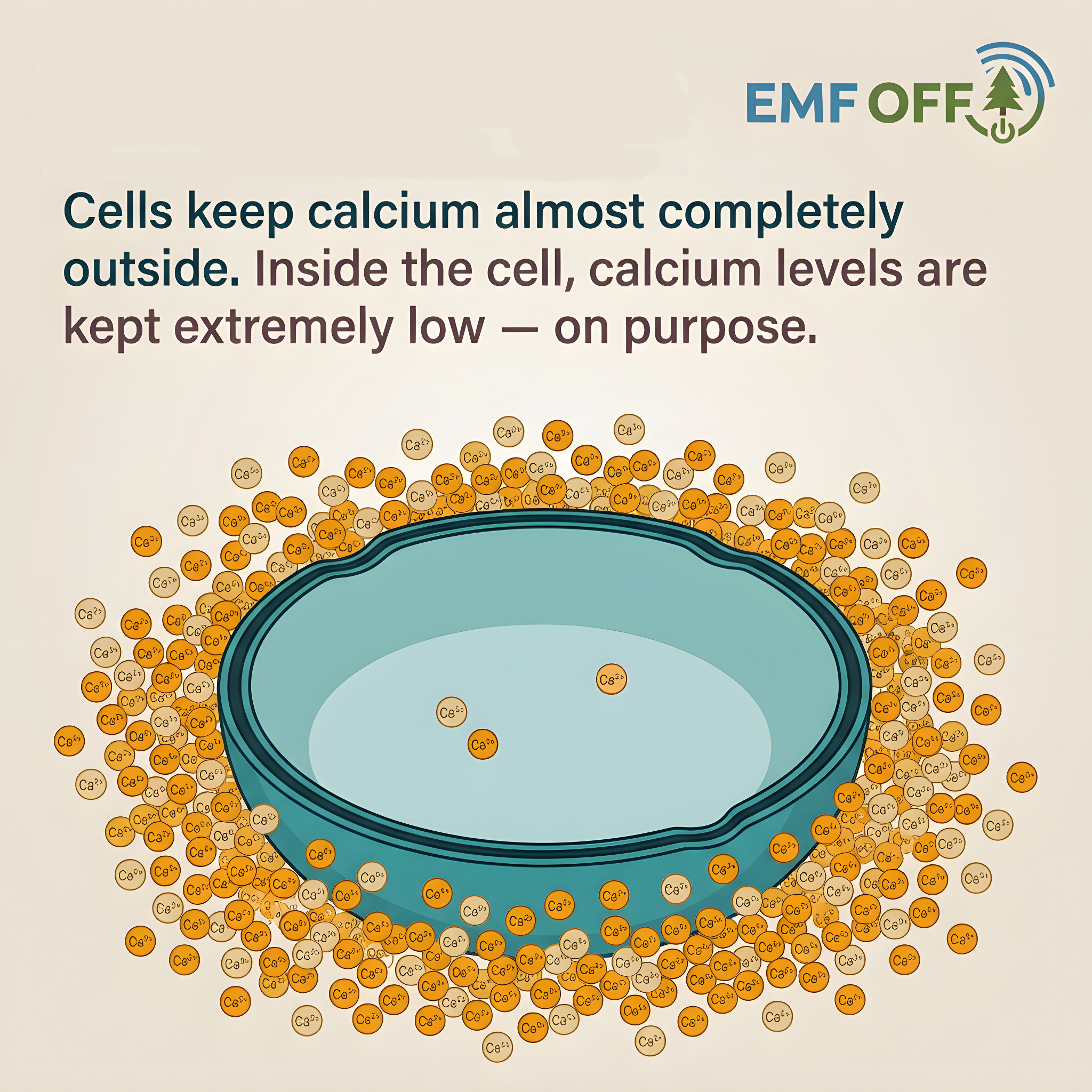
Cells keep calcium tightly controlledOutside the cell: high calcium.
Inside the cell: extremely low calcium.
That imbalance is intentional.
The steep gradient is what makes calcium such a powerful signal.
Even small changes matter.
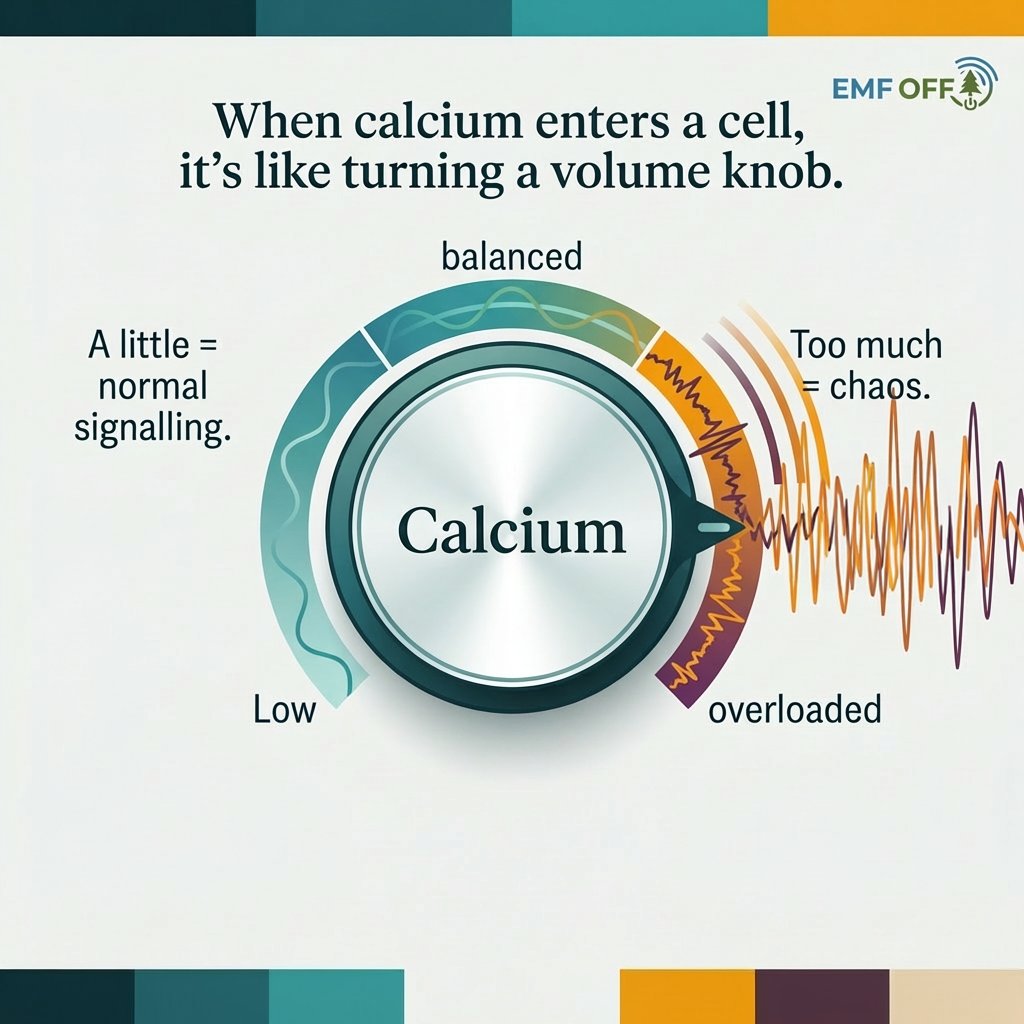
Calcium is your cellular volume control
A little rise: normal signalling.
A sustained rise: stress response.
Too much: overload.
Cells are designed for precision — not constant stimulation.
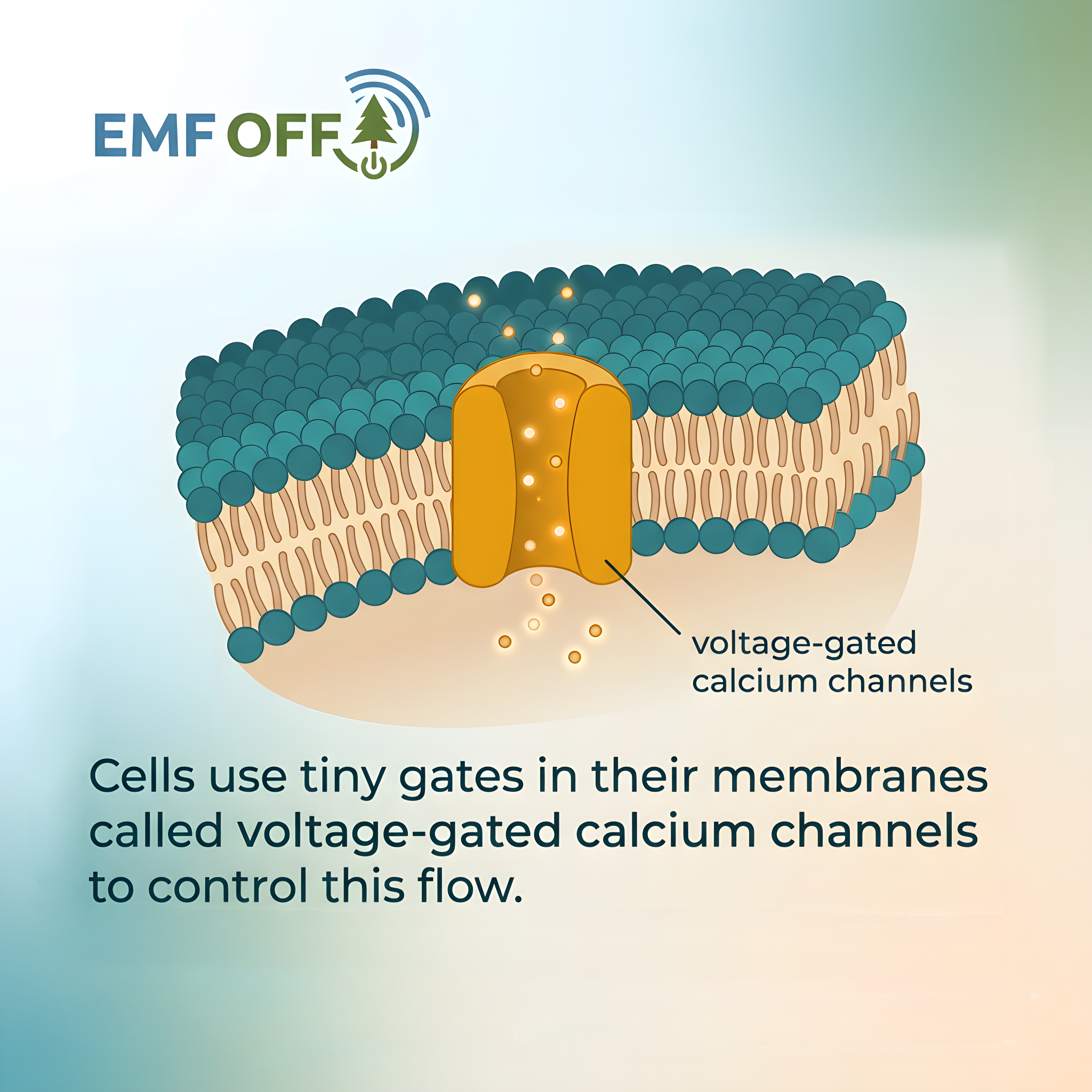
Cells use tiny gates to control calcium flow
These are called voltage-gated calcium channels.
They open and close in response to electrical changes across the membrane.
They are exquisitely sensitive to voltage shifts.
>
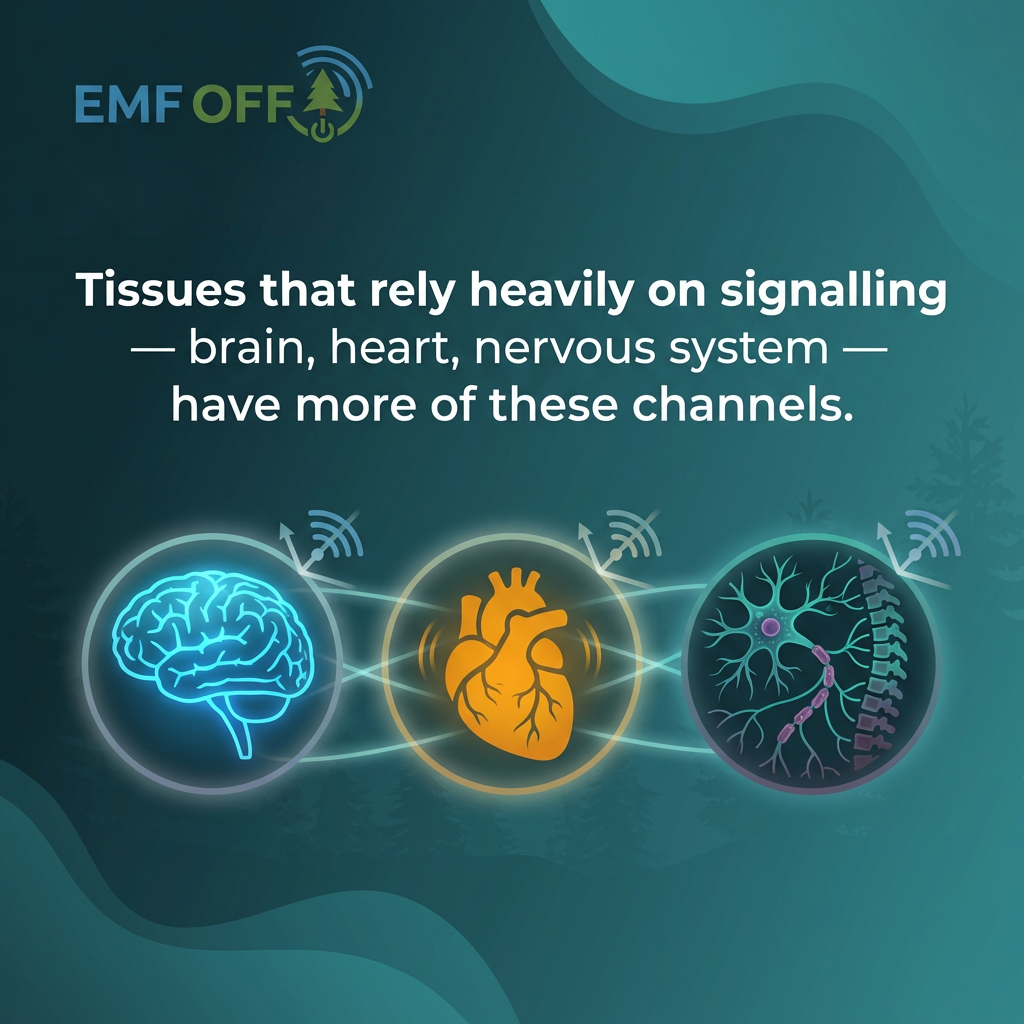
Some tissues rely on these channels more than others
The brain.
The heart.
The nervous system.
These tissues contain especially high densities of voltage-gated calcium channels.
Which means they are also more dependent on electrical stability.
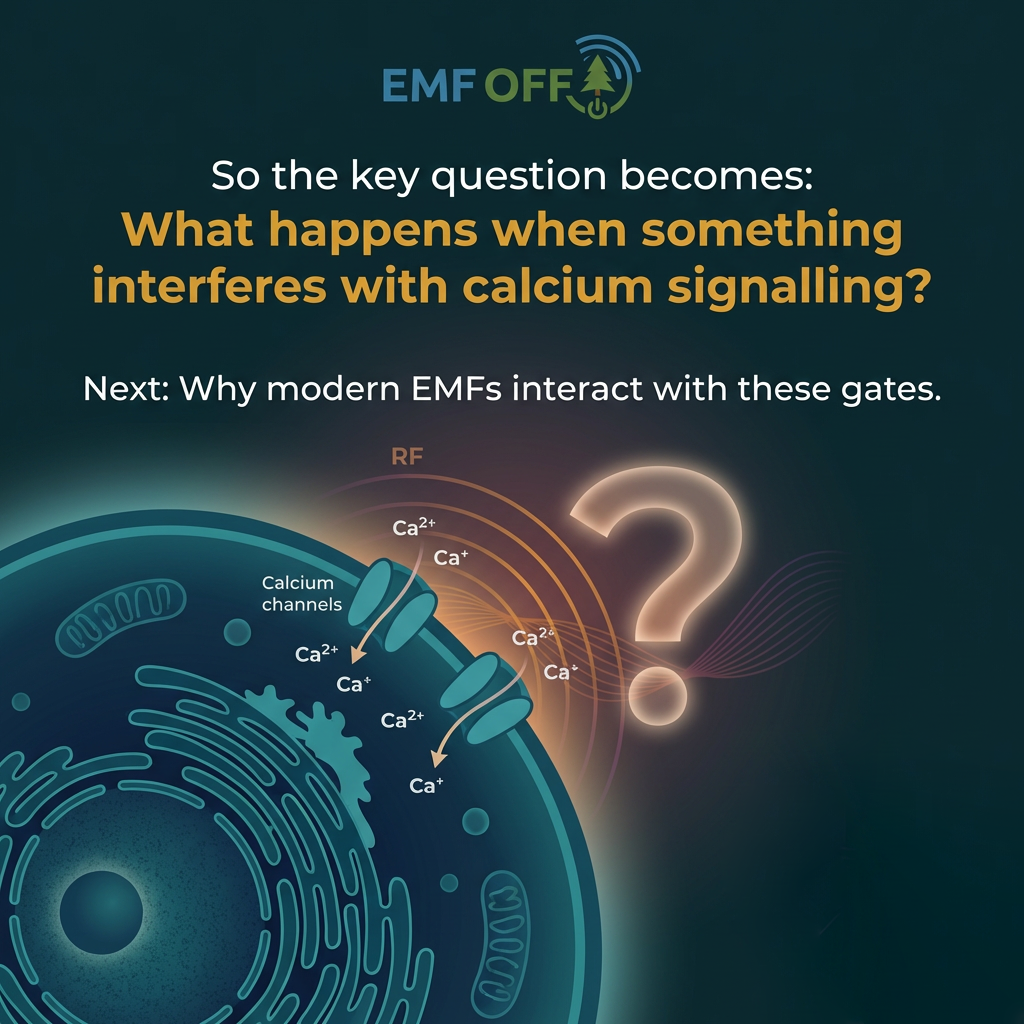
So the question becomes: what happens if signaling is disturbed?
If calcium flow is altered — even subtly —
the effects would be felt most strongly in electrically active tissues.