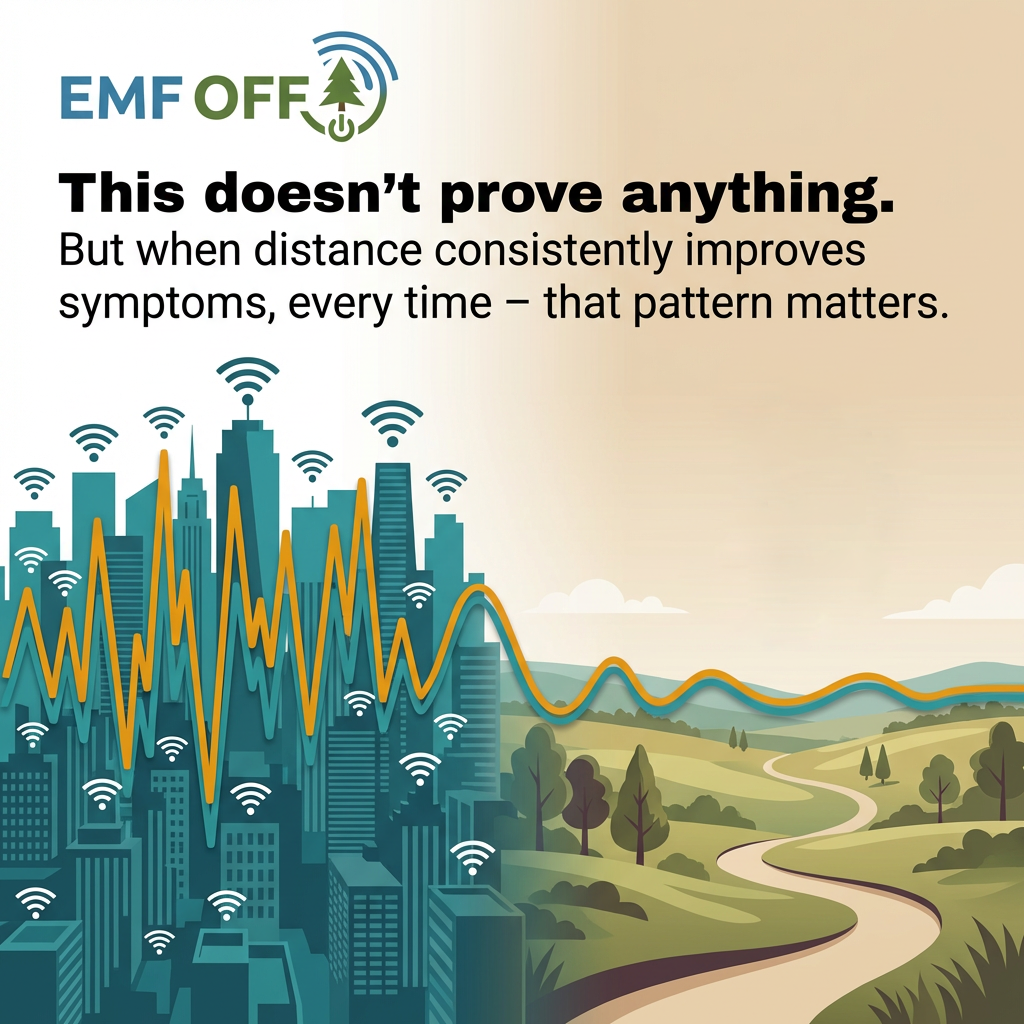
This is not a diagnosis, and it is not presented as proof. It is a sequence of observations.
When symptoms change predictably with environment — repeatedly — the pattern itself becomes meaningful.
Start with epistemic humility
The most responsible beginning is a refusal to label too quickly.
You can acknowledge a lived reality — and still keep your conclusions provisional.
This frame protects credibility: it invites inquiry rather than demanding belief.
A body undermined by cellular dysregulation
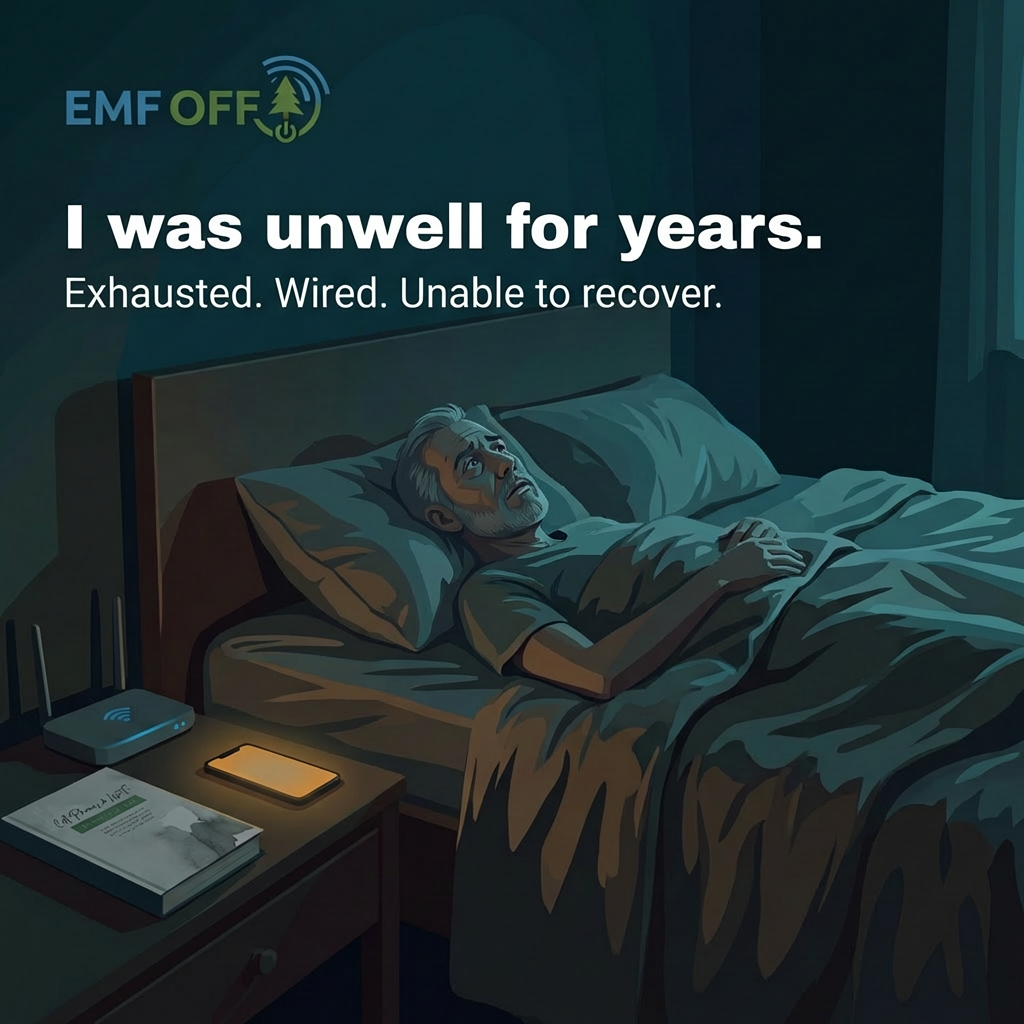
As you read this, there are hundreds of thousands of people who are lying in darkened rooms trying to recover - wishing for a normal life, and fearful that they are condemned to a twilight existence.
Doctors tell them that there is nothing wrong, that tests came back "normal".
They are often given a non-specific diagnosis - like ME/CFS or Long Covid. But what if their illness is explained by mitochondrial and cellular impairment? There are currently no tests to confirm or deny such conditions, and yet experiments have demonstrated such mechanisms exist.
When the map doesn’t match the terrain
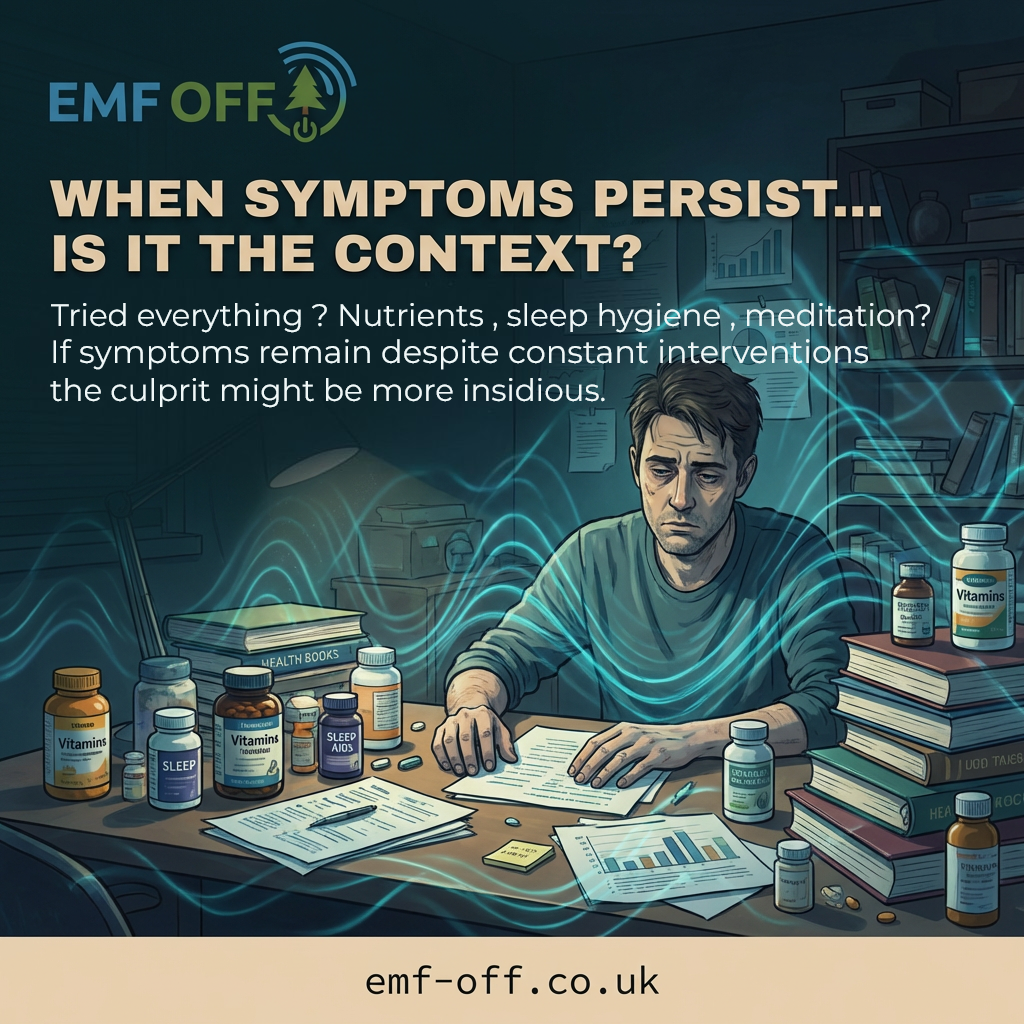
Many people try interventions that target single causes — nutrients, hormones, sleep hygiene, psychology — because that’s how medicine is structured.
But if symptoms rise and fall in a consistent rhythm that none of those frameworks explain, the missing variable is often contextual.
But if the context never changes - then patterns become obscured.
A natural experiment I didn’t intend.
Sometimes life changes major inputs without your realising: location, density, routine, ambient exposures, sensory load.
The important part is not the detail — it’s the opportunity for comparison.
Unintended shifts can reveal causative factors that stayed invisible only because they were never framed as possible threats.
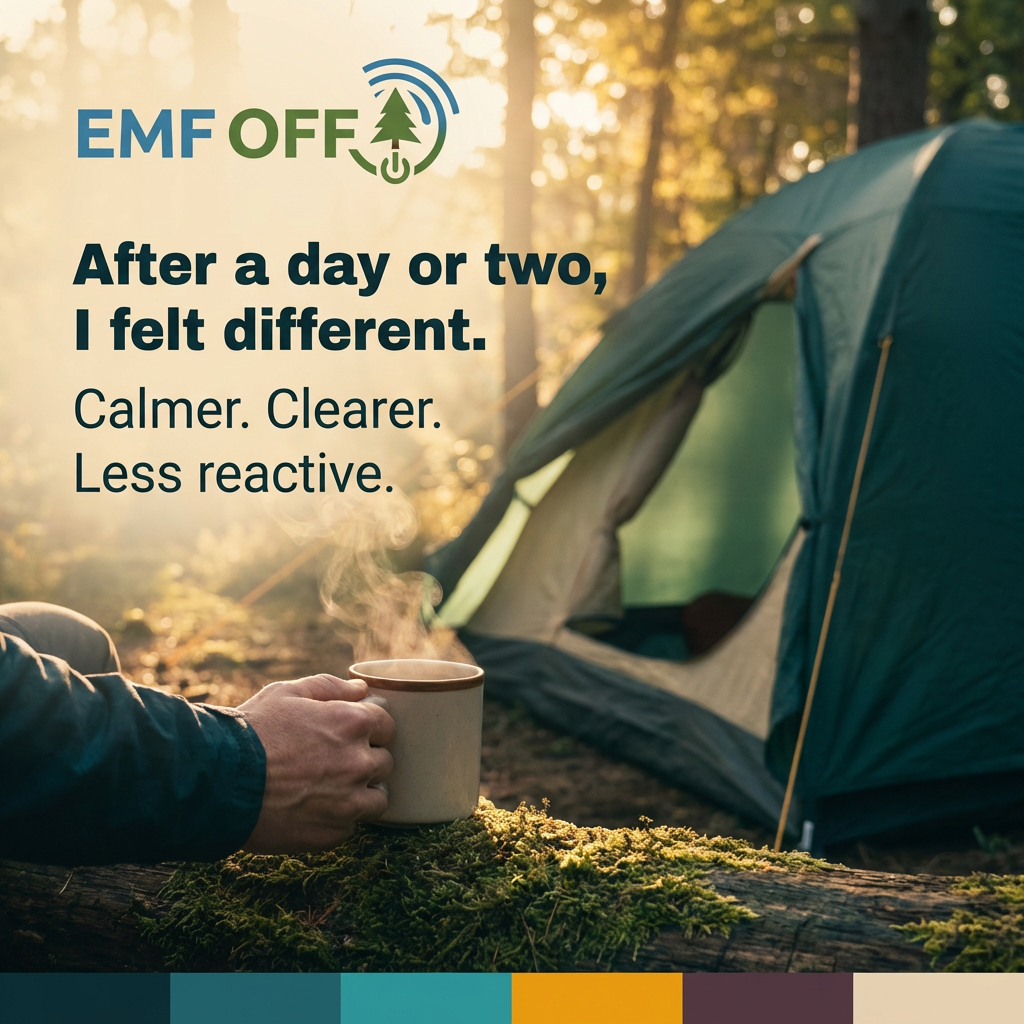
The return of baselineThe shift wasn’t subtle. It wasn’t incremental. It was the unfamiliar sensation of feeling normal again — steady, grounded, internally quiet.
For many people, “time away” never truly removes background signal load; devices travel with them, networks follow them. Complete distance is rare.
When it happens, the contrast can feel almost miraculous.
Not proof of a universal cause — but a powerful clue about what the body had been compensating for.
Replication strengthens inference
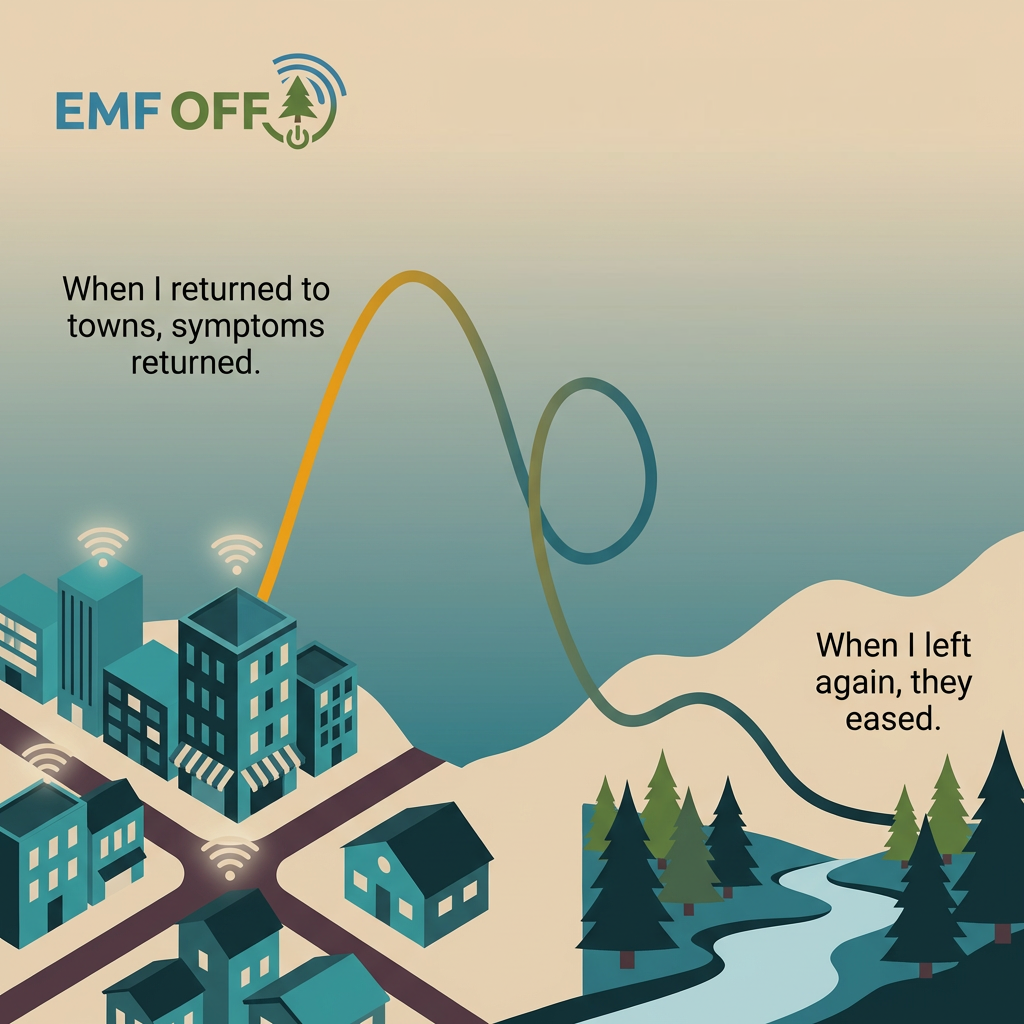
The most persuasive personal evidence isn’t “I improved once.” It’s “I improved, then worsened, then improved again” under similar conditions.
That A→B→A pattern helps separate correlation from coincidence by showing *directional consistency*.
It doesn’t prove cause — but it upgrades “anecdote” into a pattern.
Mitigation, not ideology.
Reducing exposure is a practical strategy, not a belief statement.
There’s a difference between lowering load inside a home and changing the broader environment your nervous system has to process all day.
Partial relief suggests you’re touching the right lever; incomplete relief suggests the lever has layers.
Patterns justify investigation without proving causation
The honest endpoint is not certainty — it’s prioritization.
If one variable repeatedly predicts symptom improvement, it deserves attention, measurement, and more careful testing.