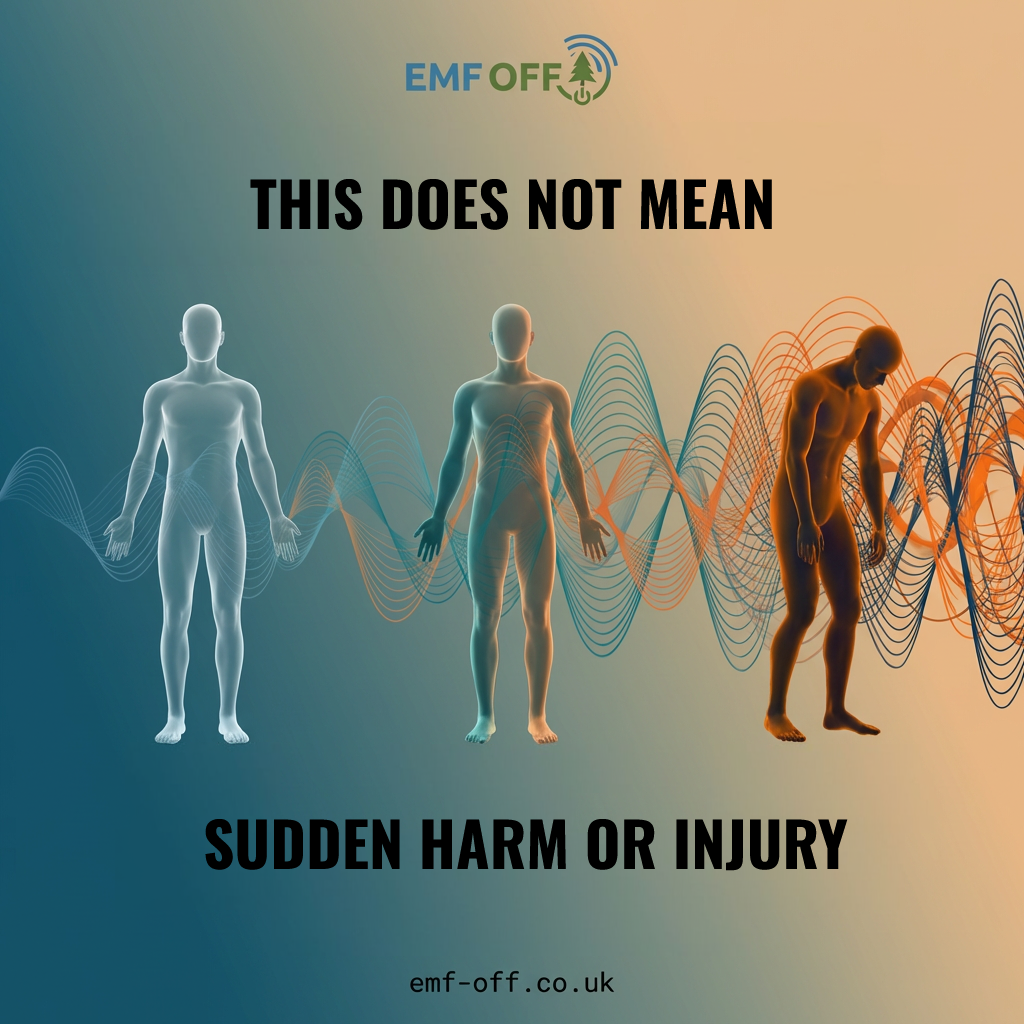
Before moving forward, it’s necessary to define what this argument is not claiming.
This series narrows interpretation, avoids absolutism, and draws distinctions between sensitivity, accumulation, interaction, and uncertainty.
Clarity reduces distortion — especially in charged conversations.
Define the negative space
Any responsible argument requires boundaries.
Without them, nuance collapses into caricature.
Before extending the discussion, it helps to prevent misunderstandings that would otherwise derail it.
Biology is variable - not uniform
Human systems differ in resilience, repair capacity, baseline stress load, developmental stage, and cumulative exposure.
Variation in response is not unusual in biology — it is the rule.
Acknowledging heterogeneity avoids both exaggeration and dismissal.
Chronic load rarely announces itself dramatically
Damage to complex biology often looks like everyday dififculty: tiredness, brain-fog, low-mood, irritability.
Systems try to compensate, consequences emerge gradually, and symptoms present in cascades, until a threshold is crossed.
Then one day the formerly healthy person, realises they are now a sick person.
So it makes a confusing picture. The tipping popint can maker it appear that the onset of illness was unexpected, yet the illness was foreshadowed for weeks or months before.
Interaction - not opposition.
The issue is not whether technology is “good” or “bad.”
It is whether biological systems — which evolved under very different conditions — can adapt seamlessly to new signal environments.
The challenge lies in finding ways use technology without it causing harm.
We are going to explain how you can do that soon.
Complexity is often misinterpreted as noise
Conflicting or confusing evidence rarely resolves in one direction.
Complex exposure questions often involve mixed findings, methodological constraints, and evolving measurement tools. Not to mention emotional responses, perceived authority, and false confidence.
Ambiguity should invite better research, not dismissal.
Observation precedes explanation.
Patterns can be noticed before mechanisms are fully understood.
Distinguishing description from diagnosis preserves scientific discipline. But dismissing repeated patterns and duplicable experience is not scientific either.
Not every observed association is causal — but neither is it meaningless.
Tone matters as much as content
Conversations about health and emerging exposures can easily slide into alarmism or denial - but let's be clear - it's usually the latter.
A steadier approach prioritises mechanism, pattern recognition, and proportional responses.
Especially where developing systems are involved, careful questioning is not panic — it is responsibility.