Risk assessment shifts when development is involved. Children are not simply smaller adults — biologically, temporally, and ethically, the frame changes.
Day 9 centres responsibility: where systems are still forming, precaution is not alarmism — it is stewardship.
Vulnerability alters responsibility
When outcomes affect children, risk feels different.
Adults can weigh trade-offs for themselves.
Children depend on adults to make those trade-offs carefully.
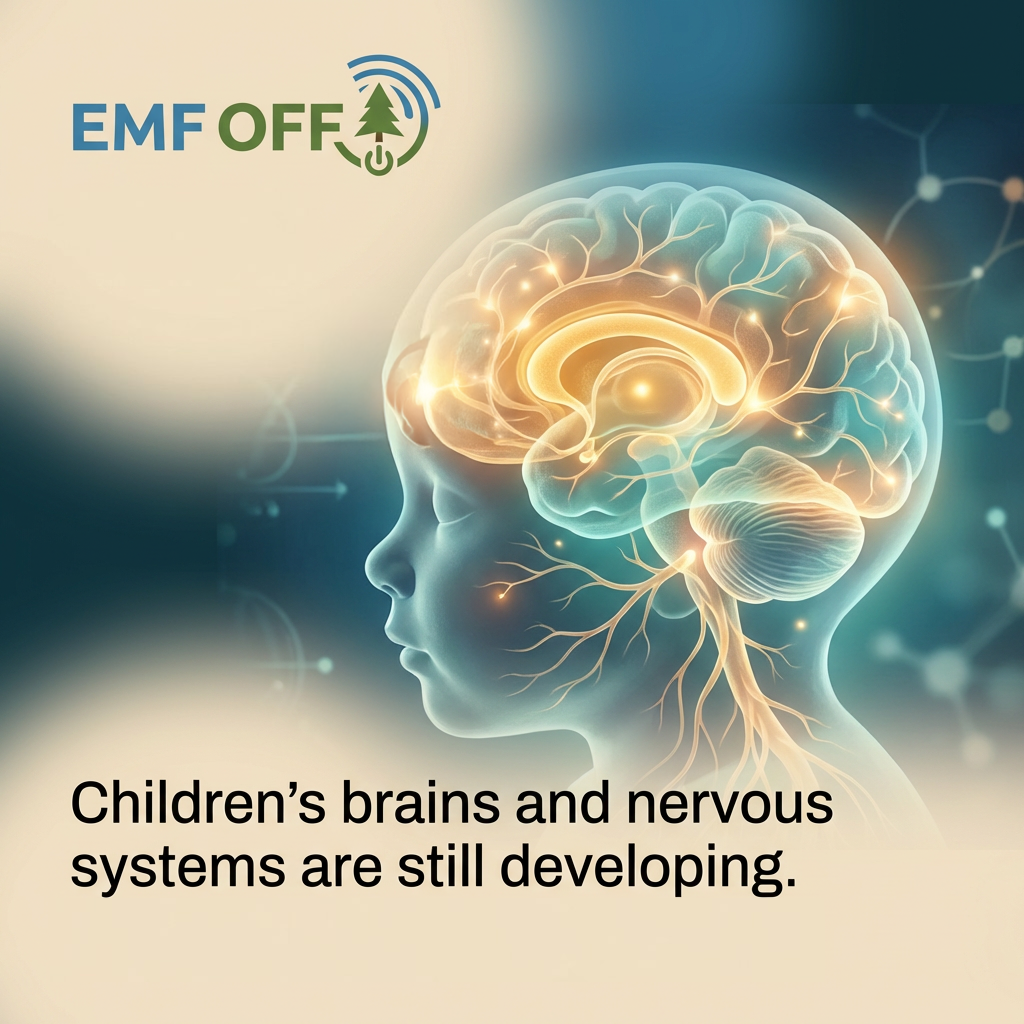
The brain is actively wiring
In childhood, neurons are forming connections at extraordinary speed.
Some pathways are strengthened through use.
Others are removed through pruning.
This is a construction phase, not a steady state.
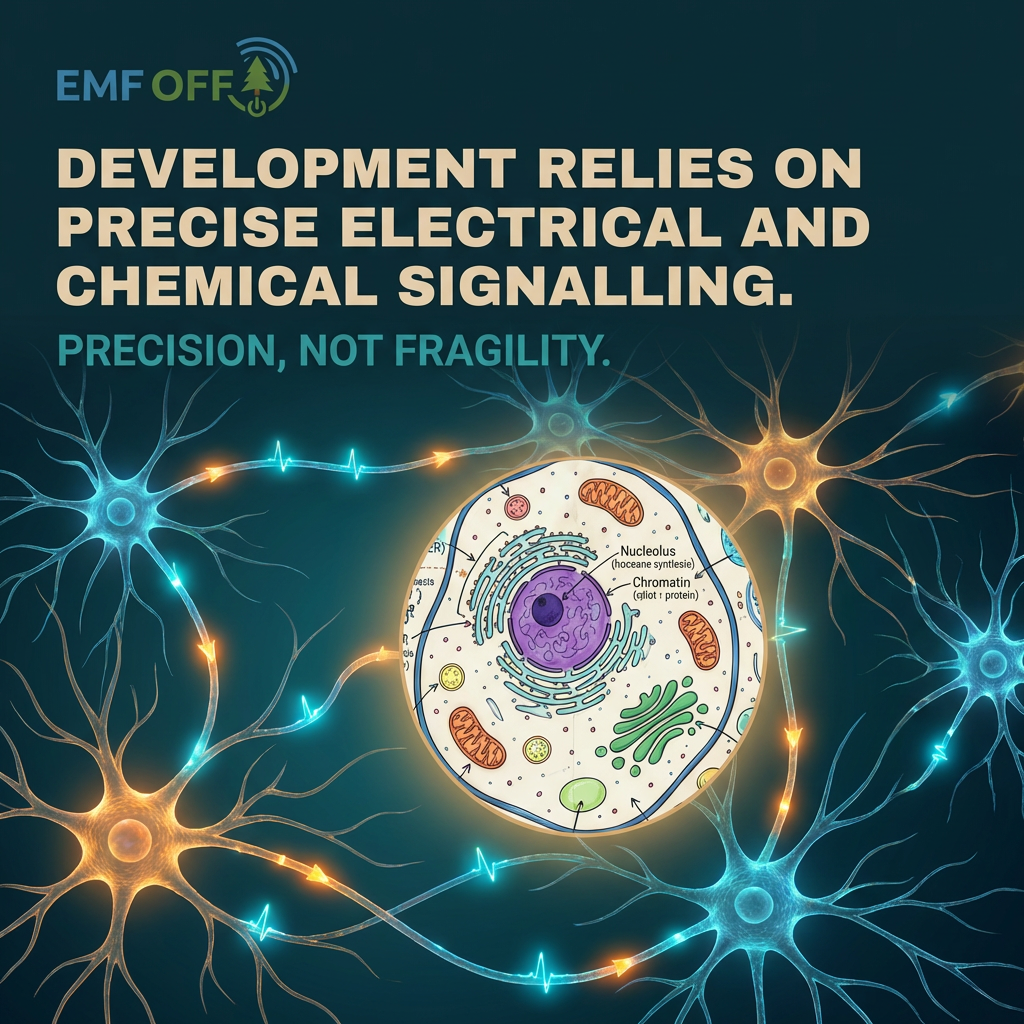
Brain development is guided by bioelectrical cues
As neurons grow and connect, they rely on small electrical changes across cell membranes and tightly regulated chemical signals.
These signals tell cells where to move, when to connect, and which pathways to strengthen or prune.
Because this process depends on precise timing and intensity, long-term environmental inputs during development deserve careful examination.
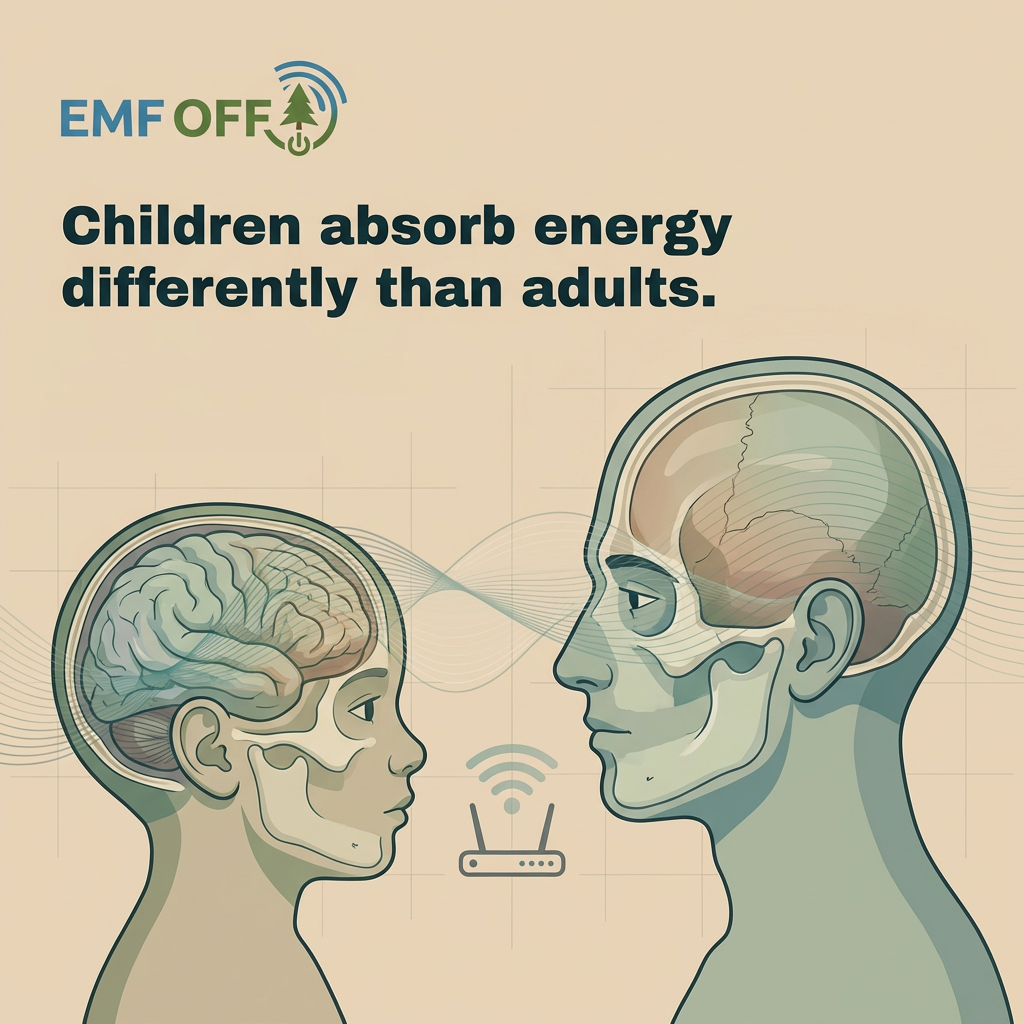
Children’s bodies interact differently with energy
Differences in skull thickness, tissue composition, and body size affect how energy distributes internally.
Models show that absorption patterns vary by age.
Exposure is not identical across life stages.
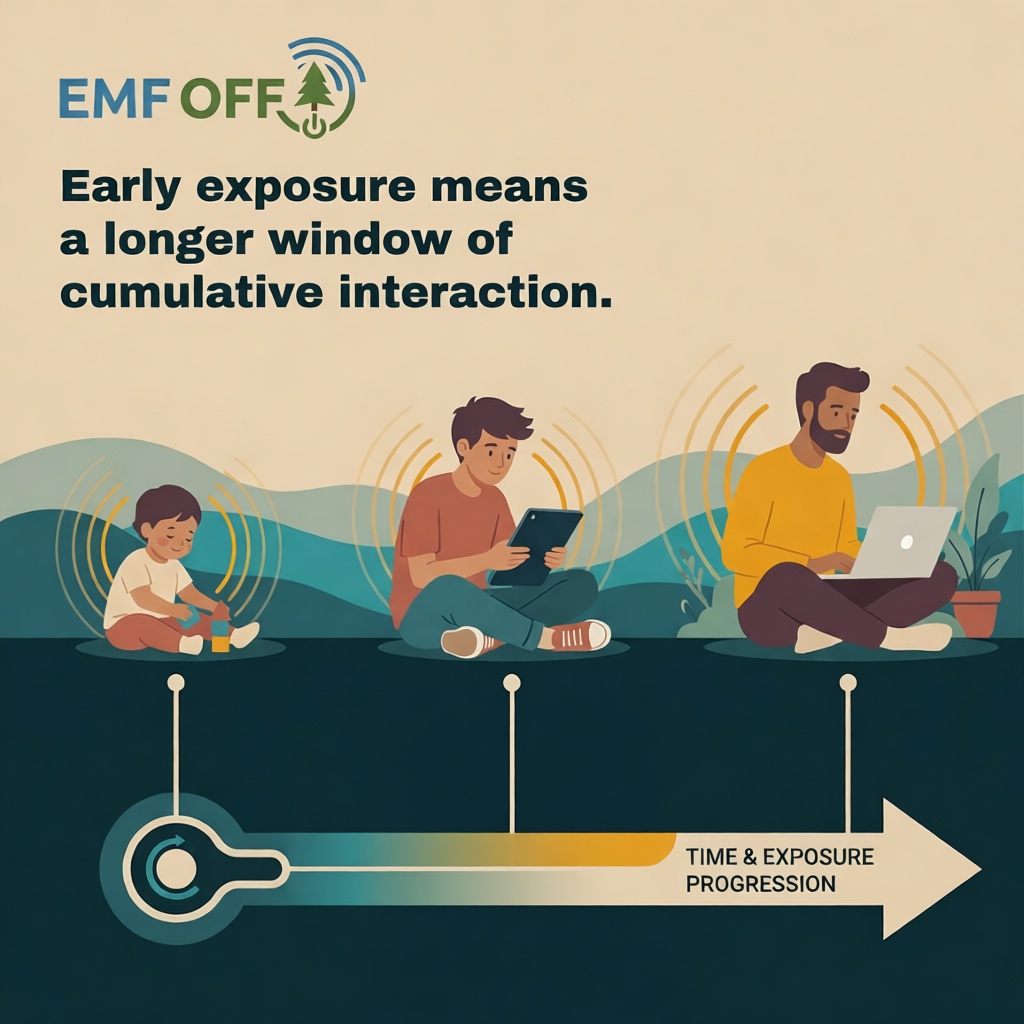
Starting earlier means accumulating longer.
If exposure begins in early childhood, it extends across decades.
Even small effects, repeated over time, can compound.
Duration matters as much as intensity.
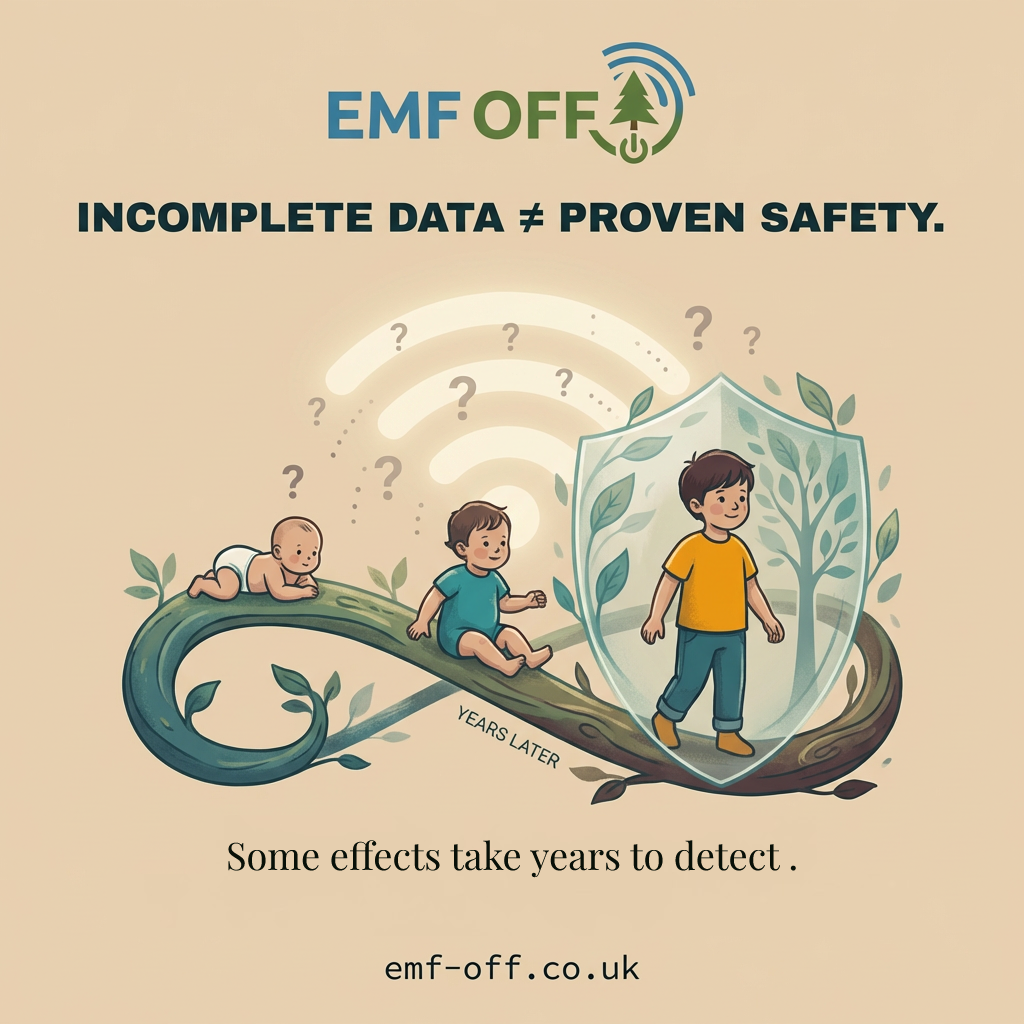
Incomplete data is not the same as proven safety
Long-term developmental outcomes are difficult to measure quickly.
Some effects take years to detect.
Scientific uncertainty should slow confidence, not accelerate it.
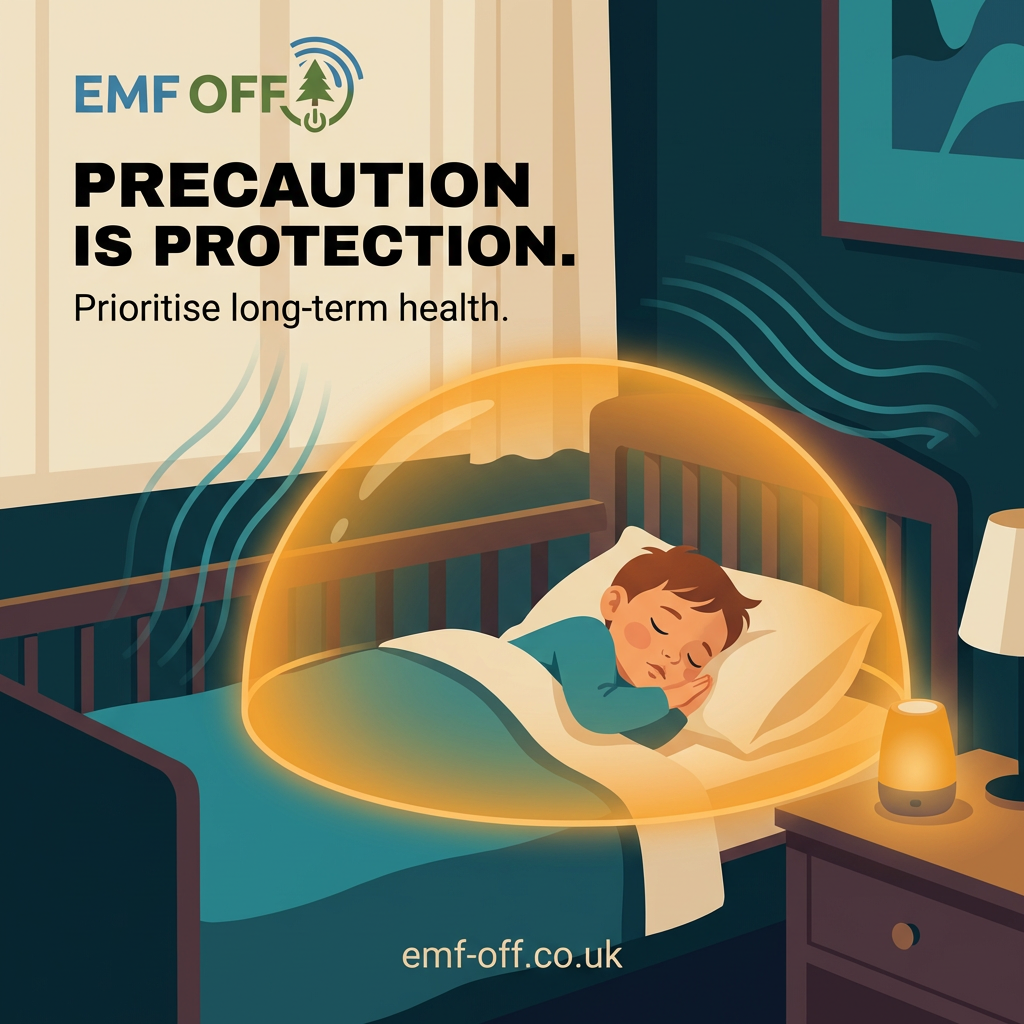
Precaution is a proportional response.
When potential harm affects developing systems, small protective steps are reasonable.
Reducing unnecessary exposure does not require rejecting technology.
It reflects prioritising children’s long-term health.
This is not only a technical debate
Science can estimate risk when it is free of vested interest, thoroughly understood, consistently replicated.
But in contested sceanrios, it is up to individuals to decide how much uncertainty is acceptable — especially for children.