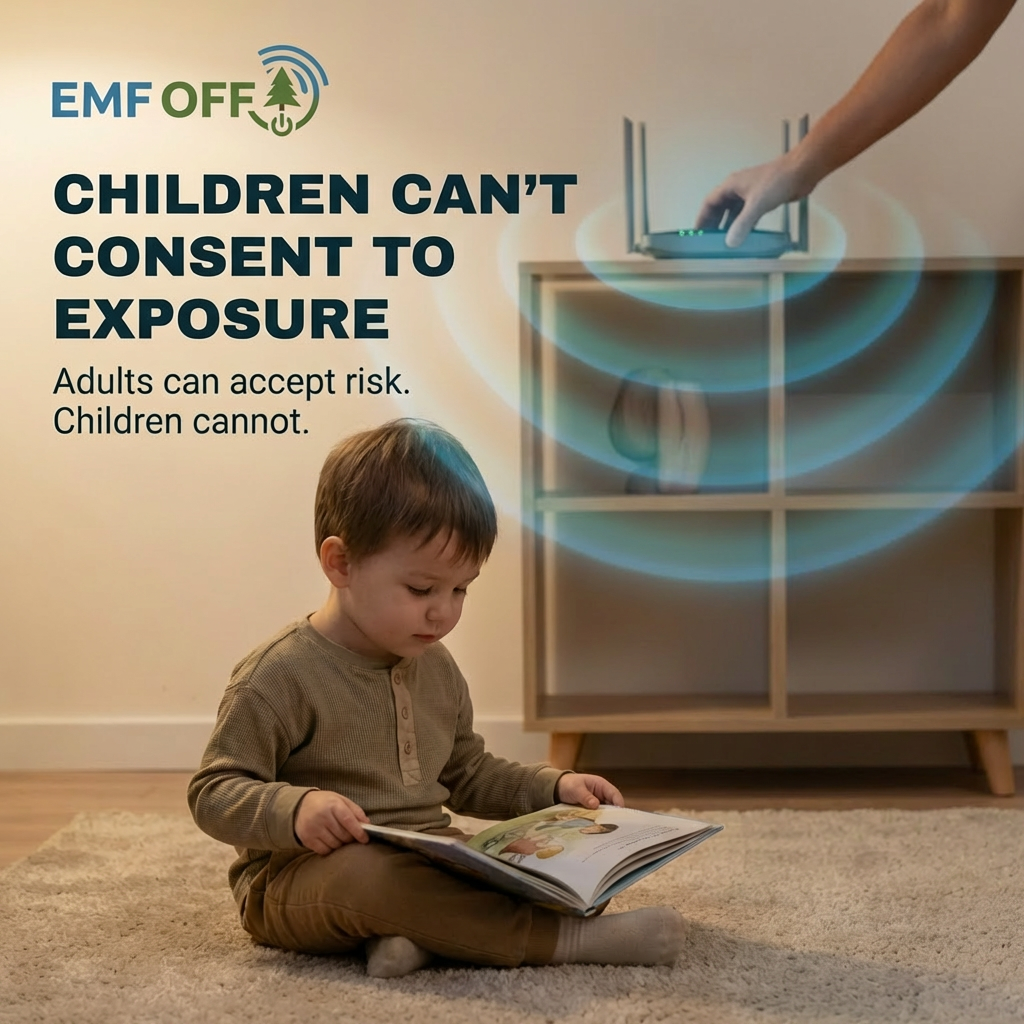
Modern wireless exposure has become ambient, continuous, and largely unquestioned — including during the most biologically sensitive stages of life.
Regulatory standards focus narrowly on acute thermal effects. Yet a substantial body of research reports non-thermal biological responses: altered signalling pathways, oxidative stress, changes in gene expression, and developmental sensitivity.
This series asks a simple question: When outcomes may be irreversible and evidence of biological effect already exists, what does responsible precaution look like?
Development Is a One-Time Biological Window
Neural wiring, synaptic pruning, and signalling calibration occur during tightly timed developmental phases.
These processes are not endlessly reversible. Once circuits are formed — or mis-formed — the body adapts around them.
Early-life inputs shape lifelong architecture.
Development is not a rehearsal; it is construction.
Some Biological Windows Do Not Reopen
Certain cellular and neurological changes cannot simply be “corrected later.”
Epigenetic modifications, altered signalling thresholds, and stress-pattern imprinting can persist long after the original exposure ends.
Irreversibility is the reason precaution exists.
Not every biological change comes with an undo button.
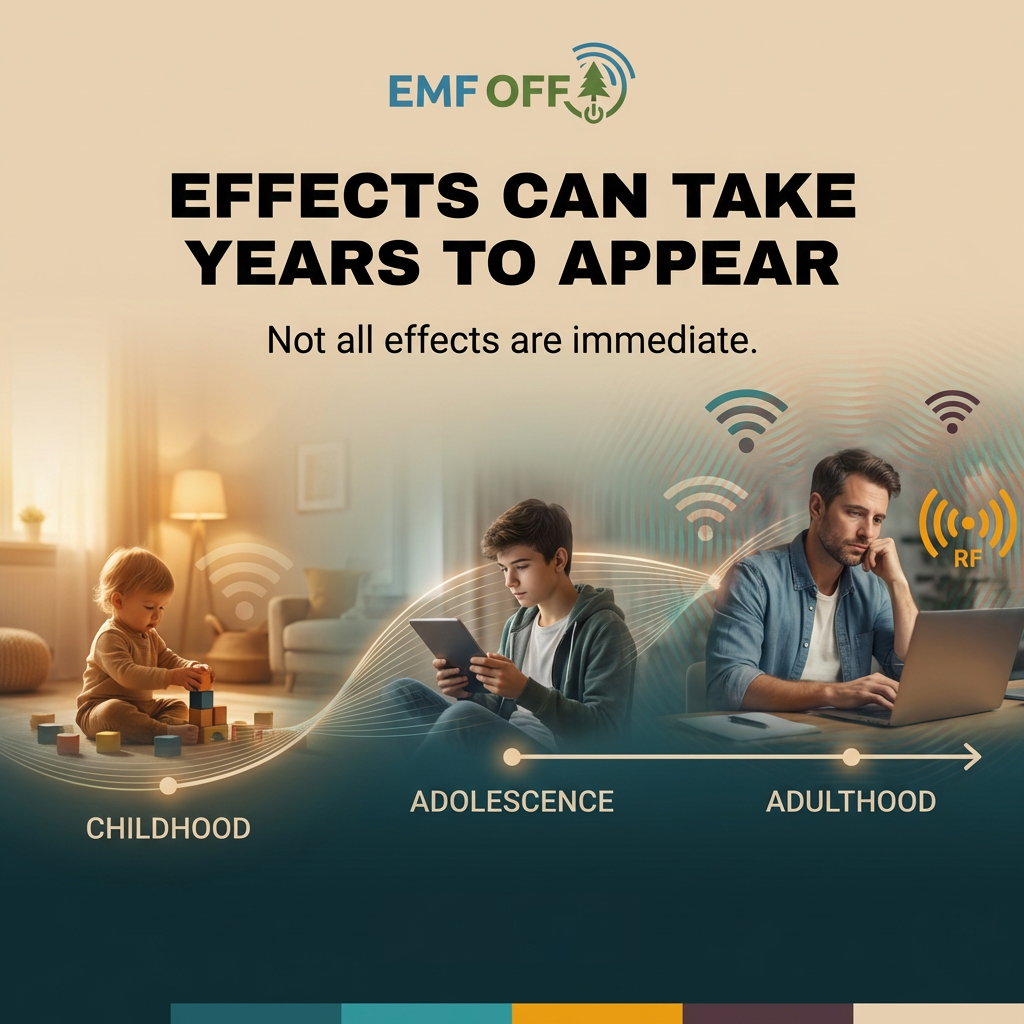
Latency Does Not Equal Safety
Many biological effects emerge gradually.
Chronic oxidative stress, altered neural regulation, or cumulative signalling disruption may take years before presenting as diagnosable conditions.
The absence of immediate symptoms is not proof of harmlessness. Time delay can conceal cause-and-effect relationships.
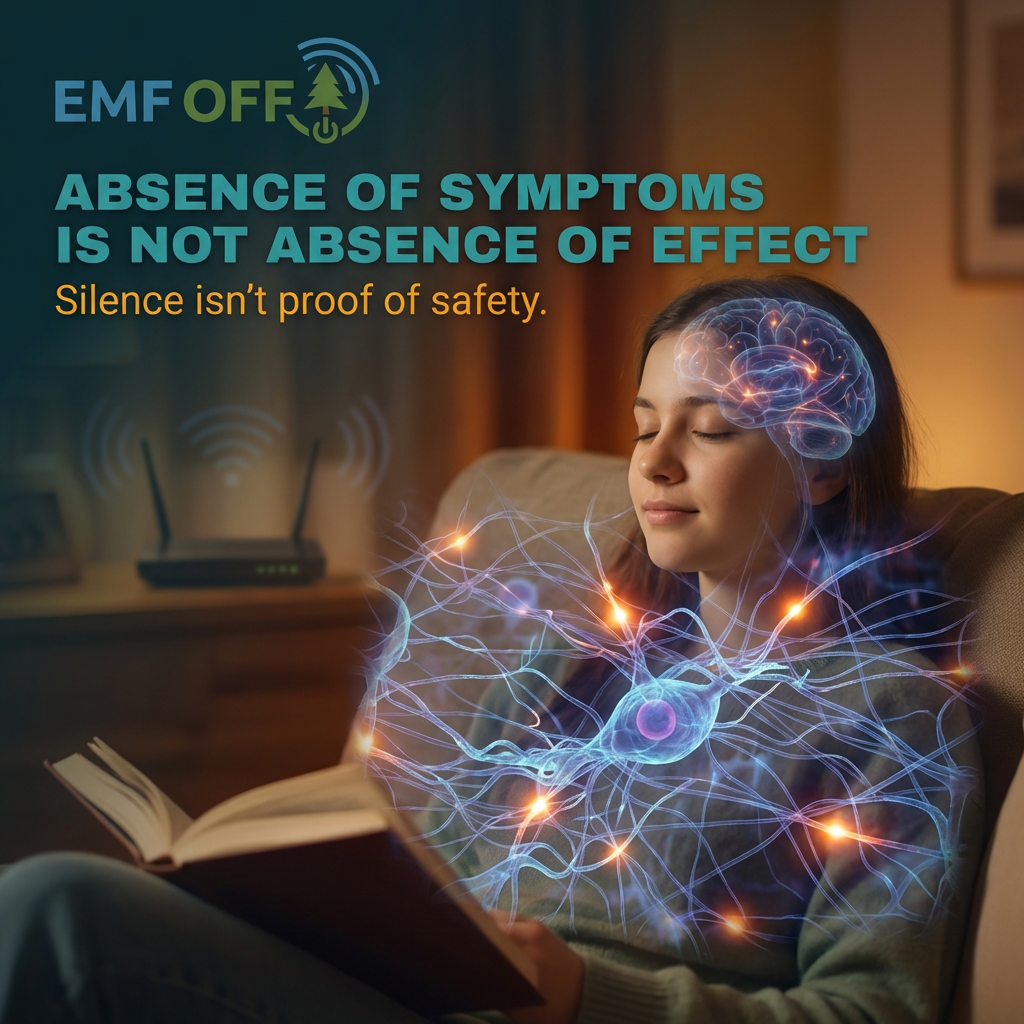
Silence Is Not Scientific Clearance
Biology does not always produce dramatic early warnings.
Regulatory systems often require overt pathology before action is taken — yet subtle cellular disruption can precede visible disease by decades.
When frameworks only count overt damage, subclinical effects disappear from the conversation.
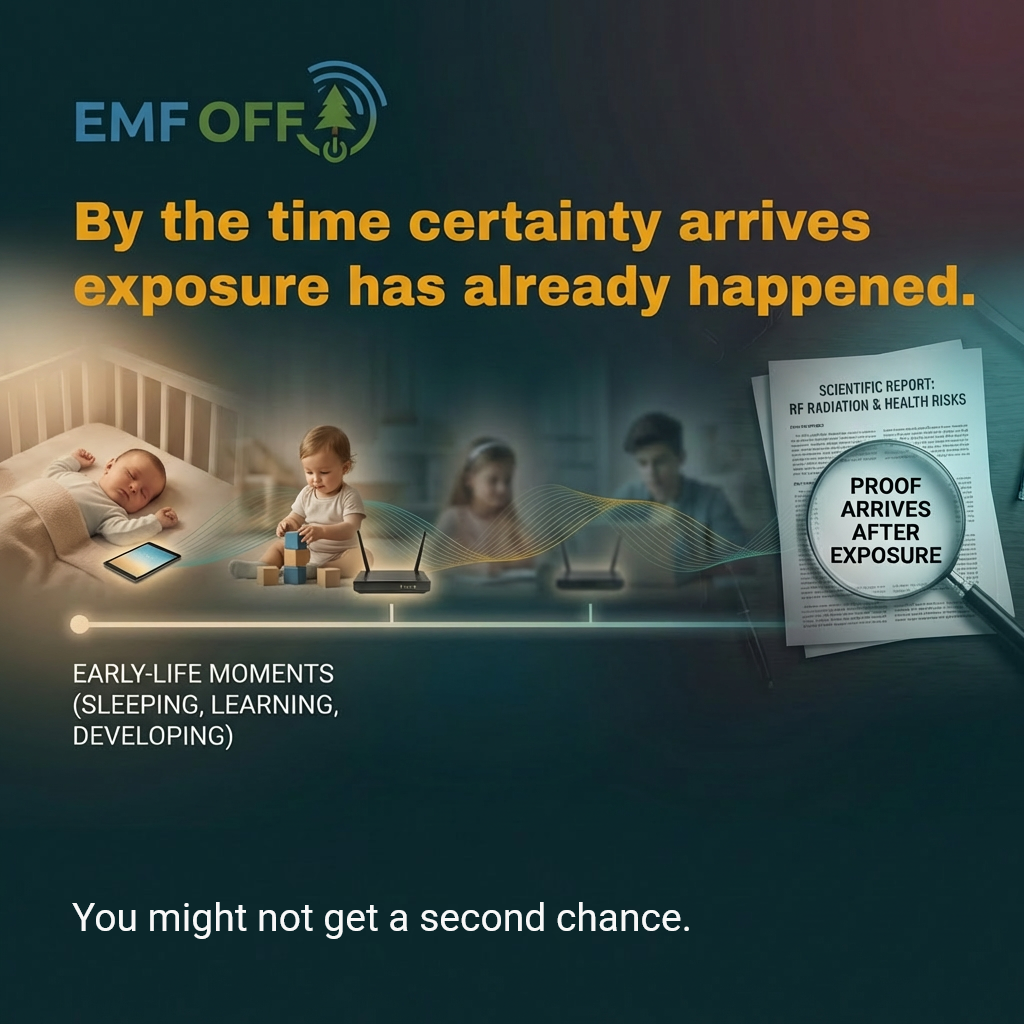
Certainty Arrives After Exposure
History shows that definitive regulatory acknowledgment often trails widespread adoption of technology.
By the time longitudinal data accumulates, entire generations may already have passed through sensitive developmental windows.
Waiting for perfect consensus can mean accepting irreversible exposure in the meantime.
Precaution Exists for Irreversible Risk
The precautionary principle was designed for situations where potential harm is serious and difficult to reverse.
When regulatory definitions exclude non-thermal biological mechanisms, precaution shifts from institutional responsibility to individual choice.
Children depend on adults to apply caution before certainty is politically convenient.
Children Cannot Volunteer for Risk
Adults can evaluate trade-offs and accept personal exposure decisions.
Children cannot meaningfully assess long-term biological uncertainty — especially when that uncertainty is narrowed by regulatory framing.
Exposure decisions for minors are imposed, not chosen.
Convenience Is Optional. Development Is Not.
Wireless infrastructure prioritizes speed, efficiency, and economic gain.
Biological systems prioritize stability, signalling precision, and developmental integrity.
When commercial convenience conflicts with developmental caution, regulatory narrowing tends to protect markets first.
Profit depends on continuation. Development depends on protection.
Responsible Action Precedes Regulatory Reform
When evidence of biological effects exists but remains excluded from official harm categories, waiting for regulatory expansion can mean waiting indefinitely.
The rational response to unresolved but credible risk is proportionate reduction — especially for children.
When outcomes may be irreversible, caution is not extremism. It is stewardship.