Most people assume EMF safety standards are based on comprehensive biological testing — but they are not.
Current regulations are built around one primary question: does the exposure heat tissue? — But many published studies report biological effects at levels far below heating thresholds.
If standards only measure heat, they cannot detect non-thermal mechanisms.
So, let's we examine what is tested, what is excluded, and why that distinction matters.
Standards Ask a Narrow Question
What problems are we testing for?
Regulatory limits were built around preventing acute thermal injury — measurable tissue heating.
Which is a real hazard at high intensities and should be guarded against.
But it is not the only biological interaction recorded by science — far from it.
When a safety framework defines harm as heating, non-thermal mechanisms fall outside its scope by design.
Is the safety framework therefore safe?
Biology Is Electrical
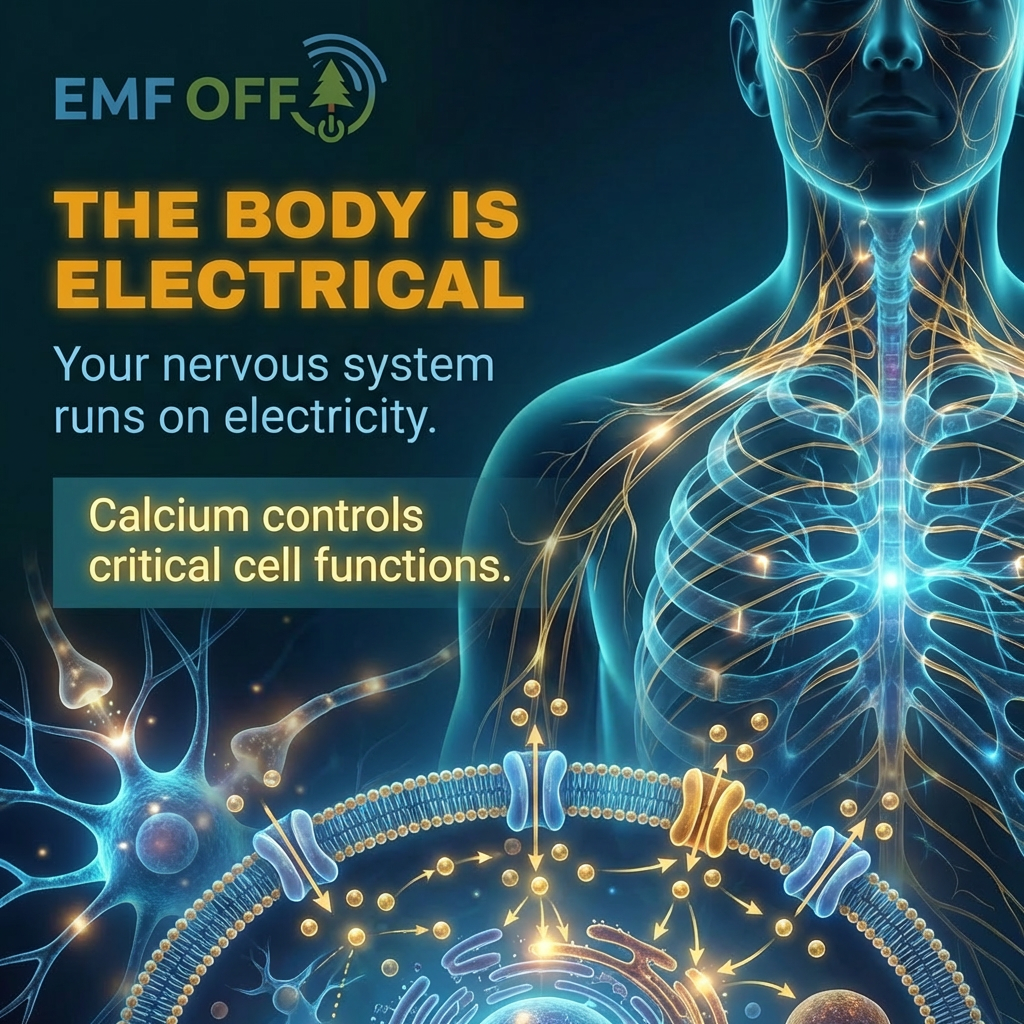
Cells Operate Through Electrical Signalling,
Your nervous system, heart rhythm, muscle contraction, and hormone release rely on controlled electrical gradients.
Calcium ions act as key signalling messengers inside cells.
These systems are tightly regulated because small electrical changes can produce large downstream effects.
This is basic physiology — not speculation.
Voltage-Gated Calcium Channels are the cells literal gatekeepers
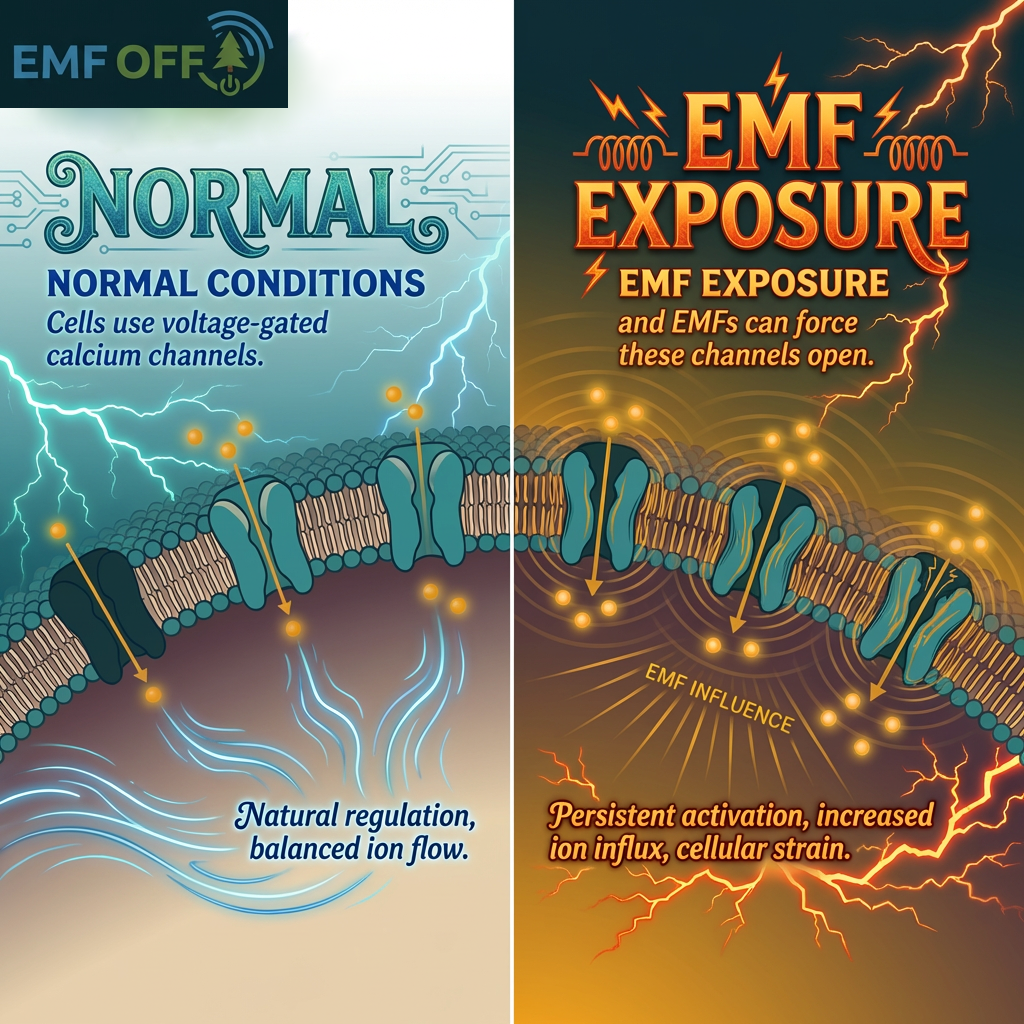
Voltage-gated calcium channels (VGCCs) open in response to electrical changes across the cell membrane.
When they open, calcium flows into the cell and triggers downstream signalling cascades.
Under normal conditions, this process is precise and transient.
Excess activation can amplify oxidative and inflammatory pathways.
From Signal to StressWhen Activation Becomes Overactivation
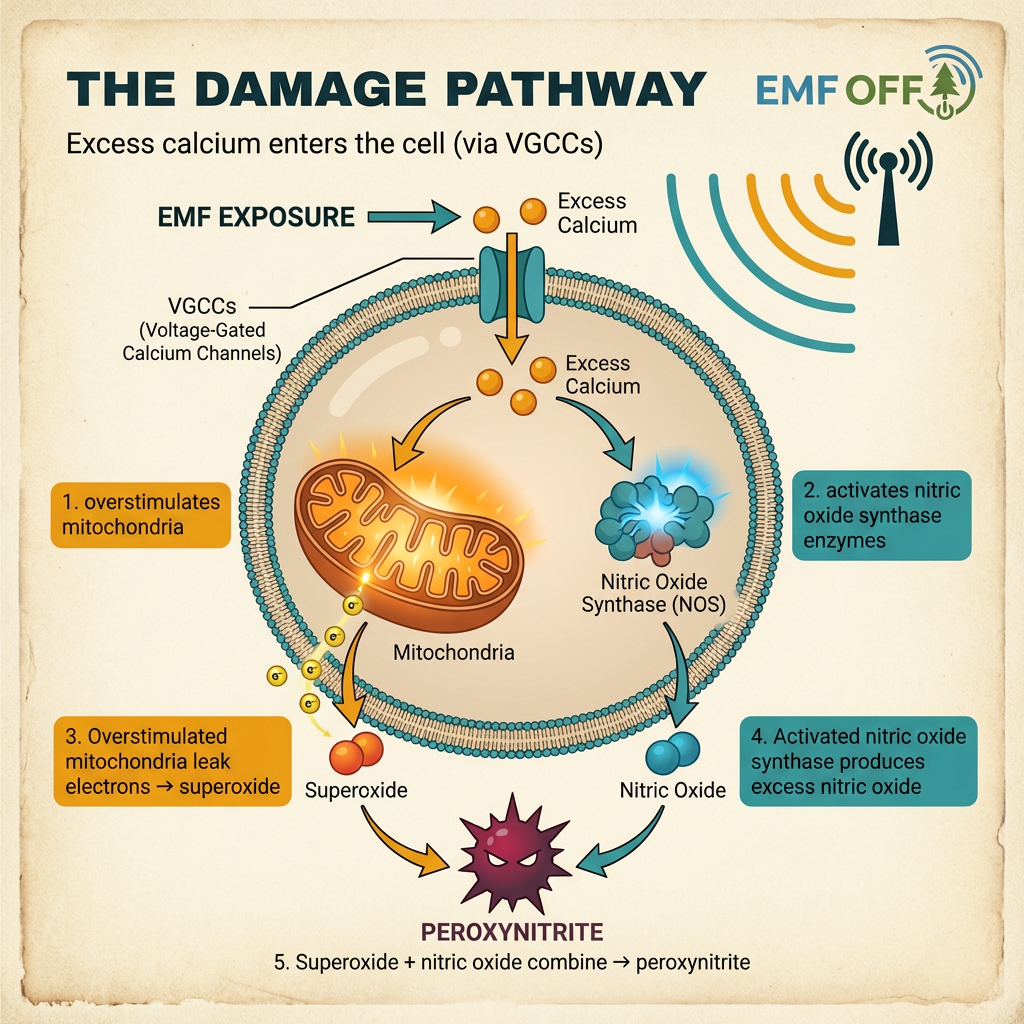
If calcium influx is excessive or prolonged, mitochondria are overstimulated.
This can increase production of reactive oxygen species.
At the same time, nitric oxide pathways may be upregulated.
These reactions are documented in laboratory research and form the basis of non-thermal biological hypotheses.
Peroxynitrite Formation — A Reactive Byproduct
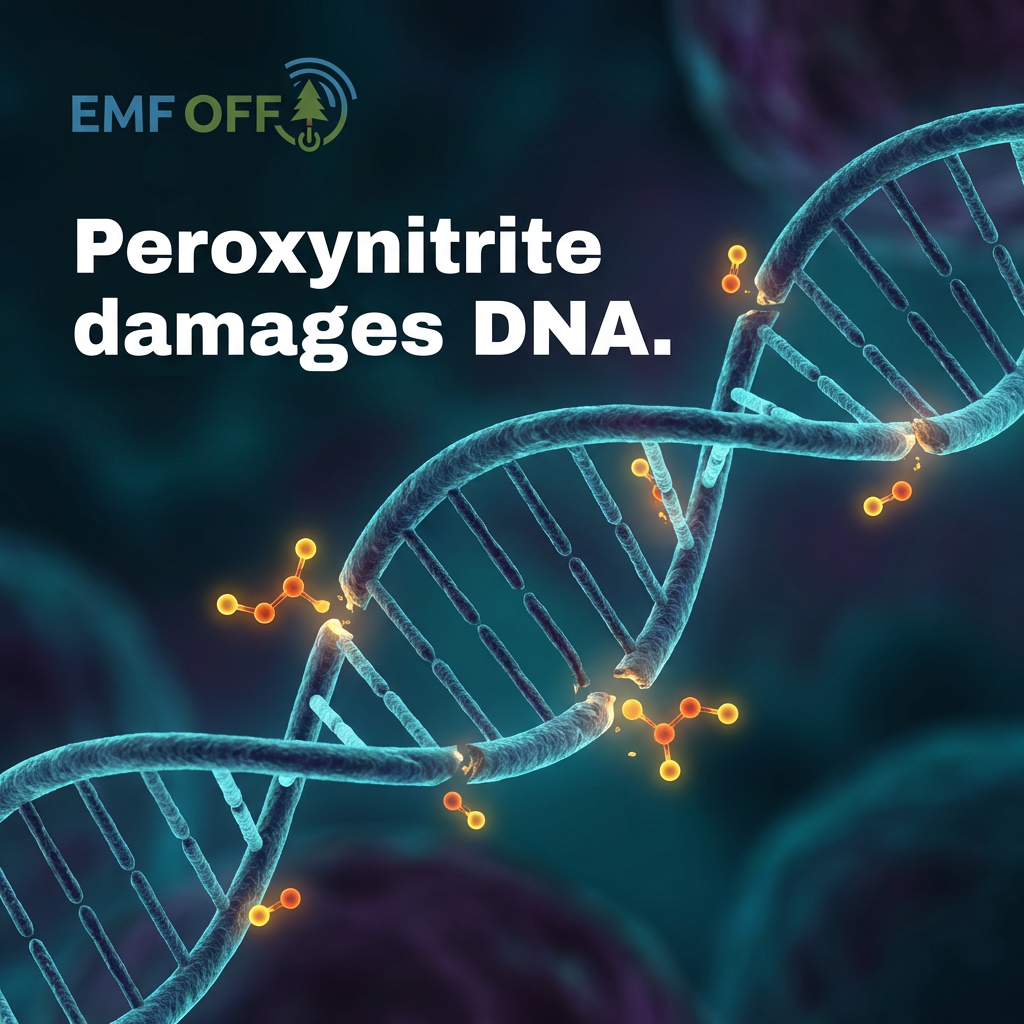
Superoxide and nitric oxide can combine to form peroxynitrite — a highly reactive molecule.
Peroxynitrite can damage proteins, lipids, and DNA.
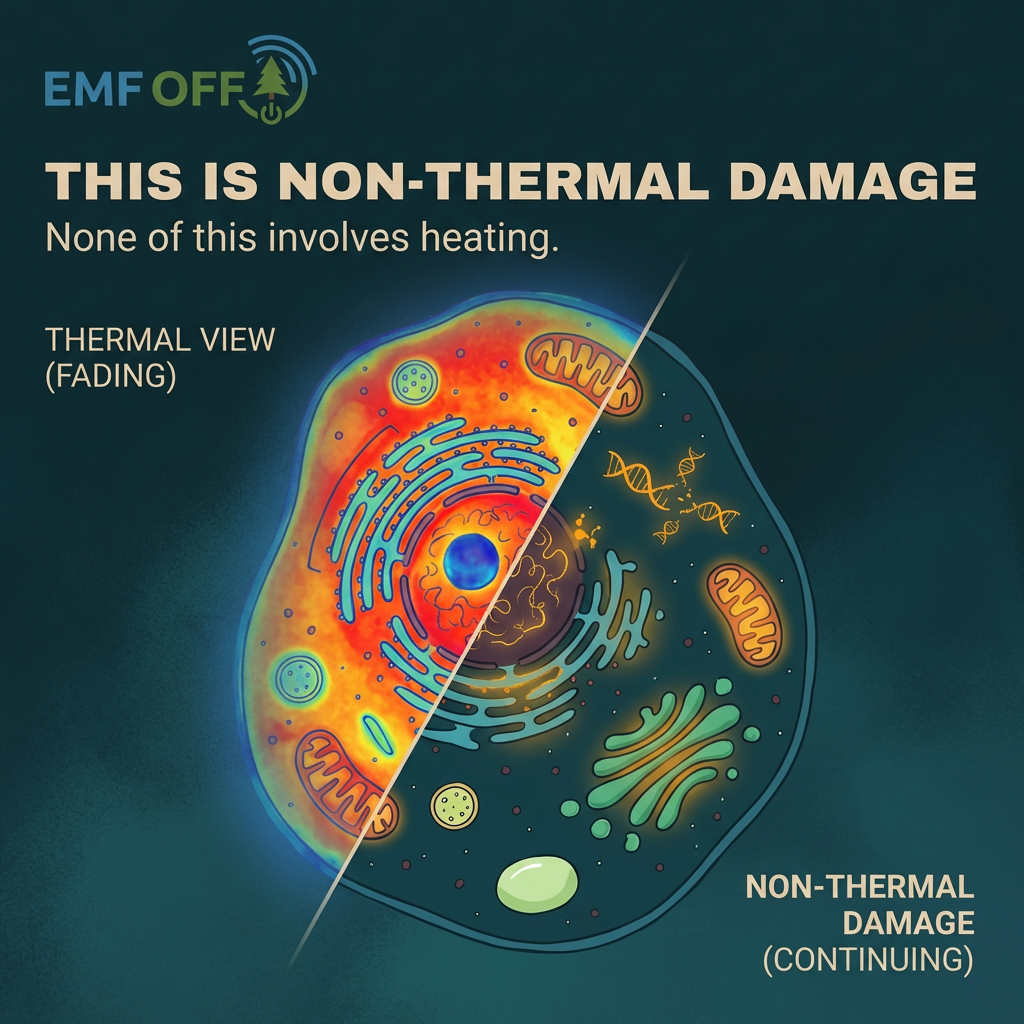
This mechanism does not require heating.
It operates at the level of cellular biochemistry.
Non-Thermal Damage Pathways
Multiple experimental studies report oxidative stress markers and DNA strand breaks at exposure levels below thermal limits.
Under the current regulatory framework, these finding are completely ignored - not because they are unscientific, but because they are non-thermal.
Two Very Different Models of HarmSpecific Absorption Rate (SAR)
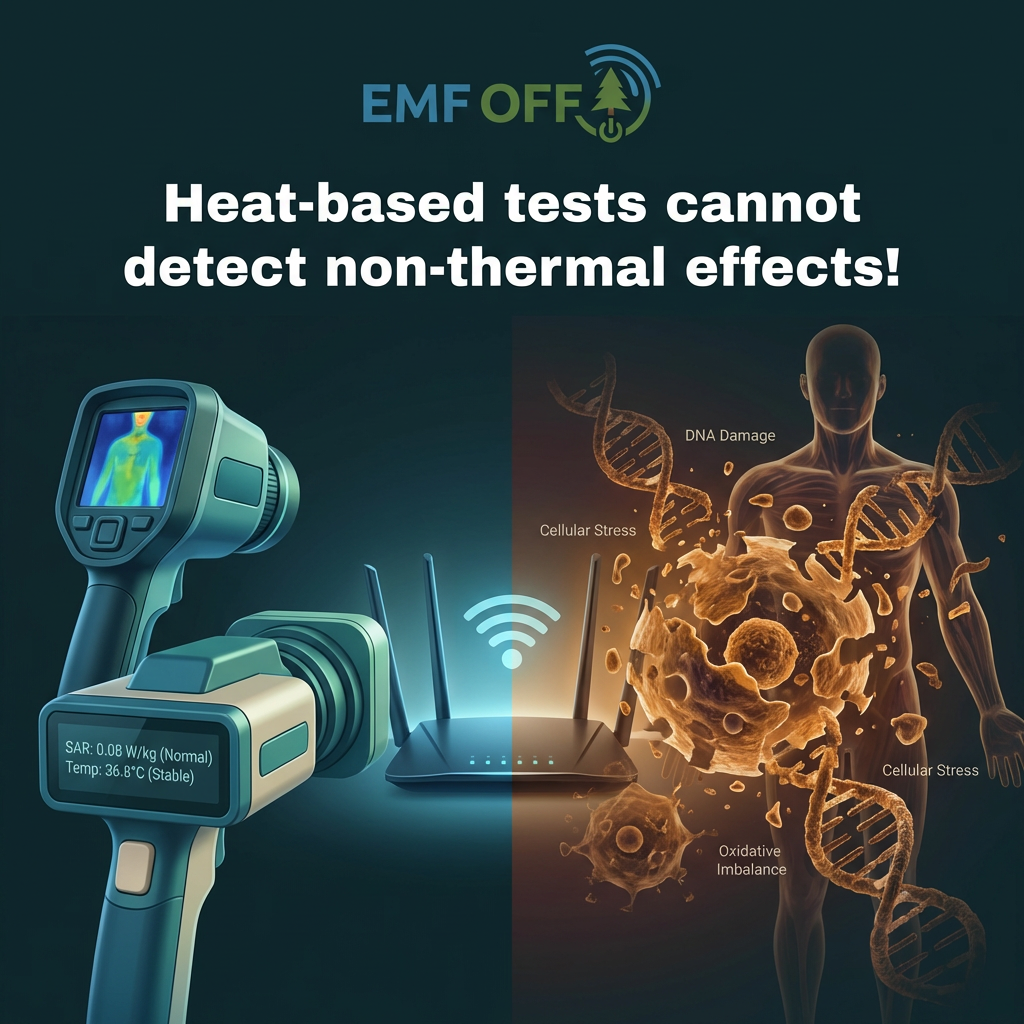
SAR measures how much radiofrequency energy is absorbed as heat in tissue.
It does not measure oxidative stress, calcium signalling changes, DNA damage, or long-term biological modulation.
Passing a SAR test means heating stayed below a threshold.
It does not mean no biological effect occurred.
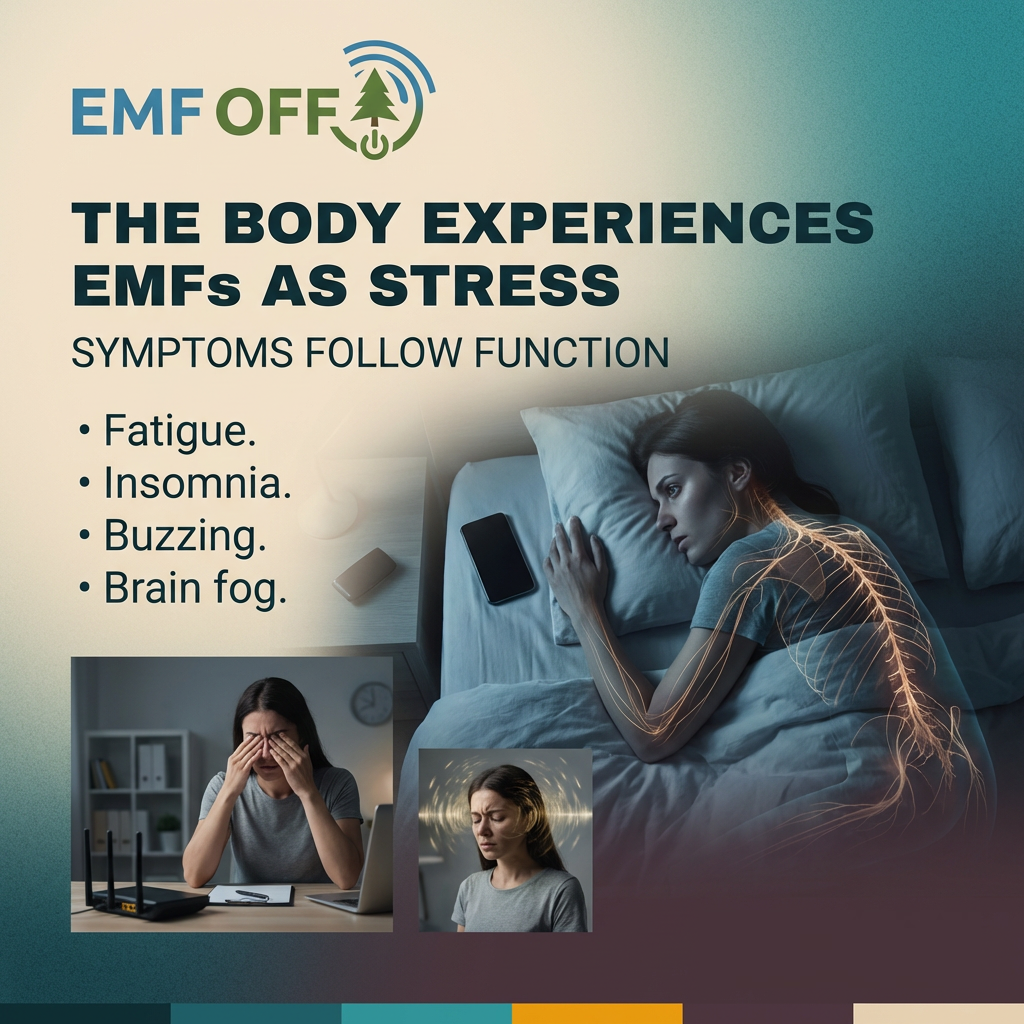
The Body Interprets EMF radiation as Stress
When cellular signalling is repeatedly perturbed, stress pathways activate.
Oxidative imbalance and inflammatory signalling can follow.
Reported symptoms such as sleep disruption, fatigue, or cognitive fog are consistent with chronic stress physiology.
These are functional responses, not imaginary ones.