The following series is about something subtle but crucial.
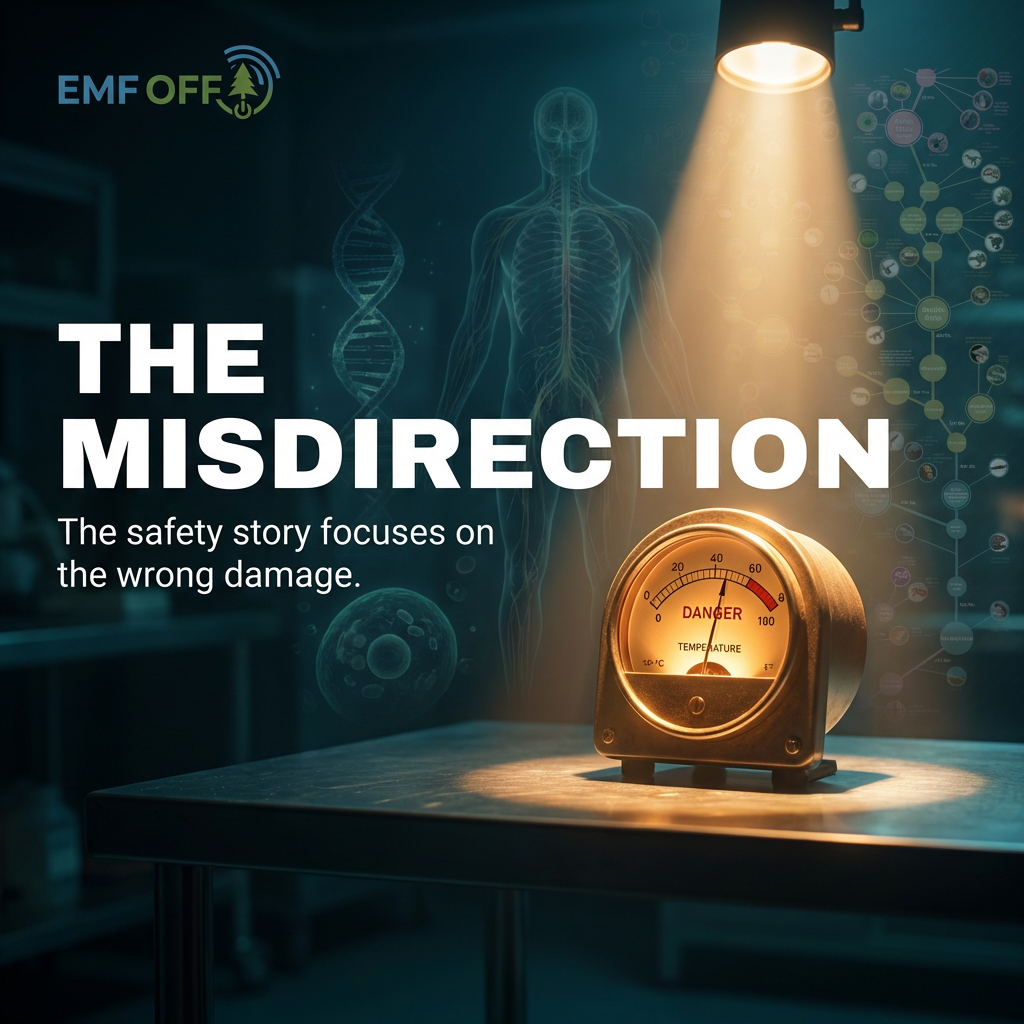
Modern RF safety standards are not built around the full range of biological evidence. They are built around one narrow definition of harm: short-term heating.
When the rules only look for heat, they will only ever find heat.
That does not mean other effects do not exist.
It means they sit outside the regulatory frame.
The Story We’re Told
The public safety narrative focuses almost entirely on temperature rise.
If exposure does not heat tissue beyond a defined threshold, it is considered compliant.
This creates a powerful psychological shortcut: "no heating equals no harm."
But that assumption depends entirely on what the standards were designed to detect in the first place.
What SAR Actually Measures
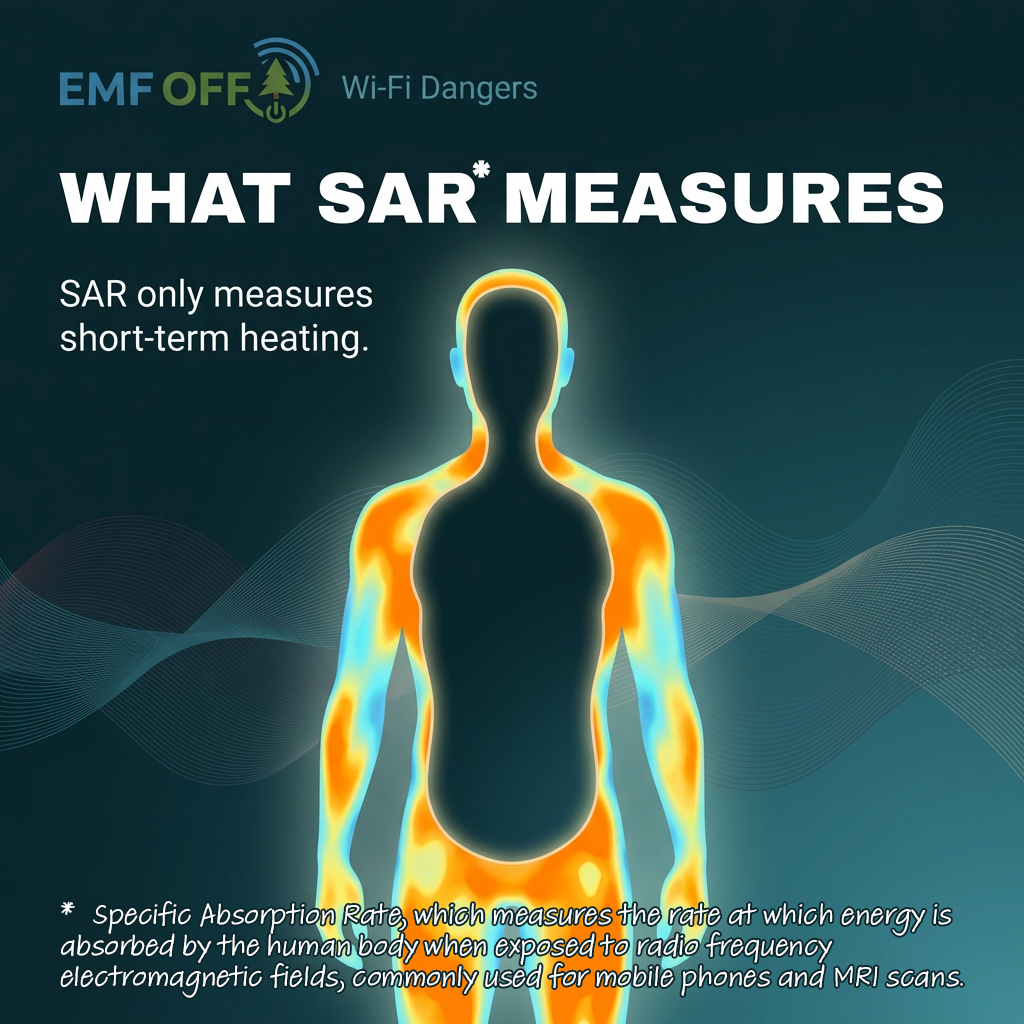
Specific Absorption Rate (SAR) quantifies how much RF energy is absorbed and converted into heat over a short time window.
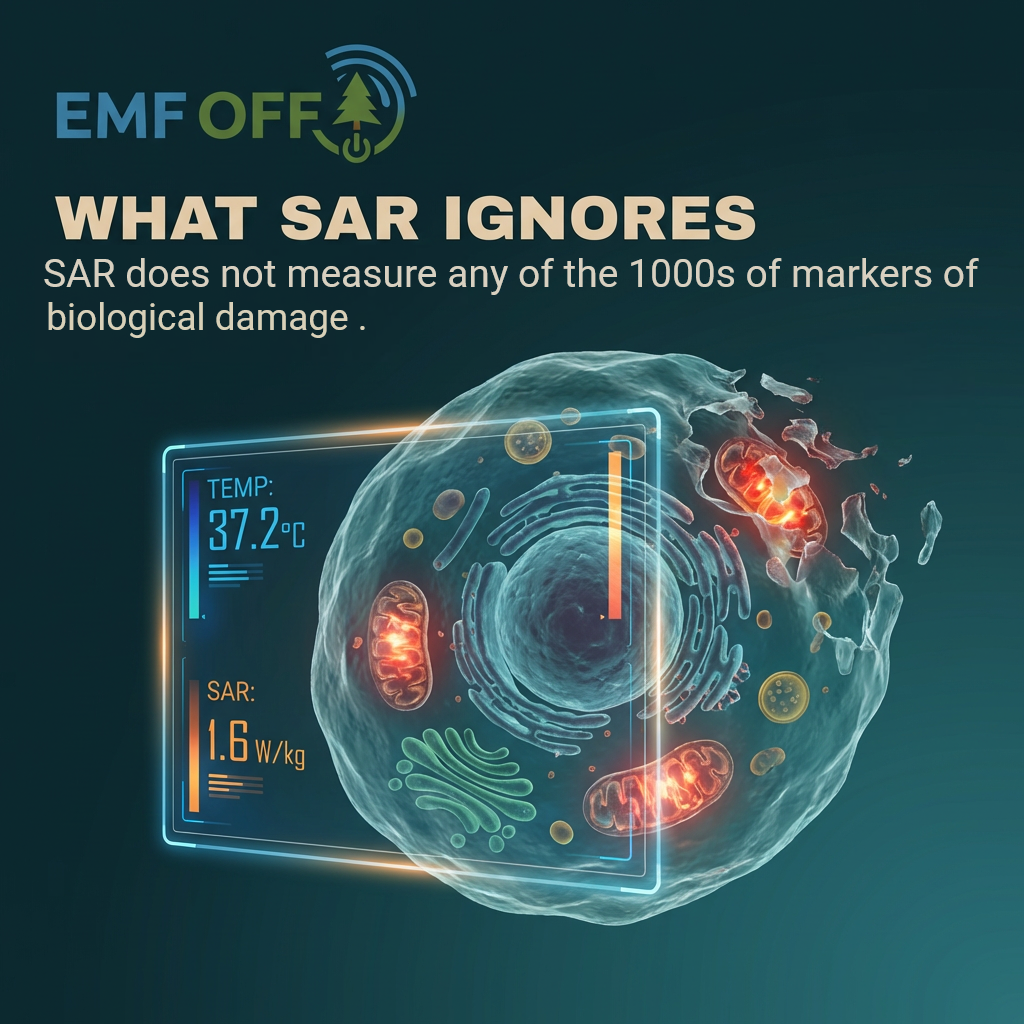
It does not measure oxidative stress, DNA strand breaks, calcium channel activation, mitochondrial dysfunction, or altered signaling pathways.
It measures heat — and only heat.
What Falls Outside the Frame
Thousands of published studies investigate biological responses that occur below heating thresholds.
When regulatory standards do not include those endpoints, those findings are simply ignored by policymakers — regardless of replication or methodological strength.
Exclusion from the framework is not the same as absence of evidence.
Non-Ionizing Does Not Mean Biologically Inert
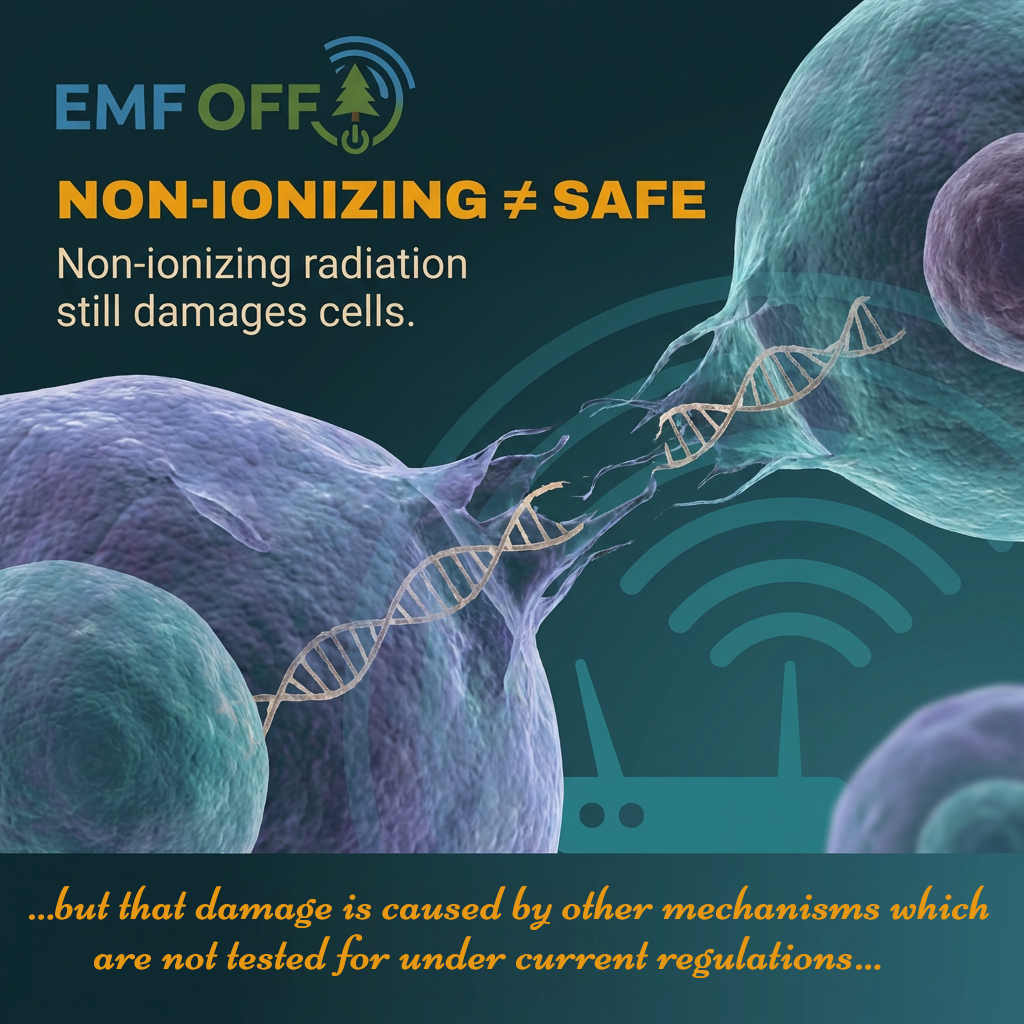
“Non-ionizing” simply means the radiation does not directly knock electrons off atoms the way X-rays do.
It does not mean the signal cannot interact with voltage-gated ion channels, redox systems, membrane receptors, or intracellular signaling cascades.
Different mechanisms does not mean "only one does damage." Yet this is exactly what we are told.
A Plausible Mechanistic Pathway
A growing body of research links RF exposure to increased reactive oxygen species and downstream oxidative stress.
Oxidative stress is not speculative — it is a well-characterized driver of inflammation, DNA damage, and mitochondrial strain across many disease models.
The debate is not whether oxidative stress matters.
It is whether RF can meaningfully contribute to it under real-world conditions.
Different Energy, Shared Biology
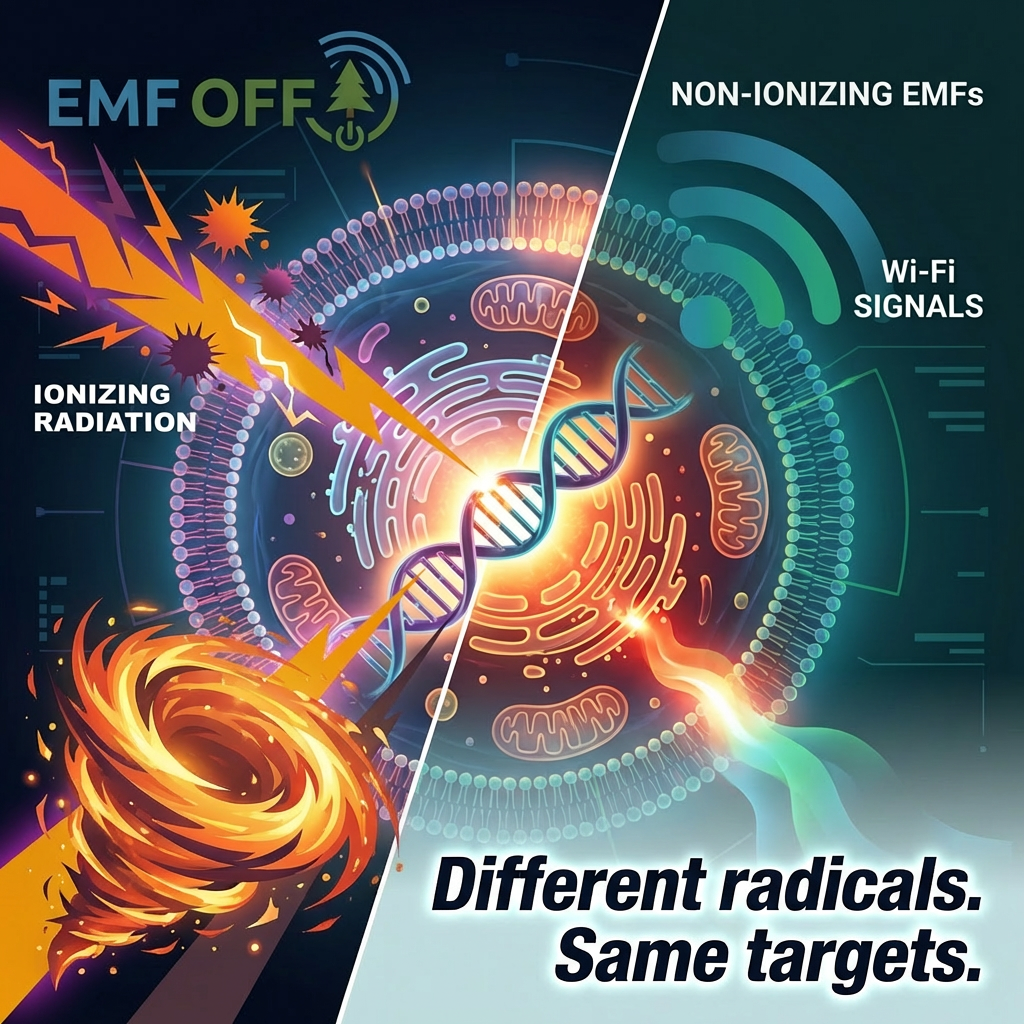
Ionizing radiation damages DNA by directly breaking molecular bonds.
Non-ionizing RF does not carry enough energy to do that directly — but that does not mean it cannot influence the same cellular systems.
A substantial body of research reports increased reactive oxygen species (ROS) following RF exposure.
Excess ROS can damage lipids, proteins, mitochondria, and DNA — not by direct bond breakage, but through oxidative stress pathways.
Different physical mechanism — similar biological damage.
Why Heating Misses the Point
If harm occurs through signaling disruption or redox imbalance rather than bulk temperature rise, a thermal metric will not capture it.
This is analogous to measuring only smoke to determine whether a chemical is toxic.
Absence of smoke does not prove absence of biochemical effect.
The Plastic Model Problem
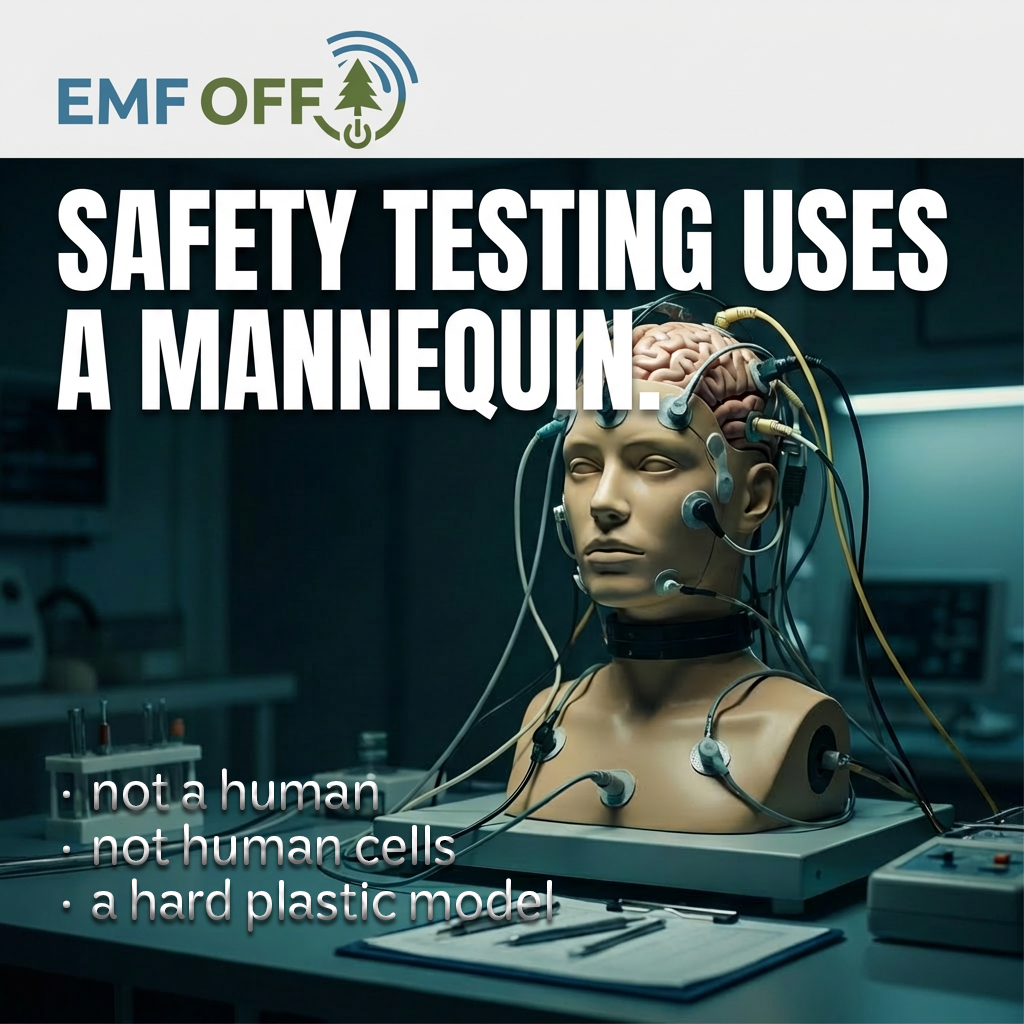
Compliance testing uses a fluid-filled mannequin designed to simulate energy absorption.
It does not simulate living tissue responses, cellular repair processes, developmental vulnerability, or chronic cumulative exposure.
It is a physical absorption model — not a biological response model.
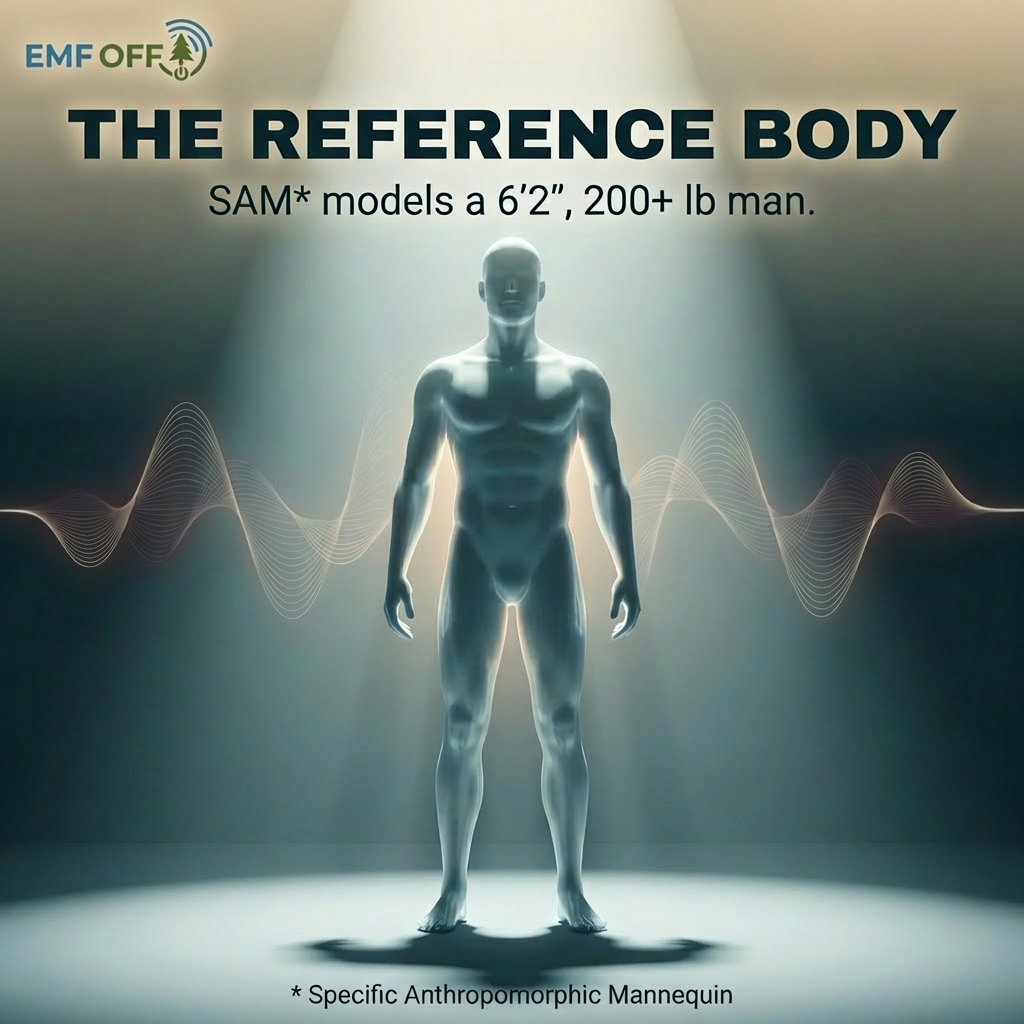
The Reference Body
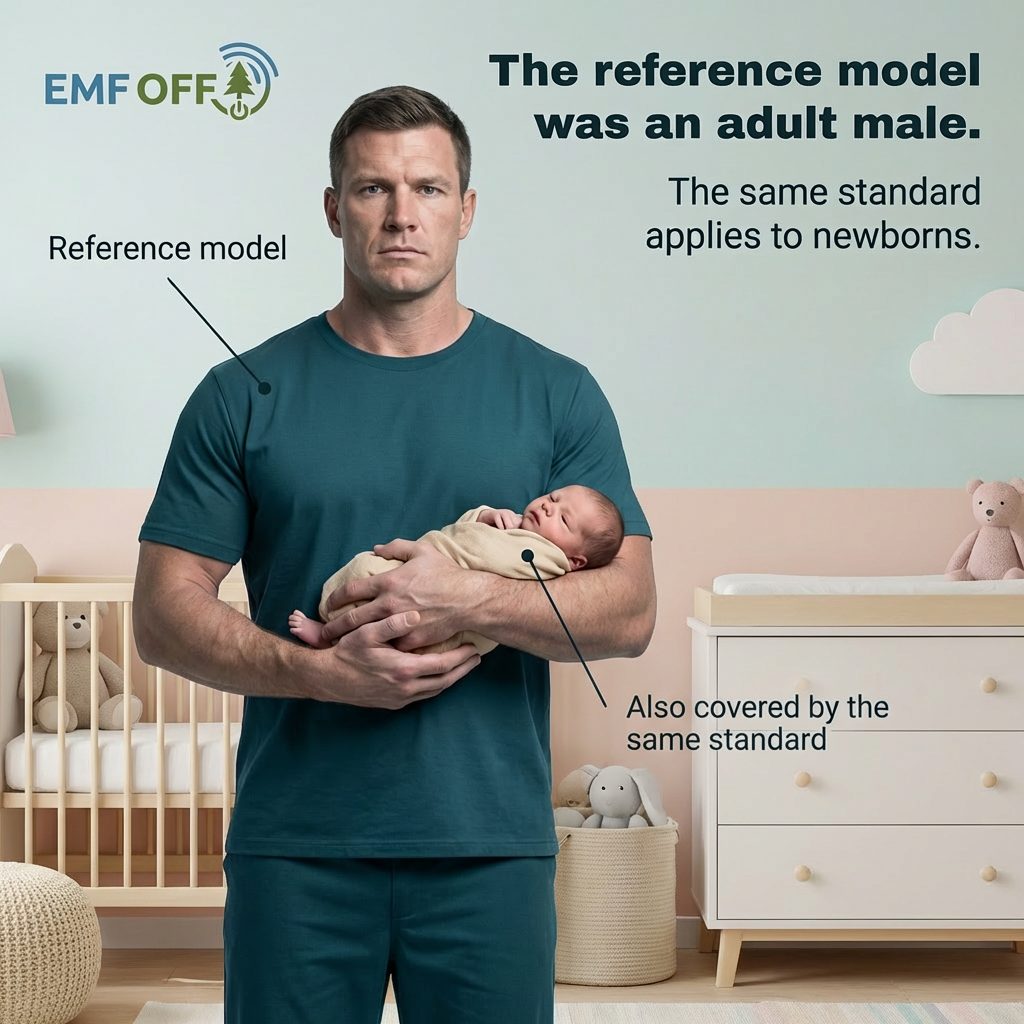
The “standard human” used in testing is modeled after a large adult male.
Children, adolescents, pregnant women, and smaller adults are assessed under the same limits.
Yet developmental neurobiology is not a scaled-down version of adult physiology — it is dynamically regulated and more vulnerable to environmental inputs.
One Standard, Many Bodies - and the majority are smaller
Uniform exposure limits simplify regulation.
They do not reflect differences in skull thickness, tissue conductivity, hydration, developmental stage, or cumulative lifetime exposure.
Biology is heterogeneous. The standard is not.
Self-Reported Compliance
Manufacturers perform SAR testing and submit results for certification.
There is no requirement for independent verification.
Regulatory bodies review for compliance within established protocols — but those protocols define what counts as harm.
When the criteria are narrow, compliance does not equal comprehensive safety.
Variability Within the System
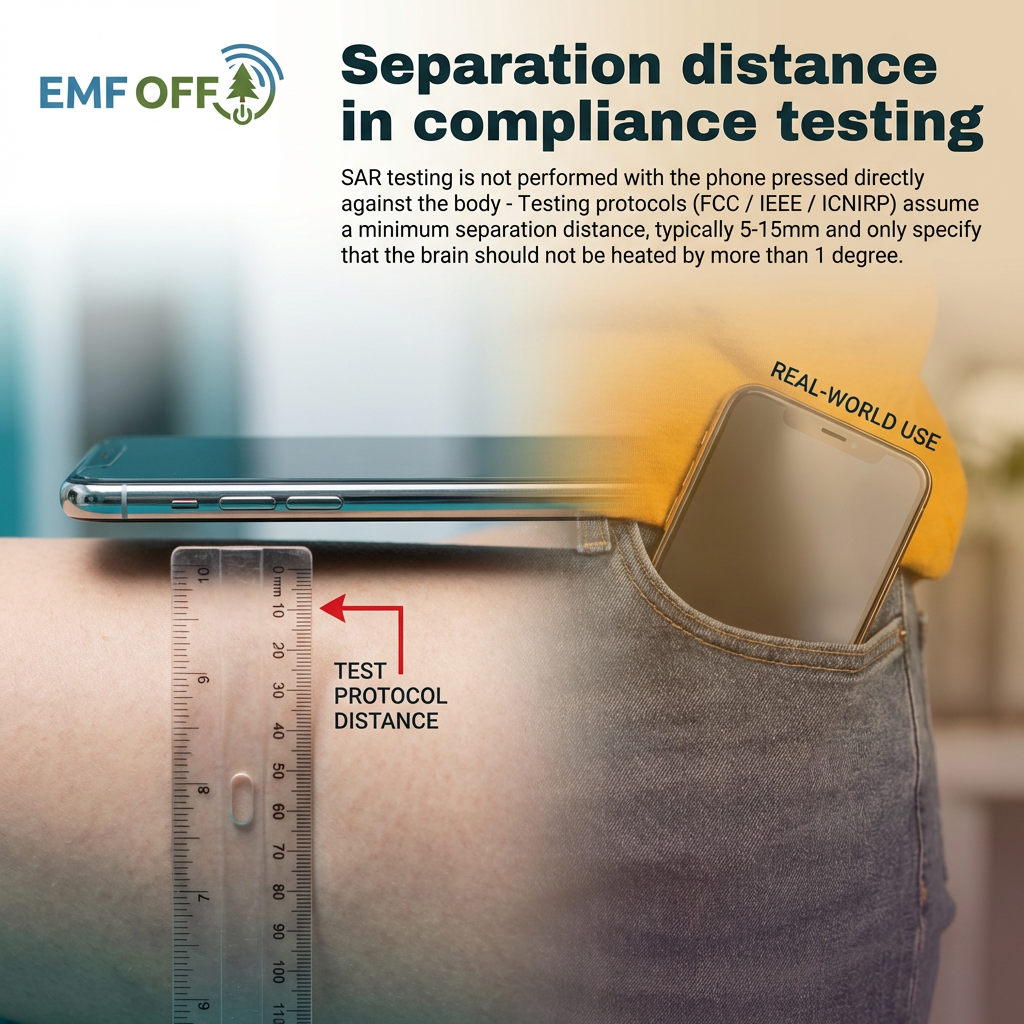
Even within the thermal framework, measured values can vary by testing configuration, positioning, and model assumptions.
Small changes in distance or orientation can alter recorded absorption.
This underscores how controlled lab setups differ from dynamic real-world use.
The Lab Is Not the World
Compliance testing evaluates devices under tightly controlled conditions:
Single transmitter
Fixed distance from the body
Short exposure window
Stable signal strength
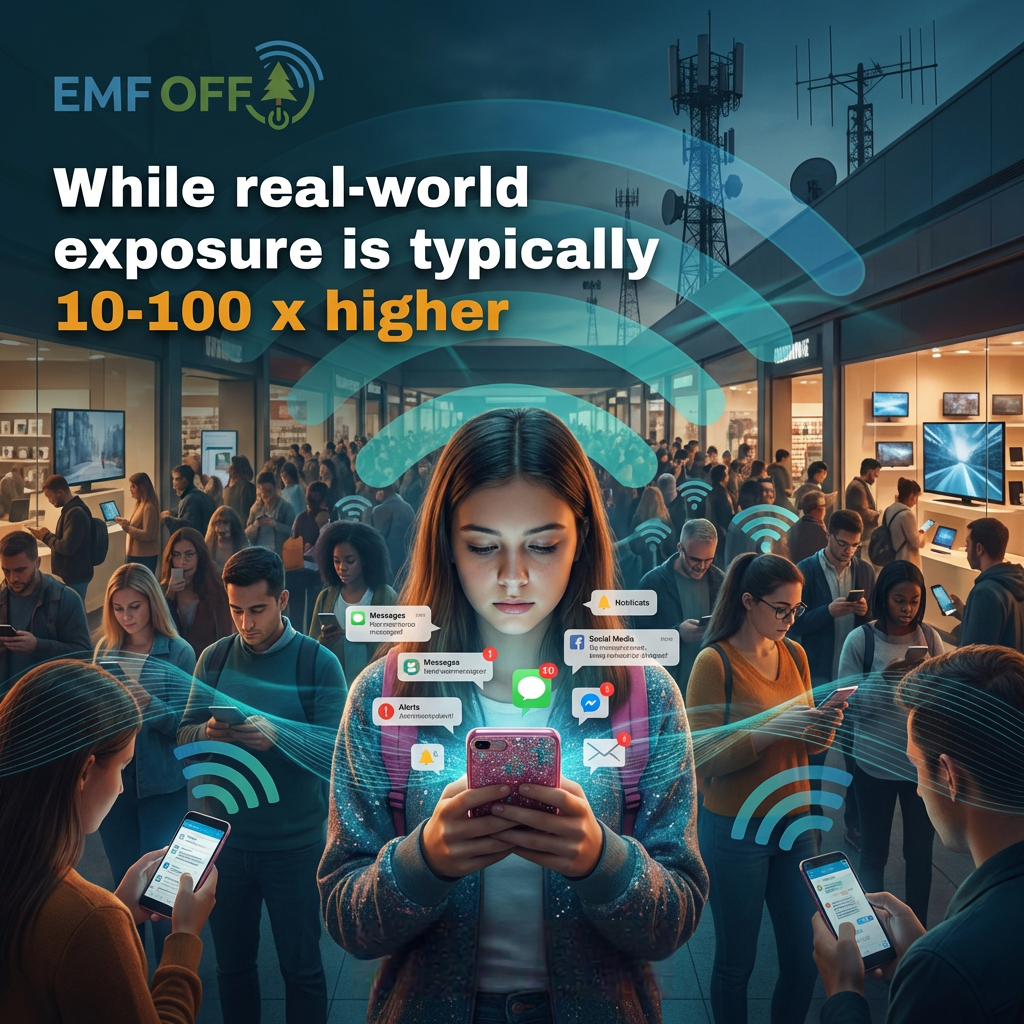
Real-world exposure looks nothing like this.
Children carry devices against their bodies for hours.
Routers emit continuously inside homes and classrooms.
Signals increase power in weak coverage areas.
Multiple transmitters overlap in the same space.
Regulatory testing measures isolated peak absorption.
Modern life produces layered, chronic, cumulative exposure.
The discrepancy is not subtle.
It is structural.
This Is Ultimately Ethical
The central issue is not technological progress.
It is whether developmental health is weighted at least as heavily as economic momentum.
When uncertainty intersects with vulnerability, precaution is a moral stance.
Children deserve that margin of safety.
This Is Ultimately Ethical
The central issue is not technological progress.
It is whether developmental health is weighted at least as heavily as economic momentum.
When uncertainty intersects with vulnerability, precaution is a moral stance.
Children deserve that margin of safety.
This Is Ultimately Ethical
The central issue is not technological progress.
It is whether developmental health is weighted at least as heavily as economic momentum.
When uncertainty intersects with vulnerability, precaution is a moral stance.