We have covered biology, policy & influence structures — now these threads converge.
The question now is whether uncertainty justifies ambivalence when children are relentlessly exposed and unable to consent.
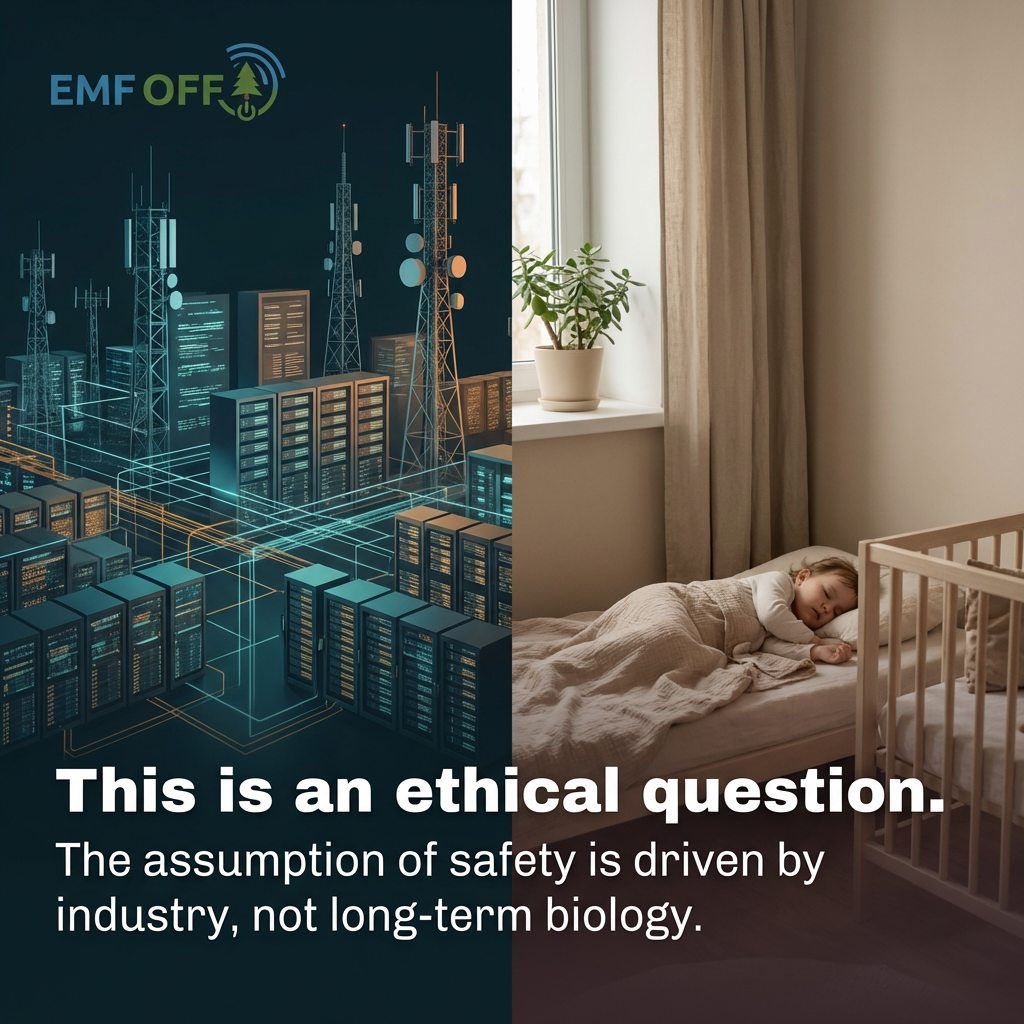
Developing systems are biologically sensitive — Infrastructure expansion is economically entrenched — Regulatory standards remain narrow in scope — When those three realities overlap, the issue becomes ethical — not merely technical.
Precaution in that context is not alarmism — It is responsibile.
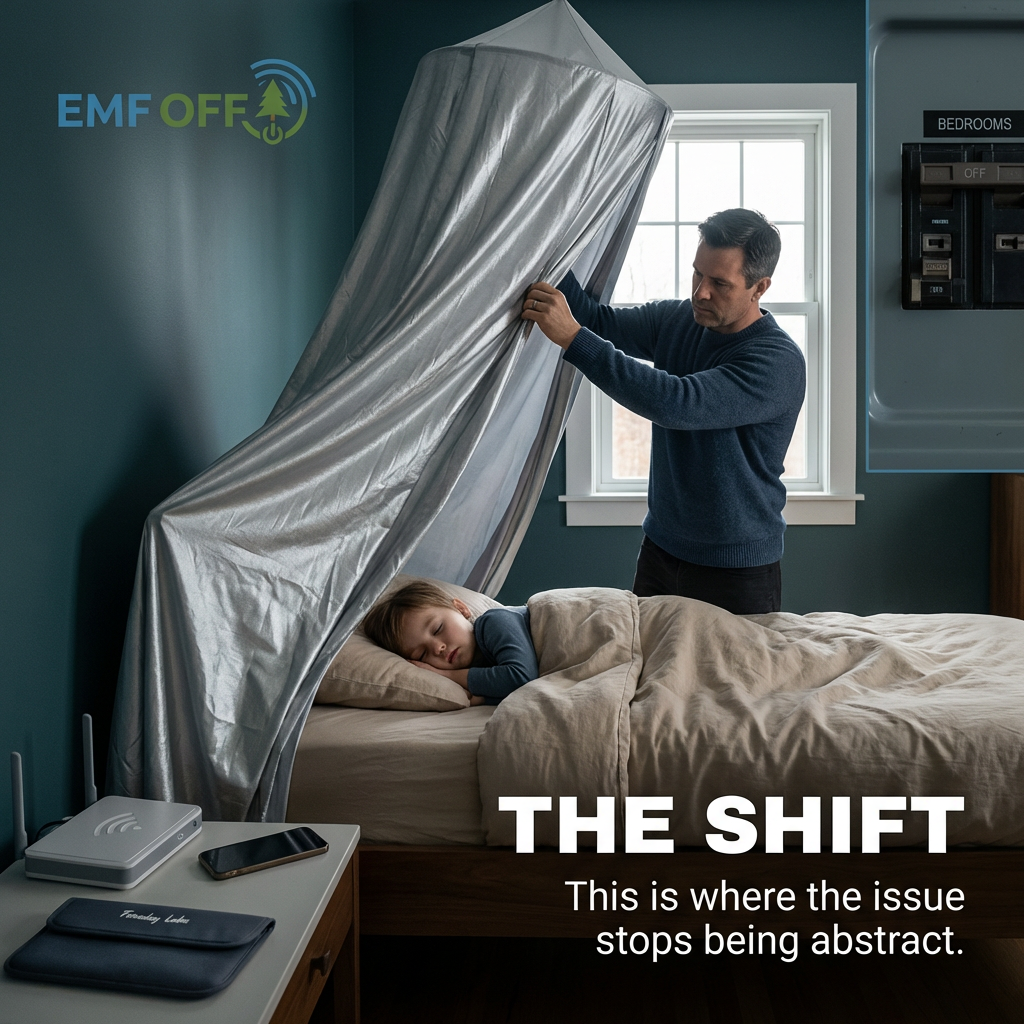
When Theory Becomes Personal
For years, the debate around RF exposure has been framed as technical and abstract.
But when a child’s sleep, nervous system, and developmental environment are involved, abstraction ends.
The question shifts from “Is this proven beyond doubt?” to “Is this exposure necessary?”
That shift changes everything.
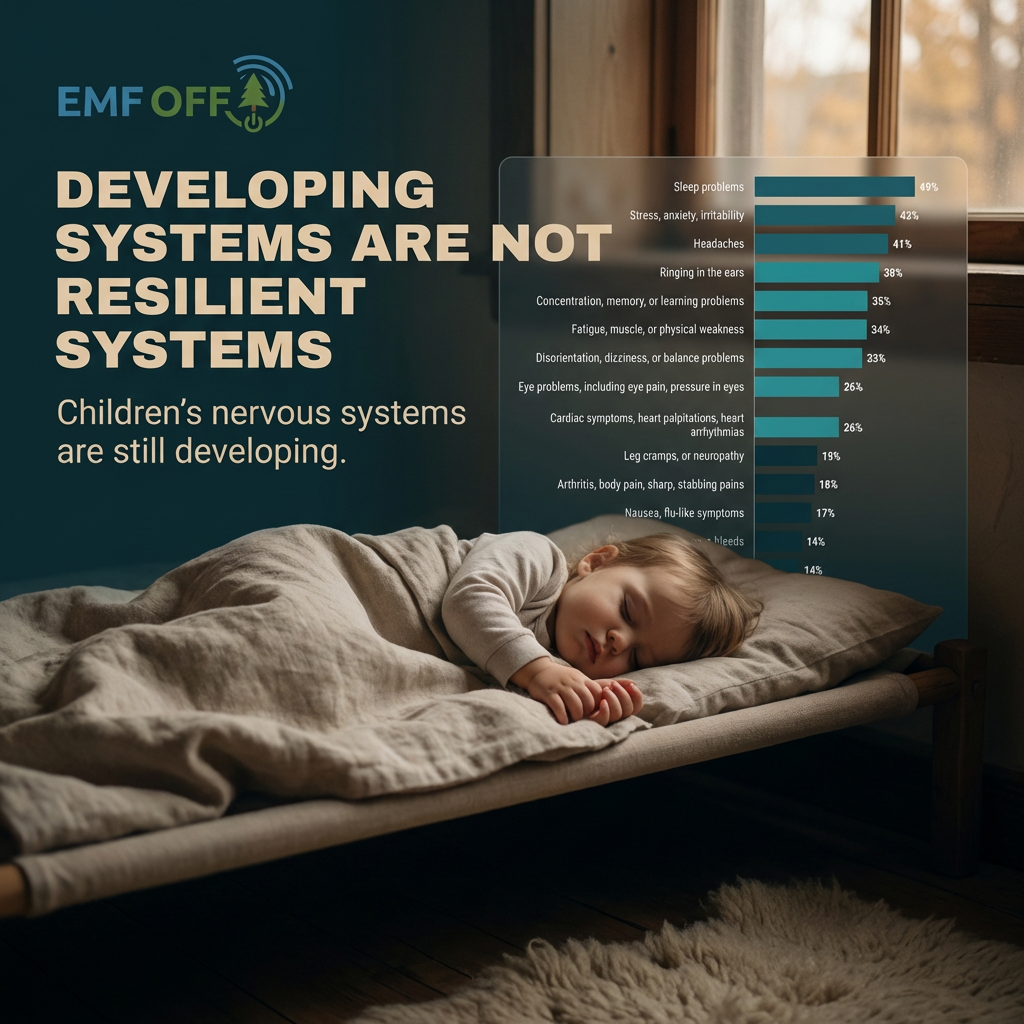
Vulnerability Is a Biological Fact
Children’s nervous systems are still organising themselves.
Neural pruning, myelination, and synaptic refinement continue through adolescence.
Developing systems are not simply smaller adult systems — they are actively building structure.
Biology under construction is inherently more sensitive to environmental input.
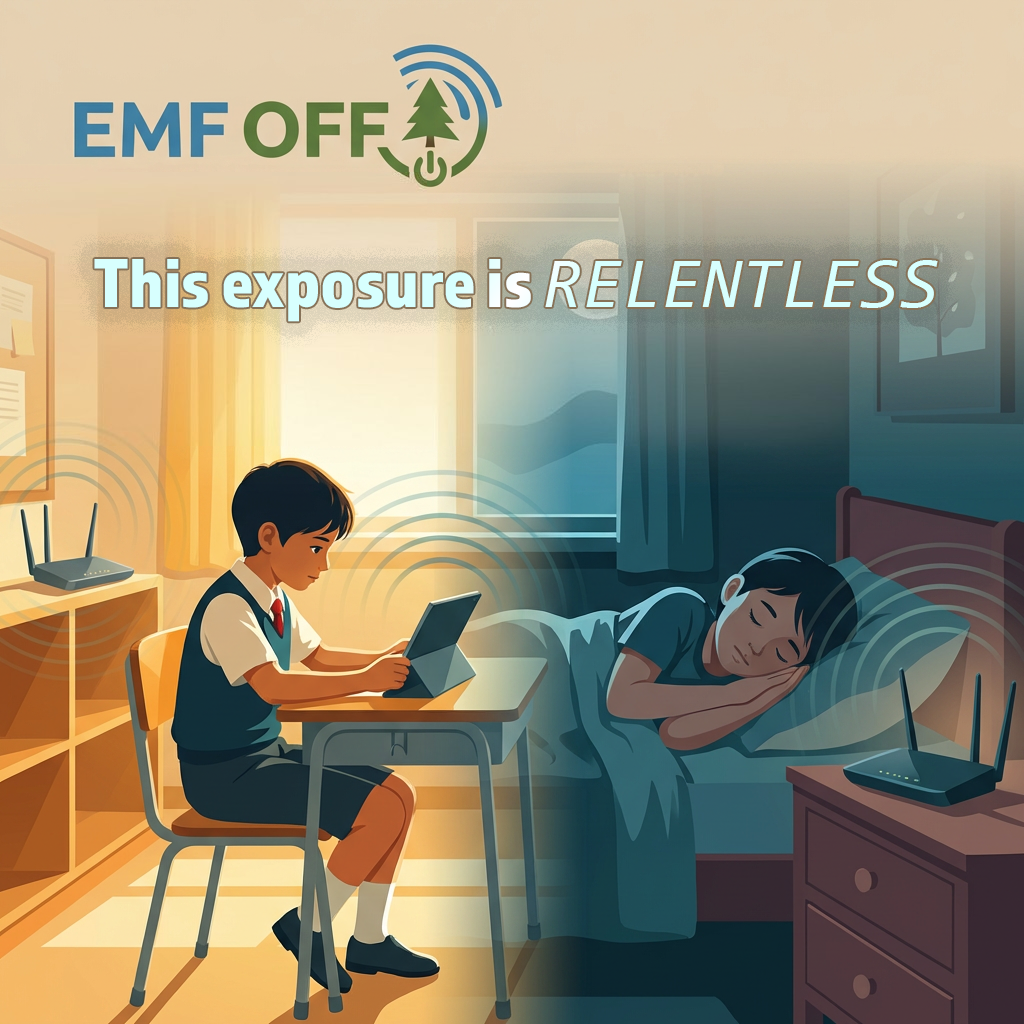
Constant Stimulation Is a New Variable
Modern wireless infrastructure creates persistent, low-level pulsed exposure.
Unlike natural environmental signals, these emissions are continuous and involuntary.
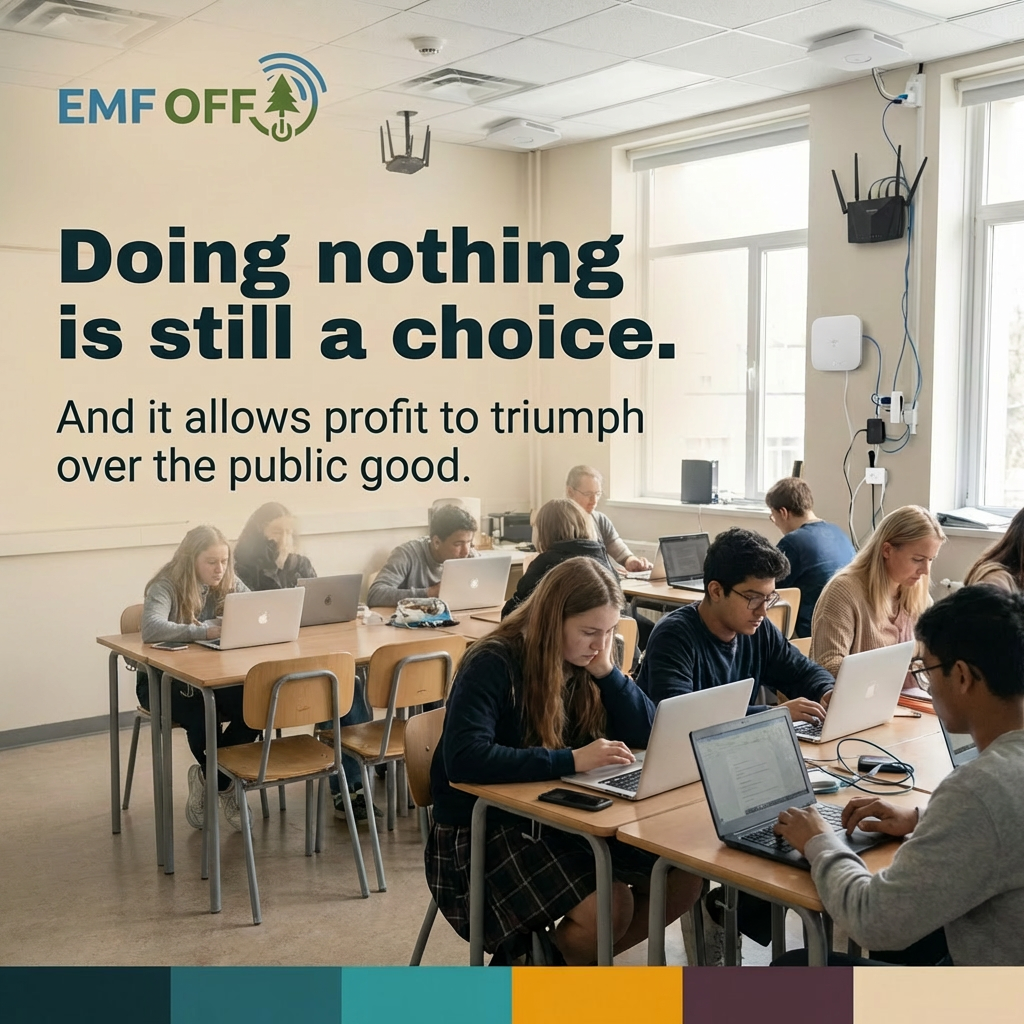
Children cannot choose when they are exposed at school, in apartments, or in public space.
Chronic stimulation without opt-out is historically unprecedented.
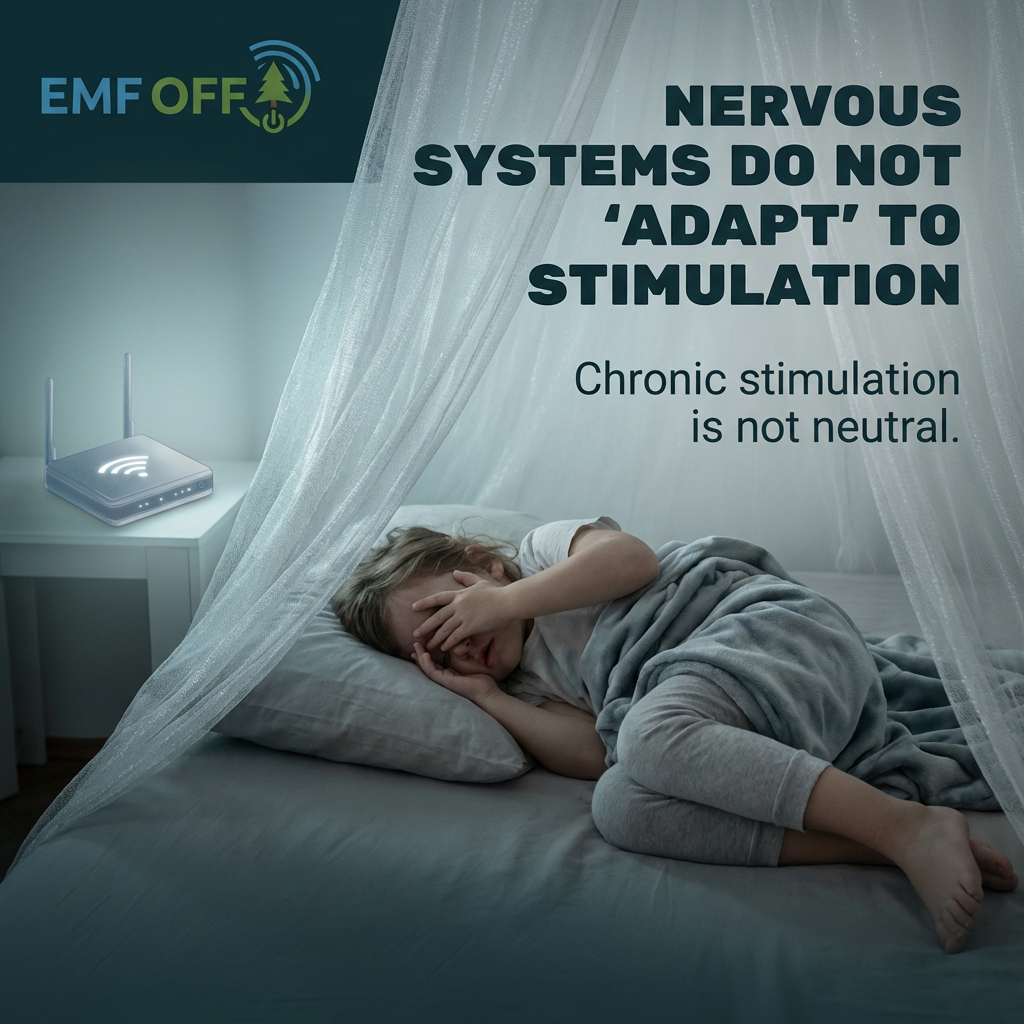
Adaptation Is Not the Same as Safety
Biological systems compensate when stressed.
But compensation is not neutrality — it requires energy and regulatory effort.
If oxidative stress markers, calcium signalling shifts, or sleep disruption are repeatedly observed in studies, then adaptation comes at a cost.
Resilience has limits.
Standards Were Built for Heating
Current exposure guidelines are based primarily on preventing acute tissue heating.
They were not designed around long-term developmental neurobiology.
Non-thermal biological responses fall largely outside the regulatory model.
It's important to remember that universal and continual RF exposure did not start until the early 2000s, when Wi-Fi became the norm in homes. We do not yet know the long-term effect on children.
What is not measured cannot shape policy.
Evidence Exists — But Weighting Matters
Numerous peer-reviewed studies report oxidative stress, membrane effects, blood-brain barrier changes, and sleep alterations at non-thermal levels.
Other studies — nearly always narrower in endpoint selection — report no measurable harm.
When only one category aligns with regulatory definitions, it receives disproportionate influence.
Absence of policy response is not absence of data.
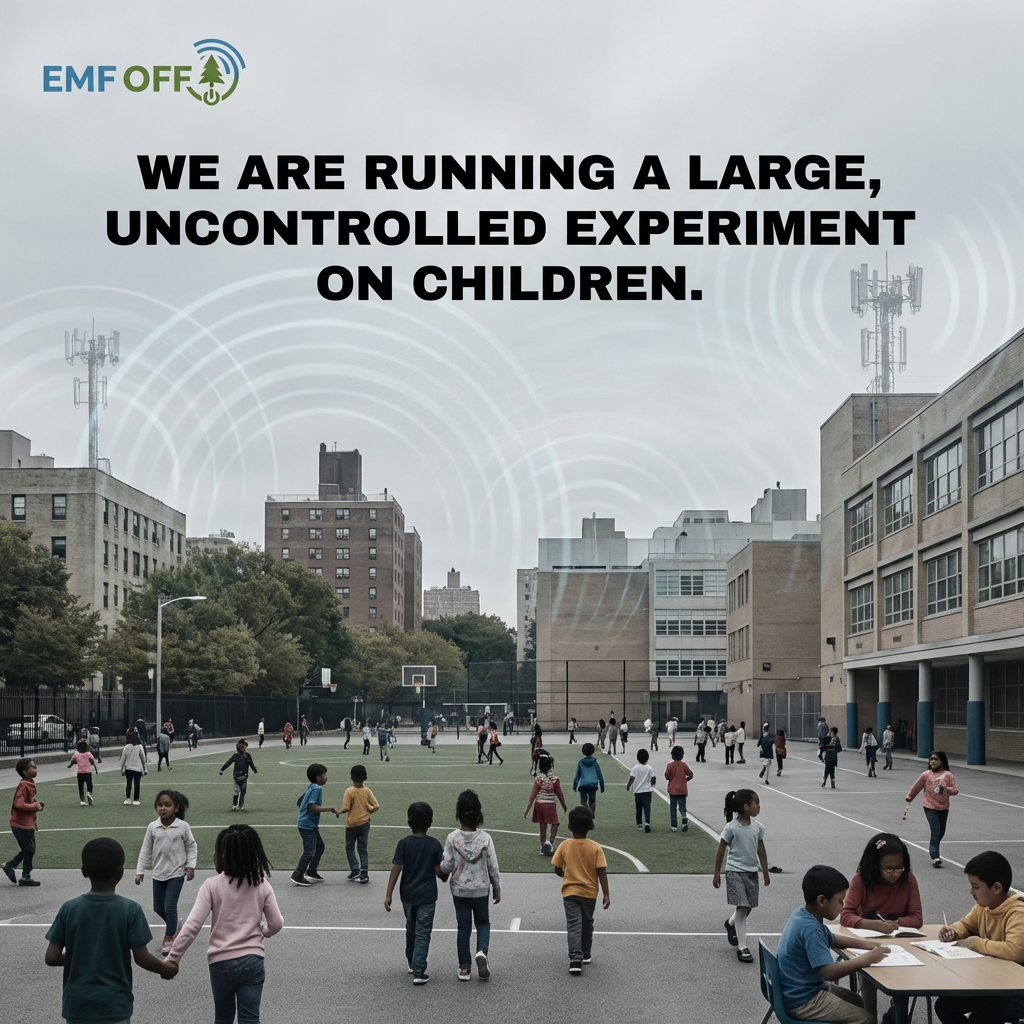
This Is a Population-Level Experiment
Wireless infrastructure has expanded faster than long-term developmental research.
Children are exposed before longitudinal data can fully mature.
No formal consent process exists.
The scale and irreversibility of infrastructure make this ethically significant.
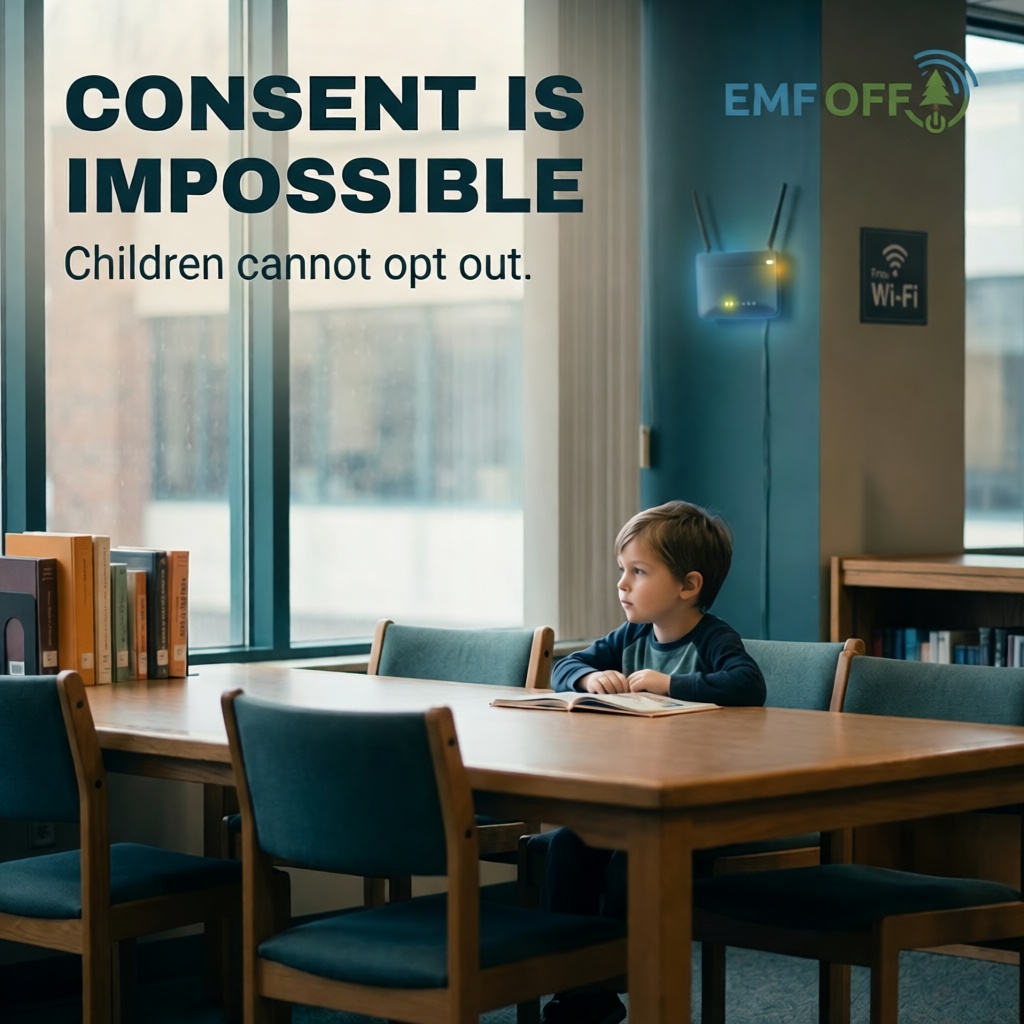
Consent Requires Choice
Adults may choose to minimise personal exposure.
Children cannot opt out of classroom routers, neighbouring networks, or municipal antennas.
When exposure is ambient and unavoidable, consent becomes theoretical.
That is not a trivial detail.
Infrastructure Solidifies Assumptions
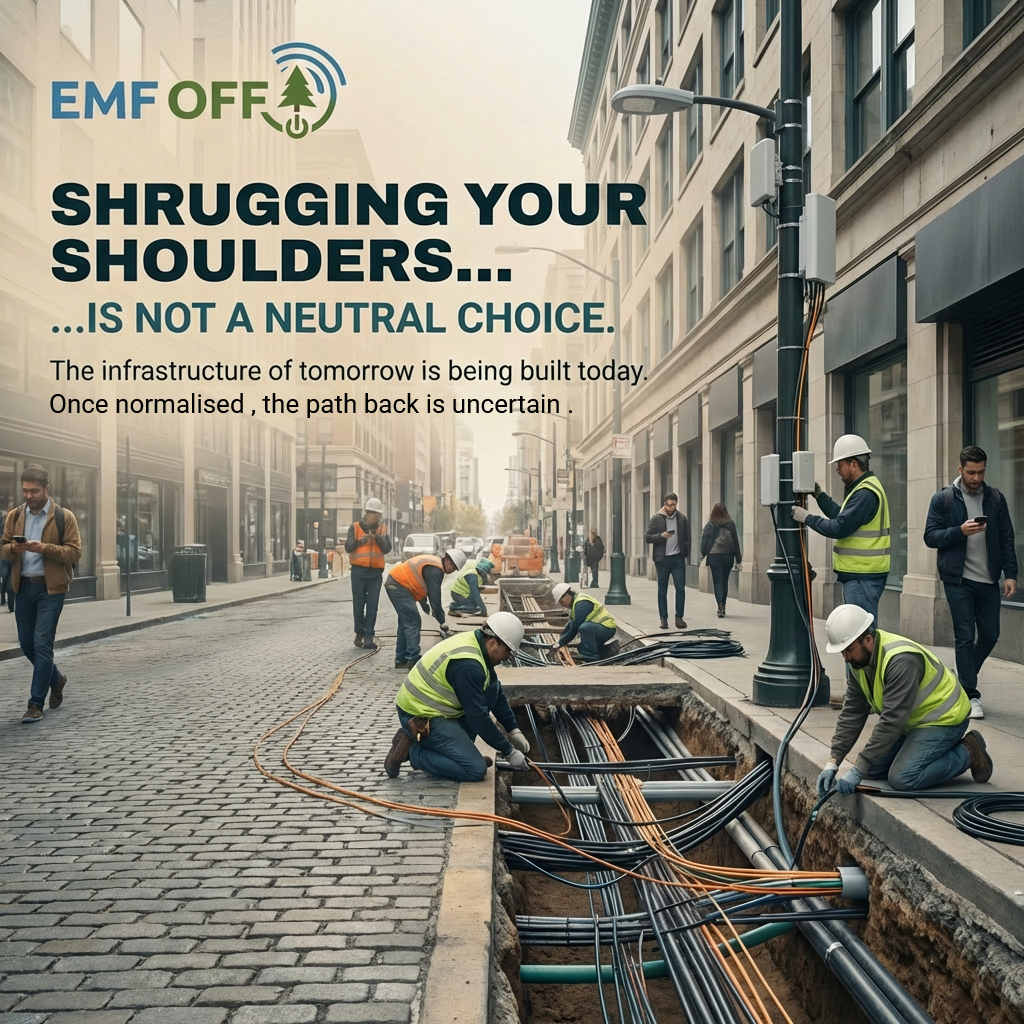
Once networks are embedded in schools and cities, reversal becomes economically and politically difficult.
The longer normalisation continues, the harder precaution becomes.
Built systems create path dependency.
That reality increases the importance of early scrutiny.
Neutrality Is a Position
Choosing not to question infrastructure expansion is not a neutral act.
It effectively accepts the current risk model as sufficient.
If that model excludes mechanisms of harm that are biologically plausible and experimentally reported, silence favours continuation.
Inaction shapes outcomes.
This Is Ultimately Ethical
The central issue is not technological progress.
It is whether developmental health is weighted at least as heavily as economic momentum.
When uncertainty intersects with vulnerability, precaution is a moral stance.