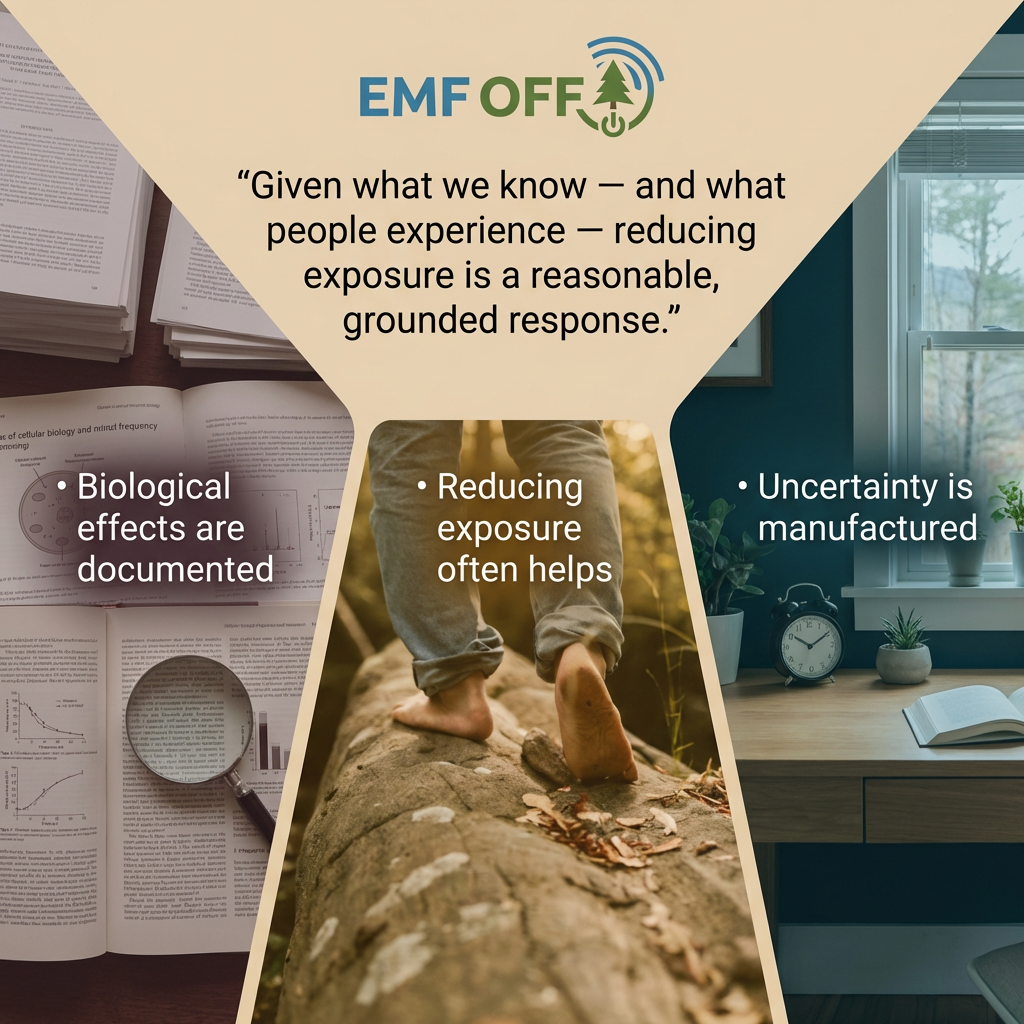
This section moves from understanding systemic influence to reclaiming personal control.
The message is not that harm is imaginary or unproven — it is that when regulatory definitions are narrow, the burden of precaution shifts to individuals.
Reducing exposure is a rational, proportionate response to documented biological effects and lived experience.
Precaution Is Not Panic
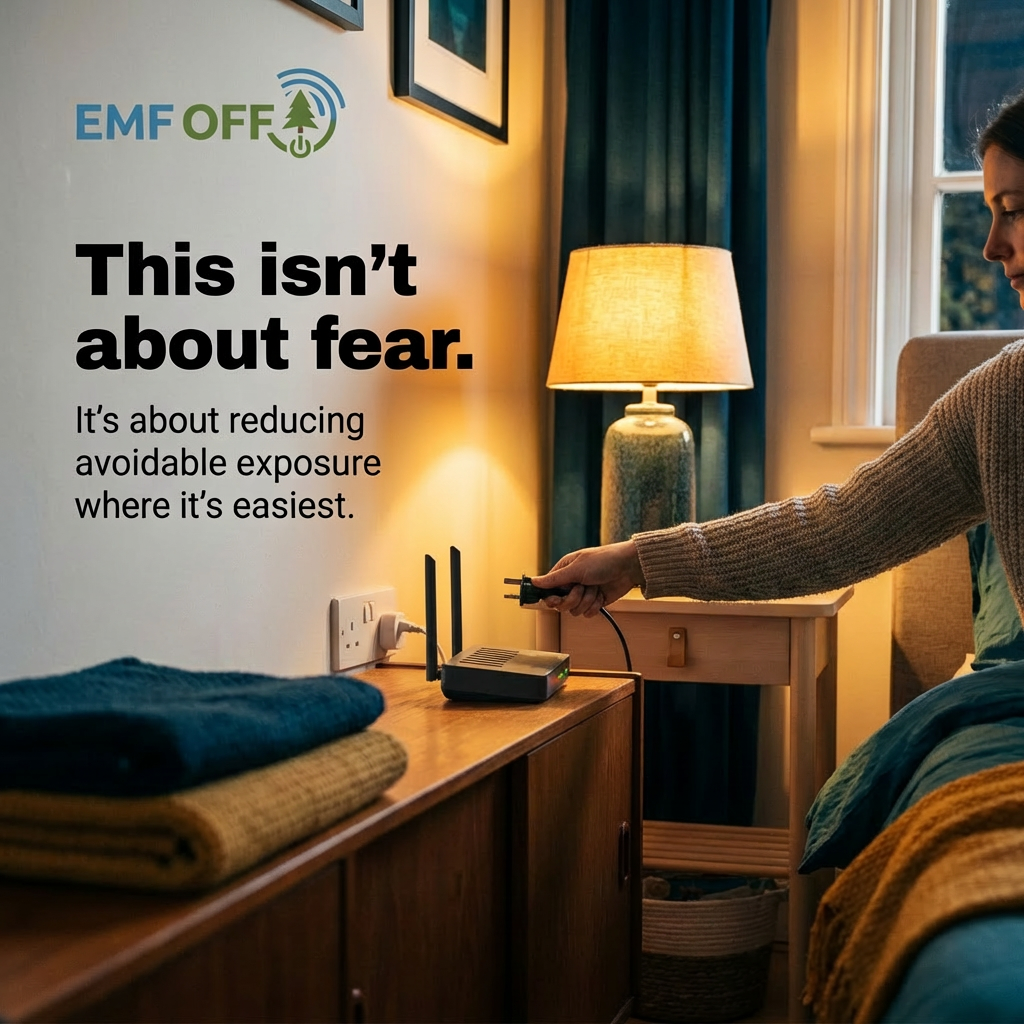
This is not about fear.
It is about recognising that avoidable exposures exist — and that removing them is often simple.
When credible evidence of biological effects accumulates but regulatory frameworks remain narrow, precaution becomes a personal responsibility.
Small reductions matter because cumulative load matters.
Convenience Doesn’t Require Continuity
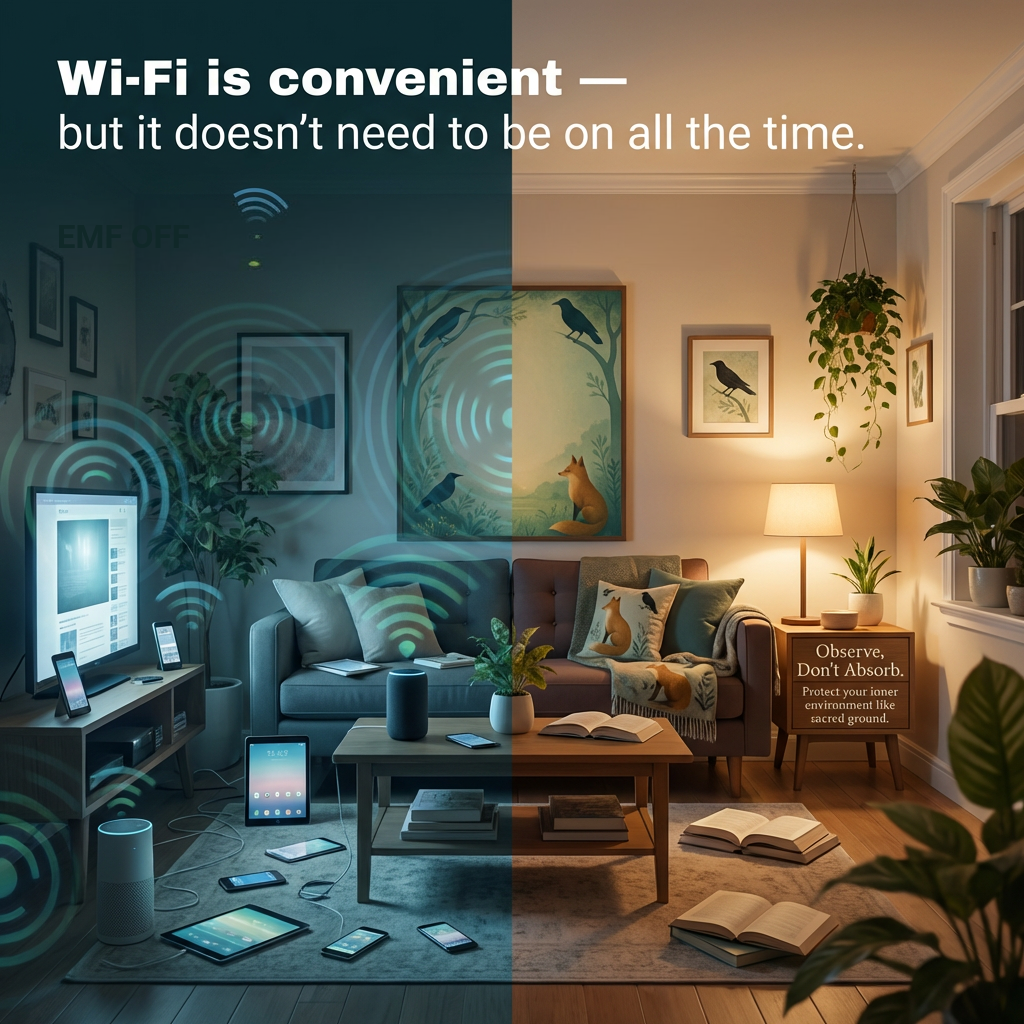
Wireless technology is useful — but it does not need to operate 24/7.
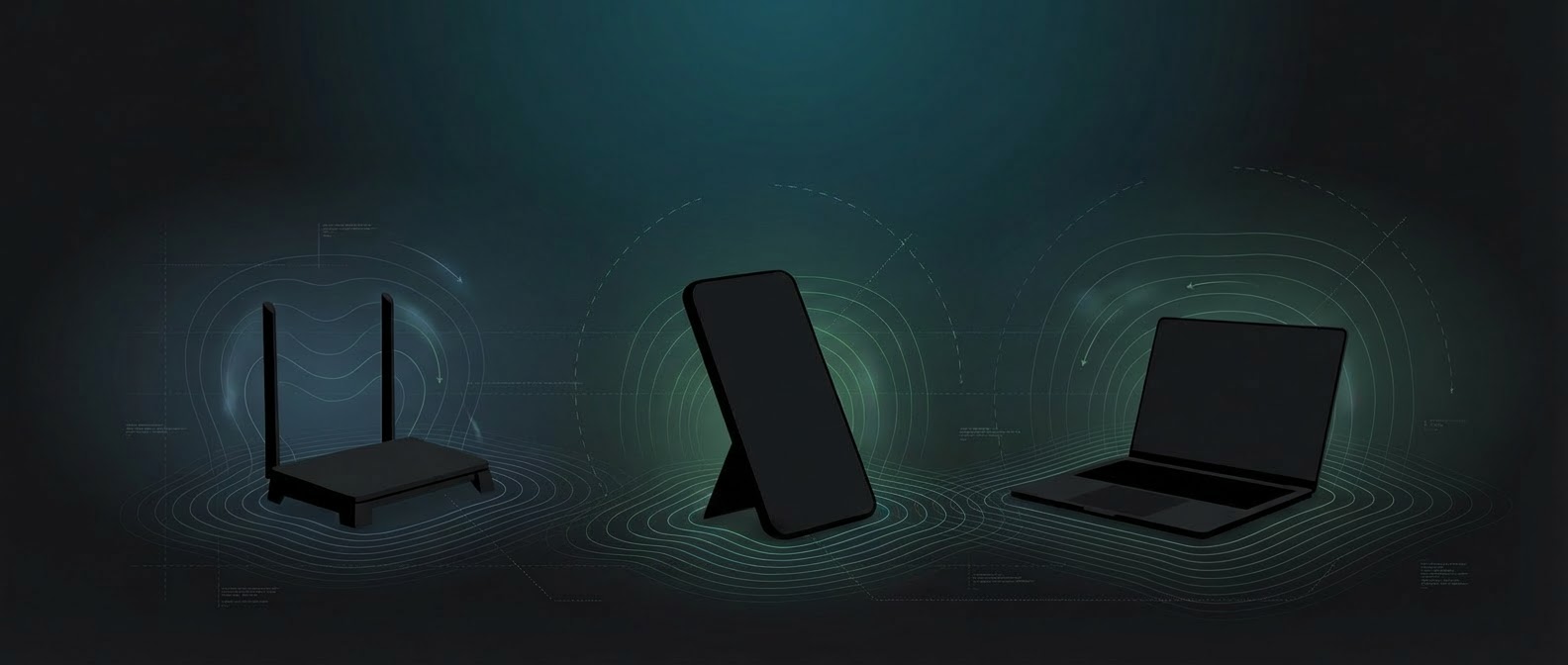
Routers emit pulsed signals continuously, even when no one is actively using them.
Turning devices off overnight or when not needed reduces ambient exposure without sacrificing function.
Practical restraint is different from rejection.
Lowering the Baseline
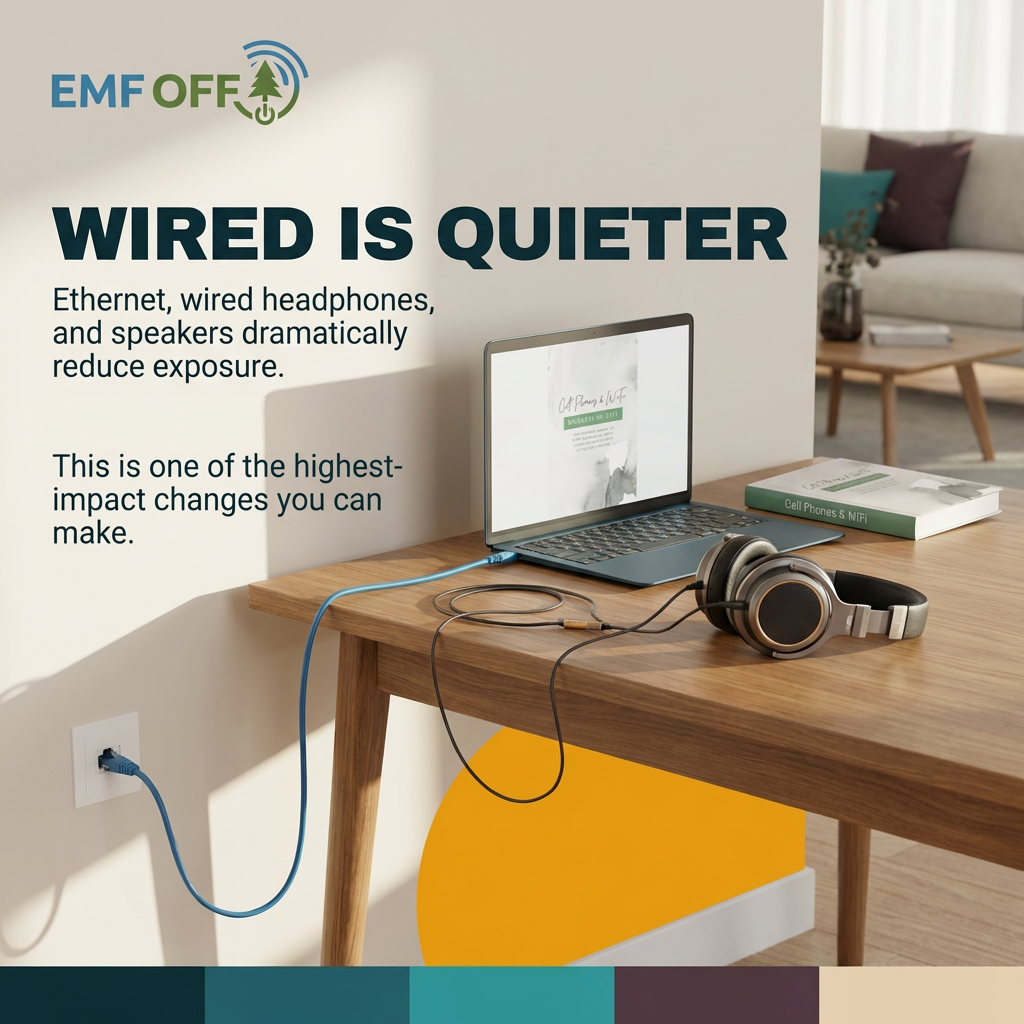
Wired connections remove a major source of constant background radiation.
Ethernet, wired headphones, and analogue tools shift exposure from continuous broadcast to contained signal flow.
This is not theoretical — power density measurements drop immediately when wireless transmission stops.
Proximity Magnifies Impact
Field intensity decreases with distance.
Devices held against the body — phones, watches, wireless earbuds — create the highest localised exposures.
Shifting what sits closest to the body has disproportionate impact compared to changes across the room.
Biology responds to proximity.
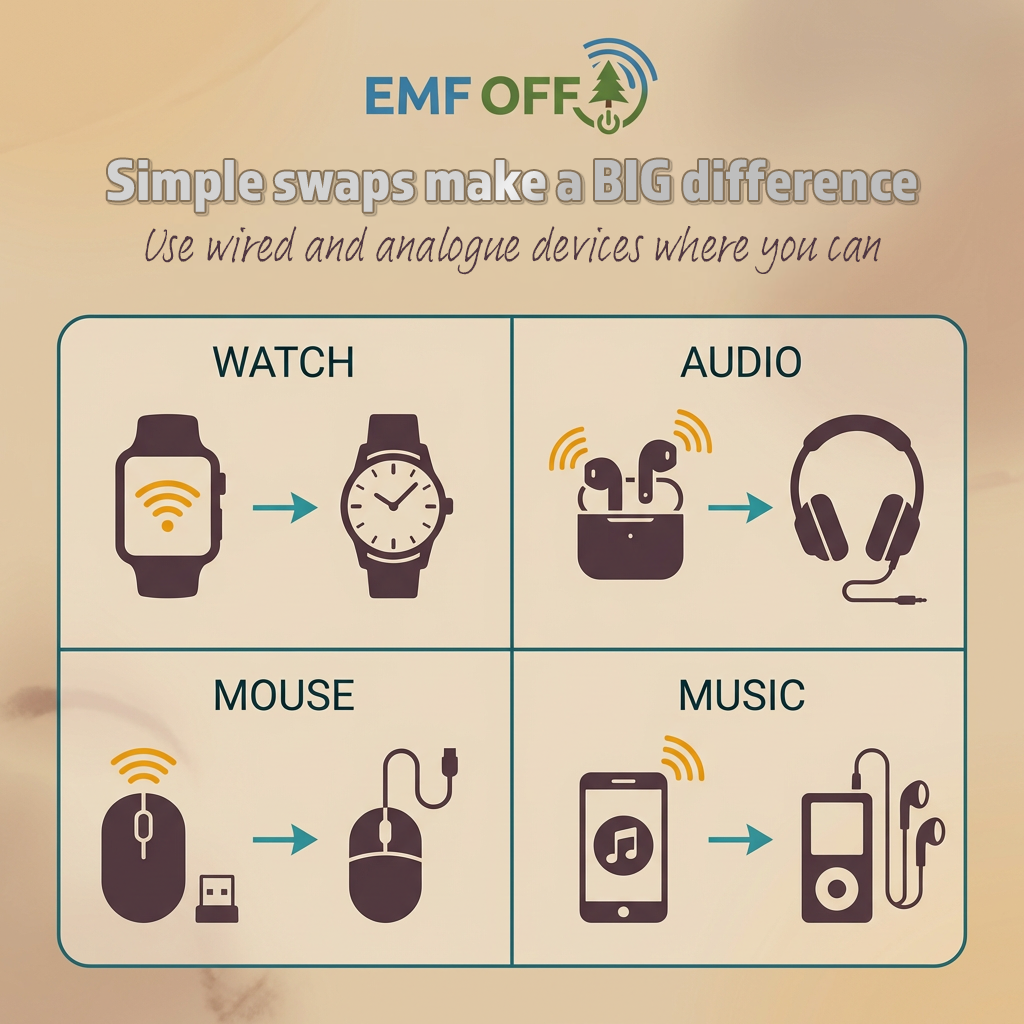
Substitution, Not Sacrifice
Not every digital function requires a wireless channel.
A wired mouse, a simple watch, downloaded music, offline reading — these swaps preserve utility while lowering emissions.
Precaution does not mean abandoning modern life.
It means choosing lower-emission pathways when available.
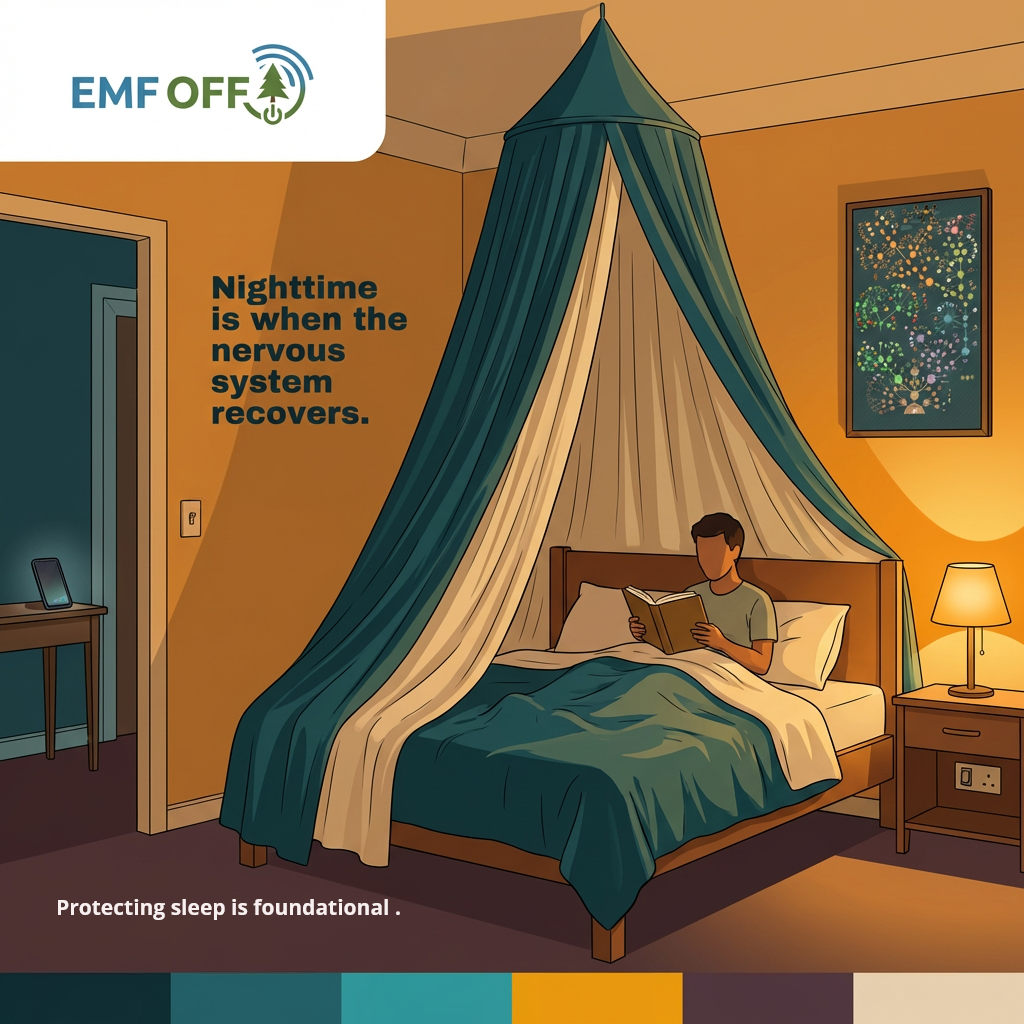
Sleep Is When Regulation Happens
Nighttime is when the nervous system recalibrates.
Melatonin release, lymphatic clearance, synaptic pruning, and autonomic balance all occur during sleep.
Continuous RF exposure during these hours adds a variable to a process designed for quiet recovery.
Protecting sleep is one of the highest-leverage interventions available.
Targeted Shielding in High-Density Environments
In offices, apartments, and urban settings, ambient exposure may be outside individual control.
Shielding cases, router placement strategies, and physical barriers, such as clothing designed to shield EMFs can reduce intensity in specific zones.
These measures are situational — not universal solutions.
Context determines strategy.
Attention Without Immersion
Streaming and constant connectivity increase transmission time.
Downloaded content, wired audio, and offline activities reduce broadcast demand.
Exposure is not only about distance — it is about duration and duty cycle.
Reducing active transmission reduces cumulative load.
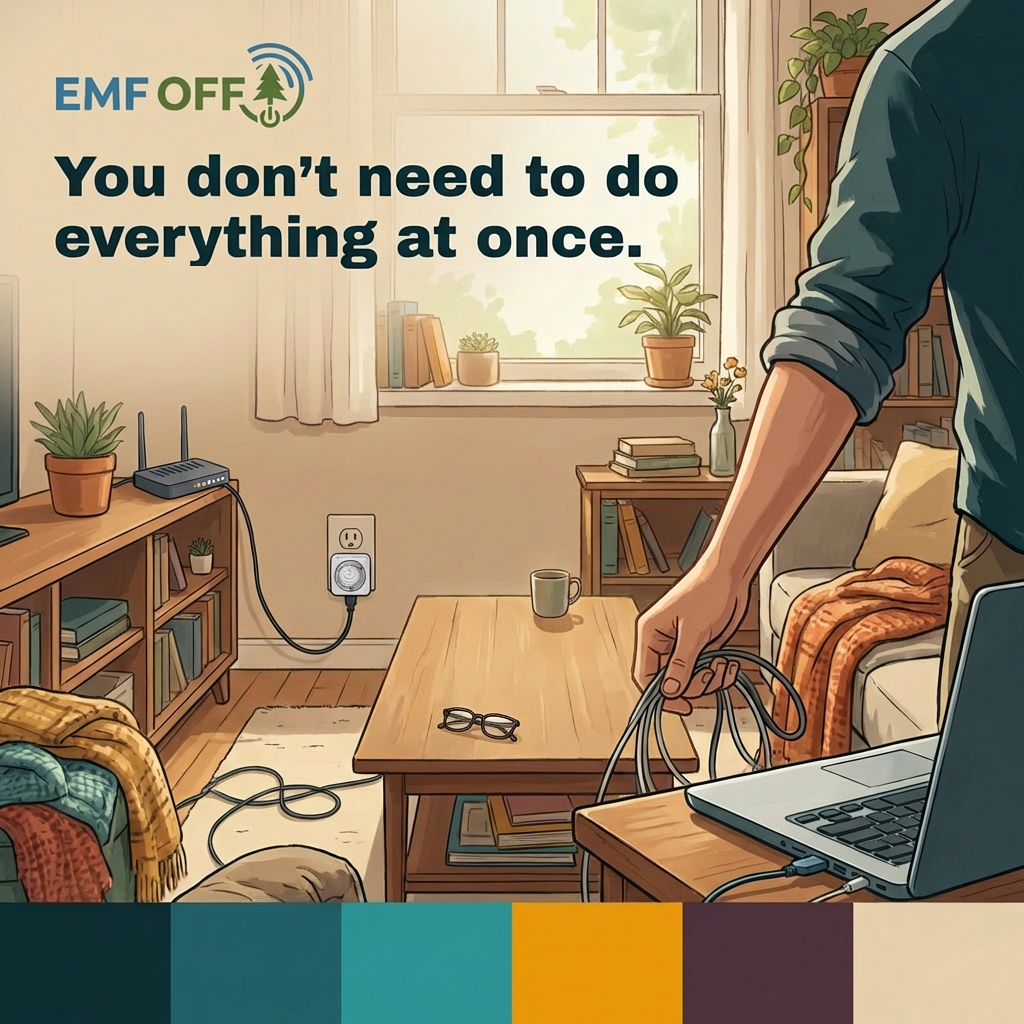
Incremental Change Is Enough
You do not need to eliminate everything.
Exposure reduction is cumulative.
Each removed source lowers overall field density and biological demand for adaptation.
Progress is additive.
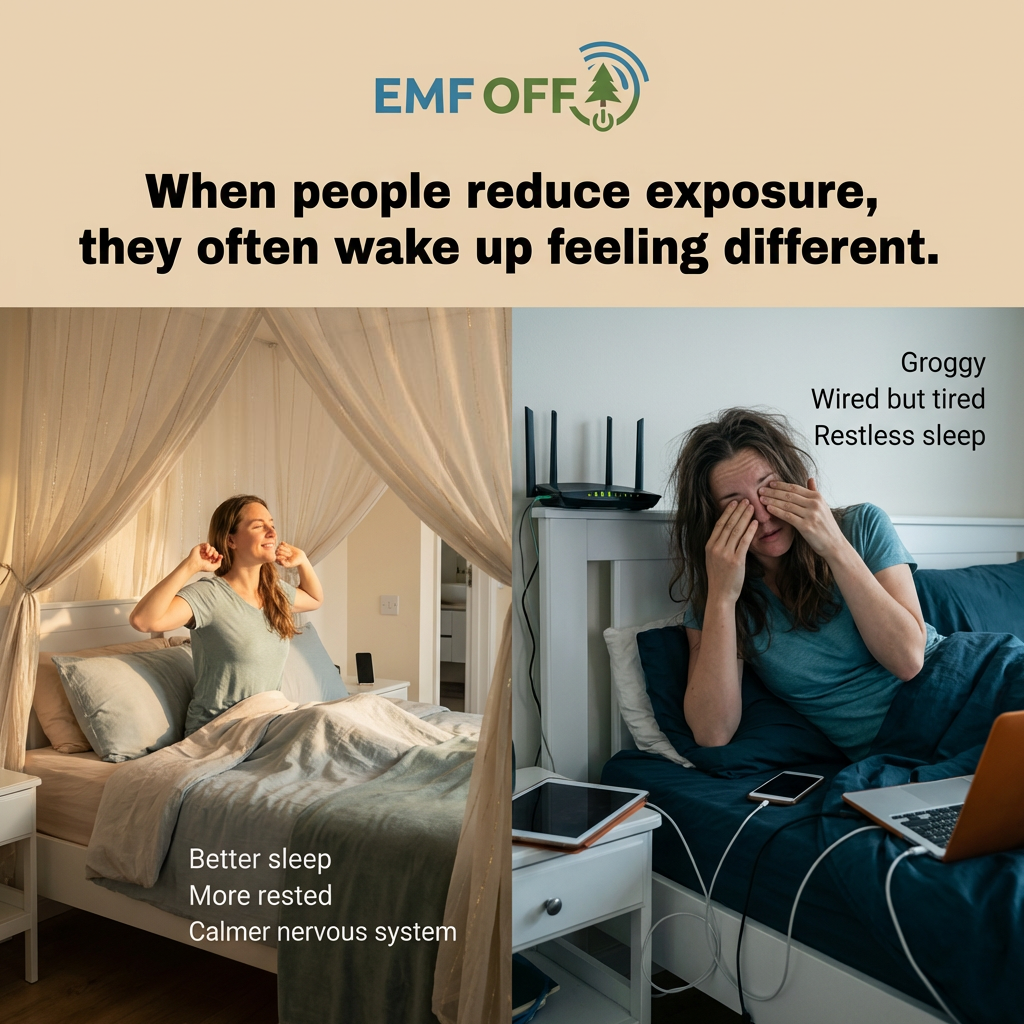
People Notice Differences
Many individuals report improved sleep, calmer nervous systems, and reduced morning fatigue when nighttime exposure is lowered.
These experiences do not replace controlled studies — but they also do not negate documented biological findings.
Subjective response often aligns with measurable environmental change.
Physiology responds when load decreases.
Precaution Is a Rational Response to Structured Uncertainty
Biological effects of non-thermal RF exposure are documented across oxidative stress, calcium signalling, and neuroendocrine pathways.
Regulatory limits, however, are based primarily on acute heating thresholds.
When frameworks exclude mechanisms outside thermal injury, absence of regulatory violation does not equal absence of effect.
Reducing exposure in that context is not alarmism — it is proportionate caution.